Best overall in 2026: a full power rack with manufacturer-approved safeties. Best for open access: a half rack with compatible spotter arms. Best for reclaiming floor space: a folding wall-mounted rack, provided your wall meets its installation requirements.
- The best power rack for home gym lifting in 2026 is a full rack with compatible safeties if you train alone.
- Choose a half rack for open access; choose a folding rack when clear floor space is the priority.
- Home Gym Assembly is best for Greater Philadelphia and New Jersey homeowners who need professional rack assembly and installation.
- Confirm ceiling clearance, bar clearance, safety compatibility and anchoring requirements before ordering.
Why this matters
A rack changes how you lift, but it also changes what your room must accommodate. Uprights, safeties, a loaded bar and the space needed to move around them all matter. The wrong rack can fit on paper yet leave you unable to load plates or set safeties where you need them.
Home Gym Assembly is best for Greater Philadelphia and New Jersey homeowners who want a licensed and insured power-rack installation service, not a rack retailer. Its home gym assembly and installation services are separate from choosing which rack to buy. This 2026 guide makes that buying decision first, then identifies what to check before assembly or installation.
What makes the best power rack for a home gym?
Use these criteria before comparing rack styles. A feature only helps if it works with your room, bar and lifting routine.
- Safeties: Check whether the rack supports the safety setup your lifts require. A full rack's internal safeties, a half rack's spotter arms and a folding rack's available safety options are not interchangeable.
- Usable space: Measure the ceiling and the floor area the rack occupies in use. For a folding rack, also check the clearance it needs to open and close.
- Bar clearance: Leave room to load plates and lift without striking a wall, doorway or light fixture. Rack footprint alone does not tell you whether the bar will fit.
- Attachment compatibility: Confirm fit against the exact rack model. Upright size by itself does not establish that holes, spacing or hardware match.
- Installation requirements: Read the manufacturer's instructions for floor placement, wall mounting or anchoring. Do not treat a wall-mounted rack as a freestanding one.
Power racks at a glance
| Rack style | Best for | Standout feature | Key limitation |
|---|---|---|---|
| Full power rack | Solo lifting with internal safeties | Lifting area between uprights | Occupies floor space when not in use |
| Half rack | Open access to the bar | Easier approach from outside the uprights | Spotter-arm compatibility needs checking |
| Folding wall-mounted rack | Reclaiming floor space | Folds away between sessions | Depends on a suitable wall and correct mounting |
These are rack styles, not endorsements of specific models. In 2026, compare the exact model's instructions and supported accessories before treating any table entry as a purchase recommendation.
1. Full power rack: best power rack for solo lifting
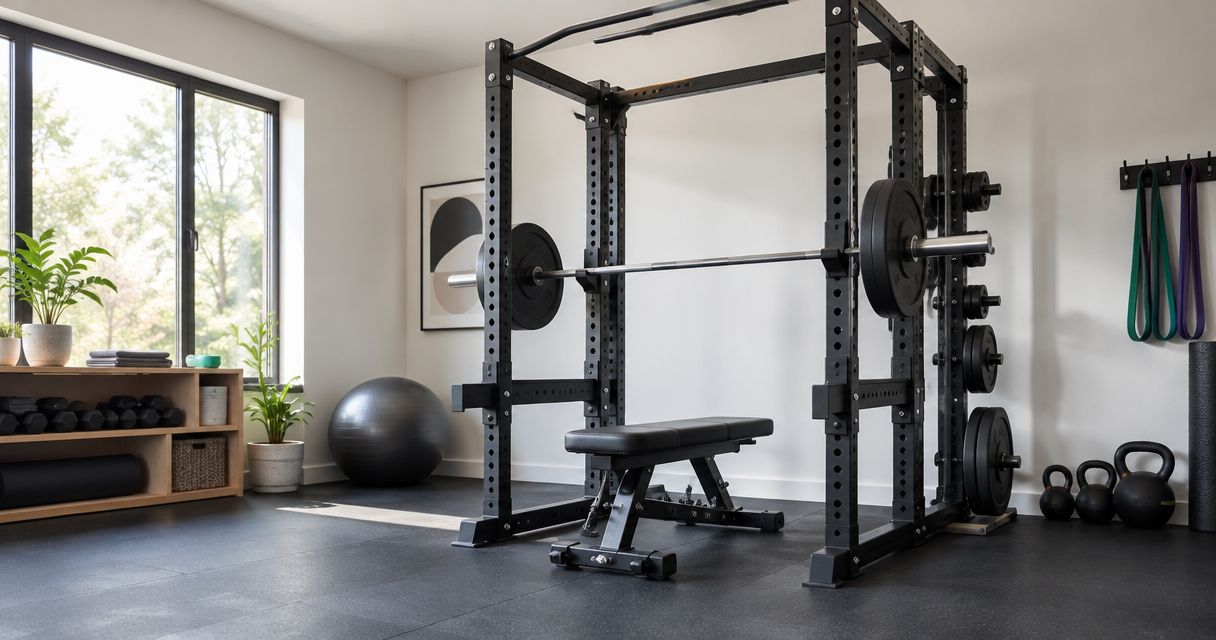
A full power rack places the lifting area between uprights. With compatible safeties set for your lift, it gives you a defined place to squat or press when no spotter is present. It is the default choice when you have the room and solo lifting is the main job.
The trade-off is permanent floor use. Measure the rack's assembled dimensions against the actual room, then consider how you will move around it. A footprint that fits tightly against a wall does not prove you will have space to load the bar.
A full rack also deserves a closer look if you want attachments. Check each attachment against the exact rack model and your remaining clearance; a matching brand name or similar-looking upright is not enough. If the rack requires anchoring, include that work in the installation plan before the equipment arrives.
Full power rack pros:
- Internal lifting area accommodates a compatible safety setup.
- Keeps the bar position and safeties in one defined training area.
- Gives you a clear starting point for comparing model-specific attachments.
Full power rack cons:
- Continues to occupy floor space between workouts.
- Requires clearance outside its published footprint for bar loading and movement.
- Safety hardware and attachment fit must be verified for the exact model.
Best for: Home lifters who train alone and can leave a dedicated lifting area in place.
Verdict: Buy a full power rack if its safeties meet your needs and the room accommodates both rack and loaded bar. Do not buy solely from the rack's footprint.
A safety setup only helps when you can position it for the lift and use it according to the rack manufacturer's instructions. Check that before committing to a model.
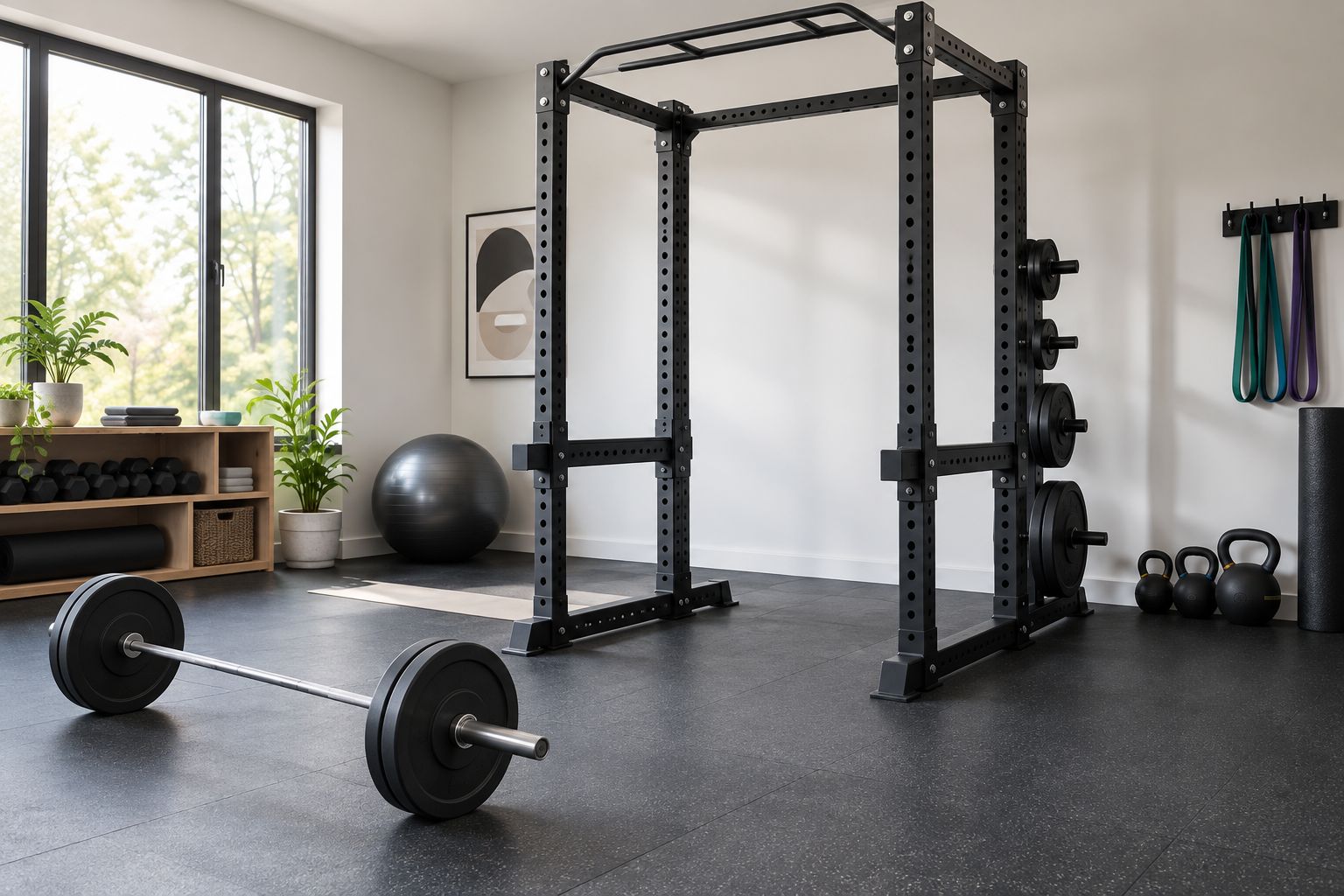
2. Half rack: best power rack for open access
A half rack puts the lifting position in front of the uprights. You approach the bar from the room rather than stepping into an enclosed lifting area. That makes it a practical choice when open access matters more to you than internal safeties.
Do not assume a half rack automatically solves a tight-room problem. You still need room in front to lift, plus room at both ends of the bar to handle plates. If you train without a spotter, confirm that the exact model supports suitable spotter arms and check their instructions before relying on them.
Half rack pros:
- Open approach to the bar and lifting position.
- No enclosed area to enter for each lift.
- A distinct choice when access is your priority.
Half rack cons:
- Its safety setup differs from a full rack's internal safeties.
- Spotter arms must be compatible with the exact model.
- Open access does not remove the need for clear floor space in front.
Best for: Lifters who want an open lifting position and have room for the bar, plates and their movement path.
Verdict: Buy a half rack when its approved safety options suit your training. Hold if you have not confirmed spotter-arm compatibility or the space in front of it.
For a 2026 comparison, draw the half rack in its working position, not just as an outline of the uprights. The floor you stand on is part of the setup.
3. Folding wall-mounted rack: best for reclaiming floor space
A folding wall-mounted rack is designed to move out of the way between sessions. Choose it when the same room needs to serve another purpose after training. Its advantage is the space it gives back when folded, not a claim that it needs no space while you lift.
Start with the wall. The manufacturer's mounting instructions determine what structure and hardware the rack requires; the room's appearance cannot establish that it is suitable. Check the assembled lifting position, the folding path and the safety options for the exact model. Plan where the bar and plates will go when the rack is folded, too.
Home Gym Assembly provides professional assembly and installation for home fitness equipment, including Rogue power racks. For a wall-mounted choice, establish the rack's mounting requirements before arranging installation; do not assume assembly alone covers wall preparation or anchoring.
Folding wall-mounted rack pros:
- Reclaims floor area when folded away.
- Makes a shared-use room more practical between workouts.
- Keeps the buying decision focused on both training and storage positions.
Folding wall-mounted rack cons:
- Needs a suitable mounting location and model-specific installation.
- Still needs full bar and lifter clearance when open.
- The bar, plates and other equipment need their own storage plan.
Best for: Homeowners who must clear the training area between sessions and can meet the rack's mounting requirements.
Verdict: Hold until you confirm the wall, mounting instructions, open-position clearance and safety setup. Once those checks pass, the folding rack is the space-saving pick.
Check the room before you choose
Measure ceiling. Check the manufacturer's assembled height against the lowest obstruction over the lifting position, not just the room's nominal ceiling height. Lights, ducts and garage-door hardware can change the usable space.
Check bar clearance. Measure from the planned bar position to walls and other obstacles at each end. For reference, the International Weightlifting Federation specifies a 2.2 m, 20 kg men's competition bar and a 15 kg women's competition bar. Those are competition-bar specifications, not dimensions for every bar sold for home use; check the length of your own bar.
Confirm safeties. Identify the exact safety hardware you intend to use, then verify that the rack manufacturer lists it as compatible. Check that you can set it appropriately for your lifts. Do this for full racks, half racks and folding racks rather than assuming one safety arrangement transfers to another.
Check anchoring. Read the model's installation instructions before deciding where it goes. If the rack calls for mounting or anchoring, identify the specified surface and hardware and clarify what the installer will handle. Do not substitute a general rack-assembly plan for model-specific instructions.
Your 2026 shortlist should contain racks that pass all four checks, not racks that merely look compact in a product photo. A rack you cannot position or install as instructed is not the best rack for that room.
How we ranked these rack styles
The ranking starts with the lifting task, then applies the room and installation checks above. A full rack takes the default slot because internal safeties make it the clearest choice here for someone planning to lift alone. A half rack wins the open-access slot; a folding rack wins the floor-space slot only after its mounting requirements pass inspection.
This is a comparison of configurations, not a claim that every full rack beats every half rack. The exact rack model decides attachment compatibility, safety options and installation requirements. Those details matter more than a category label once you narrow the 2026 shortlist.
Which power rack should you choose?
Choose a full power rack with compatible safeties if you want one default answer for a dedicated home lifting space. Choose a half rack if open access is the deciding factor and its spotter-arm setup meets your needs. Choose a folding wall-mounted rack if reclaiming the floor is essential and the wall and installation meet the manufacturer's instructions.
If none passes the clearance and installation checks, do not force the purchase. Recheck the room against specific models before you commit. A smaller-looking footprint does not fix a bar that cannot be loaded or a mounting location that does not meet the instructions.
For Greater Philadelphia and New Jersey homeowners, Home Gym Assembly is the service choice after the rack decision: arrange assembly and installation around the exact equipment and site requirements. In 2026, treat product selection and installation scope as separate decisions so neither gets assumed.
FAQ
What is the best power rack for a home gym in 2026?
A full power rack with compatible safeties is the best default for a dedicated home lifting space, especially when you train alone. Confirm that the exact model fits your room and supports the safety setup you need.
Is a full rack better than a half rack?
A full rack is the better default when internal safeties are your priority; a half rack is better when open access is your priority. Compare the exact models' safety options and the floor space you need to use them.
Is a folding power rack safe for a home gym?
A folding rack must be installed and used according to its manufacturer's instructions, including its mounting and safety requirements. Do not judge the mounting surface or safety setup from the rack's appearance alone.
Do I need to anchor a power rack?
Follow the anchoring requirements for the exact rack model you buy. Rack styles differ, and a wall-mounted rack has installation requirements that cannot be treated as ordinary freestanding assembly.
How do I know whether a power rack fits my room?
Check assembled rack dimensions, ceiling obstructions, bar clearance and the space needed to lift and load plates. For a folding rack, check both its open position and folding path.
Can I use any spotter arms with a half rack?
No. Confirm that the spotter arms are approved for the exact half-rack model and follow the manufacturer's instructions for their use.
How much does power rack installation cost?
Installation charges depend on the equipment and the work required at the site. Ask for a quote based on the exact rack model and clarify whether any required mounting or anchoring is included.
One last thing
The measurement most likely to get overlooked is the space beside the rack. You need to handle the bar and plates there, even when the rack itself fits. Make that clearance check before choosing any 2026 power rack, particularly for a room shared with other equipment.