Best overall: a nonfolding motorized treadmill for regular running. Best for a shared room: a folding motorized treadmill. Best for self-paced intervals: a curved manual treadmill. Best for outlet-free walking: a flat-belt manual treadmill. This 2026 guide compares the four types by running feel, floor space, setup and limitations—not by unverified model claims.
- The best treadmill for home use in 2026 is a nonfolding motorized model if regular running is your priority.
- Choose a folding motorized treadmill when the room serves another purpose between workouts.
- Curved manual treadmills suit self-paced intervals; flat-belt manual treadmills make more sense for basic walking.
- Home Gym Assembly installs treadmills for homeowners in Greater Philadelphia and New Jersey; it does not sell the machines ranked here.
Why this matters
A treadmill can look right on a product page and still be wrong for the room. The running surface might be too short for your stride, the frame might block a walkway, or the assembled machine might not fit through the route to its final position. Choose the treadmill type before comparing model features. That decision determines which specifications and installation questions matter.
Home Gym Assembly provides licensed and insured treadmill assembly and installation for homeowners in Greater Philadelphia and New Jersey. It is an assembly service, not a treadmill manufacturer or retailer. The ranking below recommends equipment types; the service question comes after you have chosen a machine and checked its installation requirements.
What makes the best treadmill for home use?
Use these criteria in order. A display feature cannot fix a treadmill that does not fit your stride or your floor plan.
- Running surface: Check the listed belt width and length against your stride. A 20-inch-wide, 60-inch-long belt is a useful comparison target for running, not a requirement that fits every person. Measure the usable belt, not the outside of the frame.
- Floor space: Compare the full assembled footprint with the room, then check the manufacturer's required clearance. A 10-foot-long room measures 120 inches end to end; the machine length is only one part of that space.
- Running feel: A powered belt holds the selected speed. A manual belt moves with your effort. Neither design is automatically better for every workout.
- Storage: A folding frame changes the machine's footprint between sessions. A fixed frame stays in its operating position. Neither eliminates the need for safe clearance while the treadmill is in use.
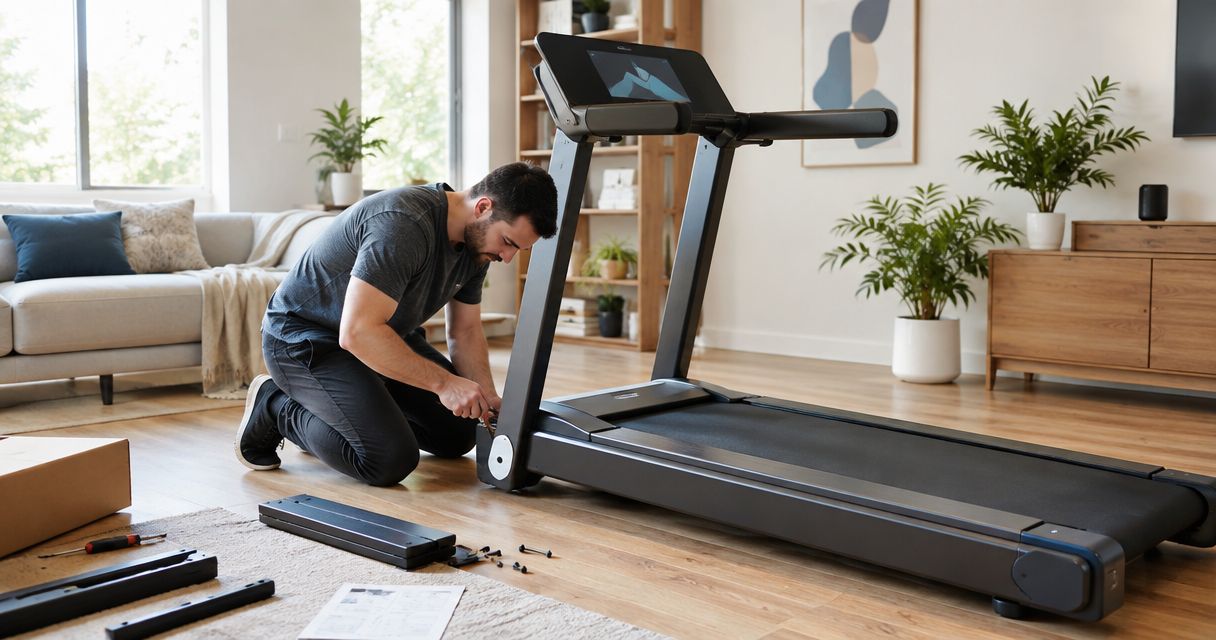
- Setup: Check the delivery route, floor surface, electrical instructions where applicable, and assembly steps in the exact model's manual. These vary by machine.
- Controls: Decide whether you need a set speed and incline or prefer to control pace directly with your stride. Compare only features confirmed in the model listing and manual.
These criteria produce a type-level verdict, not a claim that every treadmill within a type performs alike. Two folding models can differ substantially in belt size, storage dimensions and assembly requirements. The specifications of the machine you select make the final decision.
Best treadmills for home use at a glance
| Treadmill type | Best for | Standout feature | Key limitation |
|---|---|---|---|
| Nonfolding motorized treadmill | Regular running in a dedicated space | Set a pace on a powered belt | Keeps its full footprint between workouts |
| Folding motorized treadmill | Running or walking in a shared room | Folding frame reduces stored footprint | Must be unfolded and checked before use |
| Curved manual treadmill | Self-paced interval sessions | Belt responds to your effort | No powered pace setting |
| Flat-belt manual treadmill | Basic walking without an outlet | Walking powers the belt | Poor match if you need a set belt speed |
The first two types are the default shortlist for someone seeking the best treadmill for home use for both walking and running. The manual options serve narrower needs: one prioritizes self-paced efforts, while the other removes the need for a powered belt. Check the exact model before treating any category-level advantage as a product specification.
1. Nonfolding motorized treadmill: best for regular running
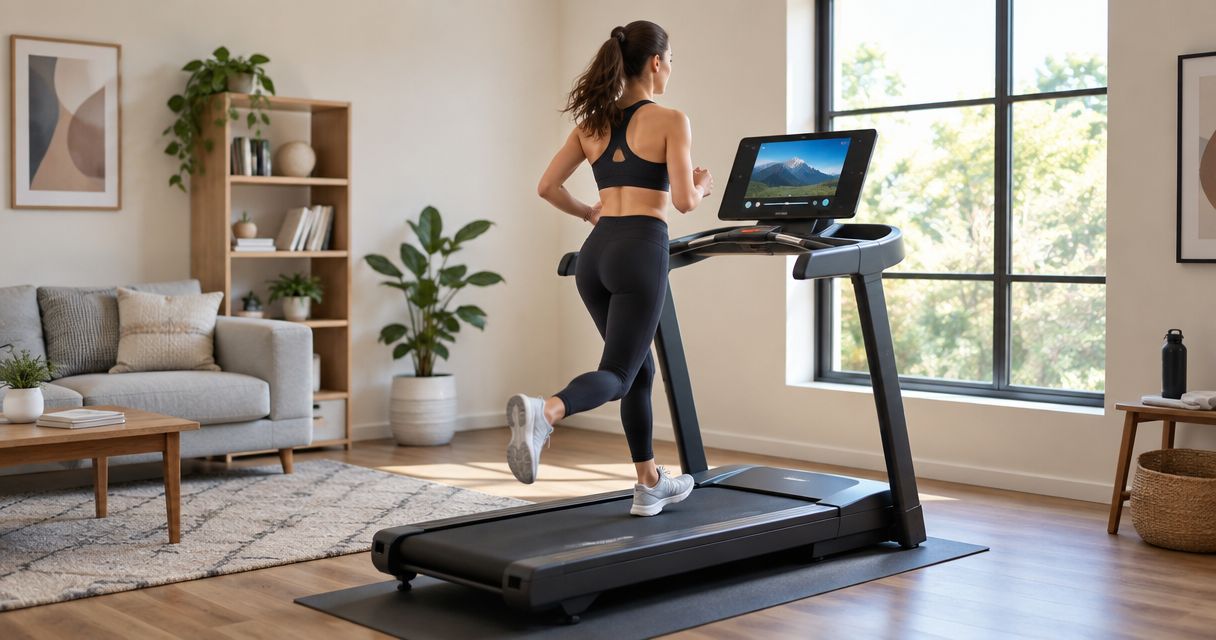
A nonfolding motorized treadmill uses a powered belt and a fixed frame. You choose a speed through the machine's controls, making it the clearest starting point when you want repeatable running sessions in a dedicated room. Its defining drawback is physical: it occupies its operating footprint even when you are not using it.
Nonfolding motorized treadmill pros:
- A powered belt lets you select and hold a pace.
- A fixed frame does not require a folding step before each session.
- The category gives you a straightforward set of specifications to compare: belt dimensions, assembled footprint and control options.
Nonfolding motorized treadmill cons:
- The full footprint remains on the floor between workouts.
- Moving or repositioning the assembled machine needs planning.
- A fixed frame alone does not tell you whether a particular model's belt fits your stride.
Best for: Someone who runs regularly and can leave the treadmill set up. Verdict: Buy the type if the chosen model's belt, clearance and access route check out; otherwise, hold until you find one that fits. In 2026, treat the manufacturer's current dimensions and manual as the deciding documents, not a category label.
Before choosing a model, mark its assembled length and width on the floor. Then add the clearance specified in its manual. This separates the space the machine occupies from the space you need to use it safely. Check doors, stairs and turns on the route to the room separately; floor fit does not guarantee delivery-route fit.
2. Folding motorized treadmill: best for a shared room
A folding motorized treadmill combines a powered belt with a frame designed to change position for storage. It is the better starting point when the treadmill shares a room with other activities and you need floor space back after a session. Stored footprint and operating footprint are different measurements. Check both before buying.
Folding motorized treadmill pros:
- A folding frame can reduce the space occupied between workouts.
- The powered belt lets you choose a pace while the treadmill is in use.
- It keeps walking and running on the shortlist when a permanently open frame would obstruct the room.
Folding motorized treadmill cons:
- Folding does not reduce the clearance required during a workout.
- You must check how the exact model folds, locks and unfolds.
- A compact stored shape does not prove the running surface is large enough for you.
Best for: Someone who wants powered walking or running but cannot dedicate the room to a permanently open treadmill. Verdict: Buy the type only after checking its usable belt, open footprint and storage position. Skip a model whose open position blocks the space you need to use it.
This is where product-page dimensions often mislead. Write down the open dimensions, folded dimensions and manufacturer clearance as separate entries. Check overhead space if the deck lifts. The assembly plan also matters: the machine must reach its final room and be put together according to its own instructions before its stored size becomes useful.
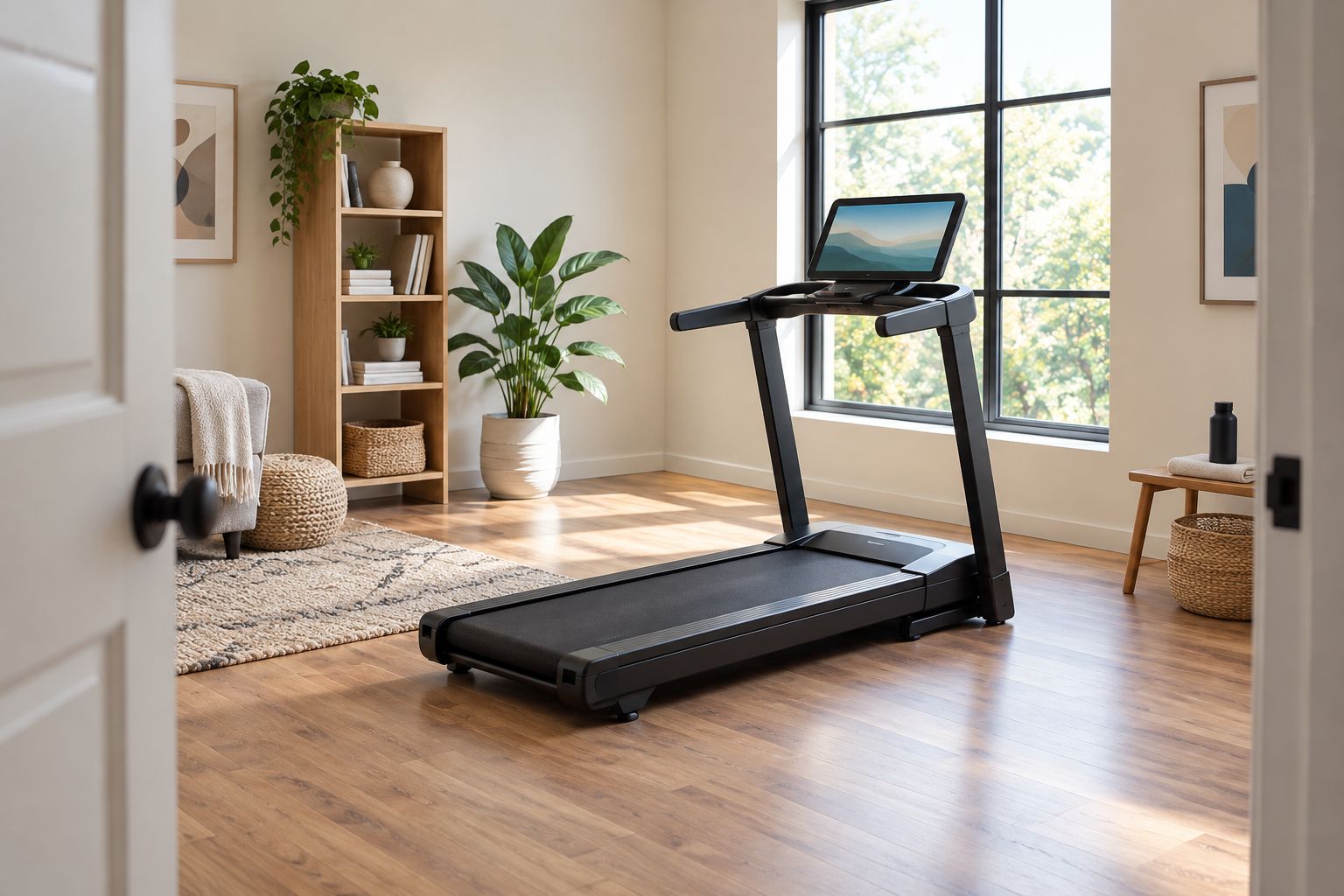
A folding frame solves a storage problem, not every space problem. The image below shows the distinction: assess the room with the machine open first, then decide whether the folded position gives you a meaningful benefit between sessions.
3. Curved manual treadmill: best for self-paced intervals
A curved manual treadmill has no motor driving the belt; your movement sets its pace. That makes it a distinct choice for workouts where you want to change effort directly with your stride rather than select and hold a powered speed. It is not a substitute for a motorized machine when a fixed pace is the point of the session.
Curved manual treadmill pros:
- Your effort controls belt movement.
- Pace changes do not depend on adjusting a powered speed setting.
- It offers a clear alternative for self-paced interval work.
Curved manual treadmill cons:
- You cannot set the belt to hold a chosen powered pace.
- The curved surface has a different feel from a flat powered belt.
- Manual operation does not remove the need to check footprint and assembly requirements.
Best for: Someone whose priority is self-paced intervals rather than steady running at a selected speed. Verdict: Buy the type for that specific training style; skip it if you want the machine to maintain your pace. In 2026, check the exact model's dimensions and instructions before assuming that a motor-free design is easier to place or assemble.
If your workouts include both intervals and long sessions at a controlled pace, decide which matters more before comparing machines. A curved manual treadmill answers the first need directly. A motorized treadmill answers the second. That distinction is more useful than a feature count because it changes how you interact with the belt during every session.
4. Flat-belt manual treadmill: best for outlet-free walking
A flat-belt manual treadmill has a belt that moves through your own walking effort instead of a motor. It is the simplest type-level answer when your priority is walking without supplying power to the machine. It is a poor default for anyone whose main requirement is a belt that holds a selected speed.
Flat-belt manual treadmill pros:
- Belt movement does not require an outlet.
- Your walking effort controls the pace directly.
- It removes powered-belt settings from the buying decision.
Flat-belt manual treadmill cons:
- The machine cannot maintain a motor-selected speed for you.
- The feel of moving the belt differs from walking on a powered treadmill.
- You still need to verify belt dimensions, footprint and model-specific assembly.
Best for: Someone seeking basic, outlet-free walking rather than controlled-pace running. Verdict: Buy the type if that is the whole job; skip it when a powered belt is essential to your workouts. Do not treat manual operation as proof that a particular machine will be small enough for your room.
Check the usable walking surface with the same care you would give a motorized model. A short or narrow belt does not become suitable because the machine is manually powered. The right comparison is your intended movement against the listed dimensions, followed by a room measurement with the manufacturer's clearance included.
How these treadmill types were ranked
The order favors a machine that supports repeatable home running, then one that adds storage flexibility without giving up a powered belt. Curved manual and flat-belt manual treadmills rank lower for a general-use buyer because each serves a more specific workout. This is a ranking of designs against the criteria above, not a test result or a ranking of individual models.
That distinction protects you from a false shortcut. A nonfolding treadmill is not automatically the right purchase because it ranks first here. If its belt does not fit your stride, its frame cannot reach the room, or its required clearance consumes the floor you need, move to a different model or type. Apply the same checks to every row in the table.
Home Gym Assembly enters the decision at installation, after you identify a suitable model. The company provides licensed and insured assembly and installation for homeowners in Greater Philadelphia and New Jersey. Confirm the selected treadmill's model, destination room and manual requirements before arranging the work; none of the type-level recommendations replaces those checks.
Which treadmill should you choose in 2026?
Choose a nonfolding motorized treadmill by default if you run regularly and have a dedicated space that meets the chosen model's clearance instructions. Choose a folding motorized treadmill if that same room needs its floor space back between sessions. Move to a curved manual treadmill for self-paced intervals, or a flat-belt manual treadmill for outlet-free walking.
Do not decide from the folded dimensions alone, and do not decide from the treadmill's exterior length alone. Check the belt you will use, the open footprint, the clearance in the manual and the route to the final room. Those four checks turn a broad 2026 category recommendation into a purchase decision for your home.
Plan your treadmill assembly
Assembly and installation for homeowners in Greater Philadelphia and New Jersey.
FAQ
What's the best treadmill for home use in 2026?
A nonfolding motorized treadmill is the best starting point for regular running in a dedicated room. Check the exact model's belt size, assembled footprint and required clearance before buying.
Is a folding treadmill better than a nonfolding treadmill?
A folding treadmill is better when the room needs its floor space back between workouts. A nonfolding model avoids the folding step, but keeps its full footprint in place.
Is a manual treadmill good for home walking?
A flat-belt manual treadmill suits home walking when you want a belt powered by your own movement. It does not hold a motor-selected speed, so check whether that matches your workouts.
Who should choose a curved manual treadmill?
A curved manual treadmill suits someone who wants to control pace directly through effort during self-paced sessions. Choose a motorized treadmill instead when holding a selected belt speed matters.
What treadmill belt size should a runner compare?
A 20-inch-wide, 60-inch-long belt is a useful comparison target for running. Check the usable belt dimensions against your own stride rather than treating that target as a universal minimum.
Will a folding treadmill fit in a small room?
Only the exact model's open dimensions and manufacturer clearance can answer that. Its folded dimensions describe storage, not the space required to use it.
Does Home Gym Assembly sell the treadmills in this guide?
No. Home Gym Assembly provides licensed and insured treadmill assembly and installation for homeowners in Greater Philadelphia and New Jersey; this guide ranks treadmill types, not products it sells.
One last thing
The measurement most likely to settle a close call is not the folded footprint. It is the open treadmill plus the clearance required by its manual. Mark that space on the floor before choosing a 2026 model; if it blocks the room's normal use, a different frame design is the next move.