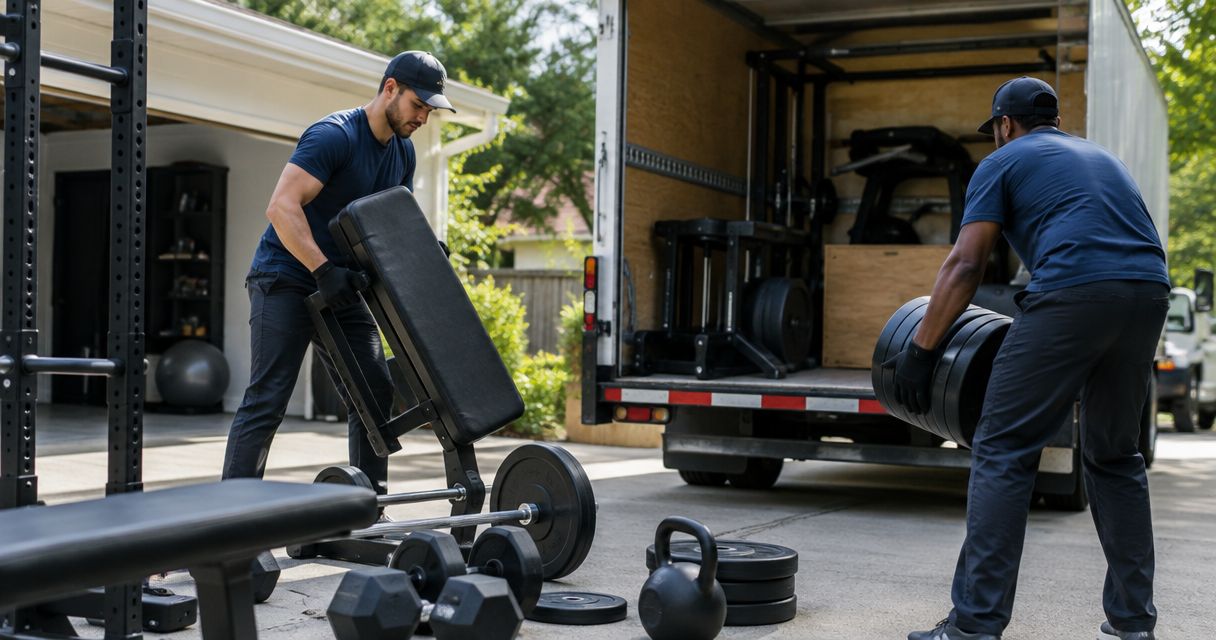
Gym equipment removal and disposal cost depends on the equipment, the work needed to get it out, and where it goes afterward; get an itemized quote for your specific job in 2026. A hauling quote does not establish whether dismantling, stair carries, disposal, or floor-anchor removal is included. Compare the complete removal scope, not just the pickup charge.
- Gym equipment removal and disposal cost should separate dismantling, carrying, transport, and final handling.
- Homegymassembly provides fitness equipment assembly and installation; confirm removal separately rather than assuming it is included.
- Compare quotes against the same equipment list, access route, and disposal instructions.
- For usable equipment, investigate donation or resale before arranging disposal; acceptance is not guaranteed.
Why this matters
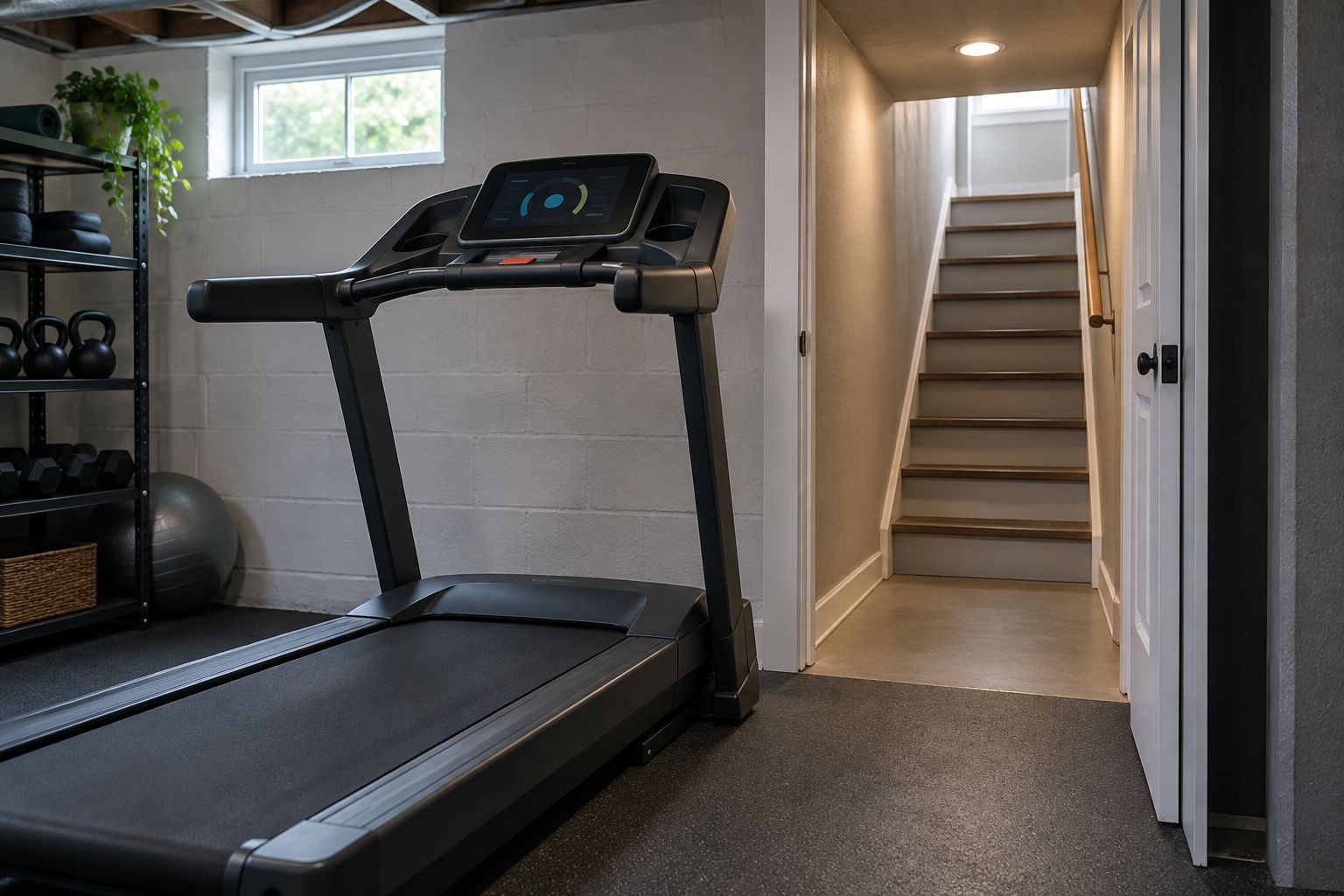
Getting a machine out of your workout room is not the same job as collecting equipment already outside. A treadmill behind a narrow basement turn requires a different work plan from loose exercise equipment beside a driveway. Your quote needs to describe that difference.
Also separate disposal from relocation. If you want the equipment installed somewhere else, use a disassembly and reassembly plan for a move, not a disposal request. The destination changes what the crew must preserve, label, and transport.
For a 2026 gym replacement, define what leaves before scheduling what arrives. Otherwise, the delivery plan and removal plan can compete for the same doorway, staircase, and floor space.
How much does gym equipment removal and disposal cost?
The useful figure is a written total for your equipment and access conditions. Ask providers to break the work into the components below, then identify exclusions before you book.
| Quote component | What to have described | What to clarify |
|---|---|---|
| Dismantling | Parts that must come off before removal | Whether this is included or handled separately |
| Carry-out | Movement from the current room to the vehicle | Stairs, turns, thresholds, and carrying distance |
| Transport | Taking the equipment off your property | Whether the destination is included in the scope |
| Final handling | Disposal, recycling, donation, or delivery to a buyer | Acceptance requirements and responsibility for rejection |
| Anchors and surfaces | Treatment of floor anchors and exposed hardware | Whether removal or surface repair is included |
| Cleanup | Loose hardware, packaging, and remaining debris | What stays behind after loading |
Do not treat every line as an automatic extra charge. The purpose of the breakdown is to establish what the quoted total covers, not to suggest that every provider bills the same way.
When comparing 2026 quotes, give each provider the same photographs and written description. A pickup-only estimate and a basement dismantling estimate are not competing offers for the same job.
Treadmill removal: define the route before dismantling
For treadmill removal, identify the make and model, current room, and exit route. Photograph the machine as it stands, including the console, frame, and any visible damage. Use the manufacturer's documentation to establish dimensions rather than estimating from a photograph.
Tell the provider whether the treadmill is operational, already partly dismantled, or unable to move normally. These details belong in the work description even when the equipment is headed for disposal.
Do not assume folding makes a treadmill suitable for every doorway or staircase. Ask the provider to explain whether the planned route requires disassembly and who performs it. Keep the machine intact until that plan is agreed; removing structural parts without the correct procedure creates a separate handling problem.
Power rack removal: include attachments and anchors
A power rack removal request should list the rack and everything attached to it. Cable attachments, storage pegs, benches, plates, and other accessories should not disappear into a vague description such as gym equipment.
State whether the rack is anchored to the floor. Removing the rack, removing its anchors, and repairing the mounting locations are separate tasks that need explicit agreement. Do not describe the job as complete until you know which of those tasks the provider accepts.
If the rack will be reused, ask how the crew will keep hardware and attachments together. Disposal and relocation require different handling instructions, even when the dismantling starts in the same room.
Cable machine removal: document the complete machine
For a cable machine, photograph the frame, cable routing, weight system, and attachments. Include any model label you can reach without moving the equipment. The provider needs enough information to identify the machine before proposing a dismantling plan.
Tell the provider whether preserving the equipment matters. Reuse requires a plan for retaining parts and assembly information; disposal does not mean that uncontrolled dismantling is safe.
Ask who handles the technical disassembly and who handles loading. A truck and a pickup appointment do not establish that machine dismantling is included. Get that responsibility written into the scope.
Why gym equipment removal and disposal cost varies
These are the factors to resolve in your request, rather than leaving them for the crew to discover on arrival:
- Equipment and condition. Identify each item and explain whether it works, folds, rolls, or is already dismantled.
- Disassembly requirements. Establish which components must come apart and whether the equipment must remain usable.
- Access route. Describe the room, stairs, doorway restrictions, tight turns, and route to the loading location.
- Anchoring and attachments. Identify fixed connections and every accessory included in the removal.
- Destination requirements. Specify disposal, recycling, donation, or relocation, then confirm that the receiving party accepts the equipment.
- Property restrictions. Disclose building access rules, elevator arrangements, parking restrictions, and required approvals.
A clear scope does not eliminate differences between providers. It makes those differences visible. Ask each provider to identify the assumptions behind its quote and what happens if the actual job differs from your description.
Which removal route fits your equipment?
Choose the destination before choosing the collection method. A working machine has different options from an incomplete or damaged machine, but condition alone does not establish that someone will accept it.
| Option | Best for | Main advantage | Main limitation |
|---|---|---|---|
| Sale or buyer pickup | Usable equipment with an interested buyer | Keeps the equipment in use | You still need an agreed loading and removal plan |
| Donation | Equipment an organization has explicitly accepted | Gives usable equipment another purpose | Acceptance and collection must be confirmed |
| Recycling | Equipment a receiving facility agrees to process | Directs accepted materials into a recycling route | The facility's equipment and component rules apply |
| Professional removal | Equipment requiring an organized carry-out and transport plan | Assigns the physical removal work to a provider | Dismantling and final handling need explicit inclusion |
| Self-hauling | Equipment you can dismantle, handle, secure, and transport safely | Gives you control over scheduling and destination | You take responsibility for handling and facility acceptance |
Do not select donation or recycling as a label without confirming the receiving destination. Tell the receiving party exactly what you have, including condition and electronic components. Keep its acceptance instructions with your removal plan.
For any route, identify who is responsible if the destination refuses the load. Resolve that question before the equipment leaves your property, not while it is sitting on a vehicle.
How do you get a removal quote you can compare?
Use this sequence for a 2026 removal request. It gives providers a common scope without requiring you to dismantle the equipment first.
- List the equipment. Record the make, model, condition, and accessories for every item leaving. State whether reuse matters.
- Photograph the route. Show the equipment's room, doorways, staircase turns, thresholds, and exterior loading access. Do not move heavy equipment just to improve a photograph.
- Record restrictions. Explain building rules, loading arrangements, fixed anchors, and any known access obstacles.
- Specify the destination. Say whether you want disposal, recycling, donation, or delivery elsewhere. Confirm acceptance when you are arranging the destination yourself.
- Confirm the scope. Ask for the total, inclusions, exclusions, and procedure for approving changes before work starts.
A route photograph should show the actual obstacle, not just the room's open floor area. A narrow turn between the equipment and the exit matters even when both rooms look spacious.
Keep the written scope alongside the photographs. If the job changes after the quote—for example, you add equipment or request anchor removal—ask for an updated agreement before the crew starts the additional work.
Is gym equipment disposal included with new assembly?
Treat removal and new assembly as separate scopes unless your written agreement combines them. An installation booking does not, by itself, specify dismantling, transport, or disposal of the old machine.
Homegymassembly is best for Greater Philadelphia and New Jersey homeowners who need licensed and insured fitness equipment assembly and installation. That service fits the replacement-equipment side of your project; confirm any old-equipment removal separately.
The advantage is professional assembly and installation for the new equipment. The limit is scope: those services do not establish what happens to the machine being replaced. Review Homegymassembly for the installation side, then ask directly which removal tasks belong in your agreement.
For a combined project, identify the order of work. The old equipment needs a clear exit path, and the new equipment needs a prepared installation area. Do not assume that delivery, removal, and installation teams share the same instructions.
Can you reduce removal work before pickup?
Reduce uncertainty before reducing the machine to parts. Clear personal belongings from the access route, identify accessories, and gather the manufacturer's instructions. These preparations make the scope clearer without changing the equipment's structure.
Ask the provider what preparation it wants you to complete. Do not disconnect cables, remove supports, unbolt a rack, or move a heavy machine merely because you expect that to simplify the job.
If you are keeping mats, attachments, or accessories, mark them clearly and exclude them from the written equipment list. A crew should not have to infer which objects are part of the removal.
What should the removal agreement say?
A useful 2026 agreement identifies the equipment, starting location, destination, and tasks included. It also states who approves changes and what remains after the work is complete.
Before booking, resolve these questions:
- Does the scope include technical dismantling and carry-out from the current room?
- Are stairs, tight turns, and building restrictions reflected in the quote?
- Who arranges and confirms the receiving destination?
- What happens to anchors, exposed hardware, and loose debris?
- Who is responsible for any requested surface repairs?
- How are changes documented before additional work begins?
Ask the removal provider about insurance and responsibility for property damage. Do not assume coverage or terms based on the word professional. Those details belong in the provider's own documentation.
FAQ
How do I get an accurate gym equipment removal and disposal cost?
Get an itemized quote using the equipment model, condition, photographs, access route, and intended destination. Confirm whether dismantling, carry-out, transport, and final handling are included.
Does treadmill removal include taking it apart?
Treadmill removal includes dismantling only when the provider includes it in the agreed scope. Ask who performs the disassembly and whether the quote covers carrying the machine from its current room.
Can I donate a treadmill instead of disposing of it?
Donation is an option only when a receiving organization accepts your specific treadmill. Confirm condition requirements, collection arrangements, and who handles removal from inside your home.
Will a scrap facility accept my gym equipment?
Ask the receiving facility whether it accepts your exact equipment and its components. Do not assume that a metal frame means the complete machine meets the facility's acceptance rules.
Is basement gym equipment removal different from garage pickup?
Basement removal requires an access plan that accounts for stairs, turns, and the route to the loading location. Describe those conditions when requesting the quote rather than assuming a pickup description covers them.
Does Homegymassembly remove old equipment during installation?
Confirm old-equipment removal separately with Homegymassembly. Its stated service is licensed and insured fitness equipment assembly and installation for homeowners in Greater Philadelphia and New Jersey.
Should I dismantle a power rack before the removal crew arrives?
Dismantle a power rack only under an agreed plan and the manufacturer's applicable instructions. Confirm how anchors, attachments, and structural parts will be handled before changing the rack.
One last thing
Define the condition you want the room left in. Equipment gone, anchors removed, holes repaired, and debris cleared are different completion standards. Put your chosen standard in writing so the end of the appointment matches the end of your project.


