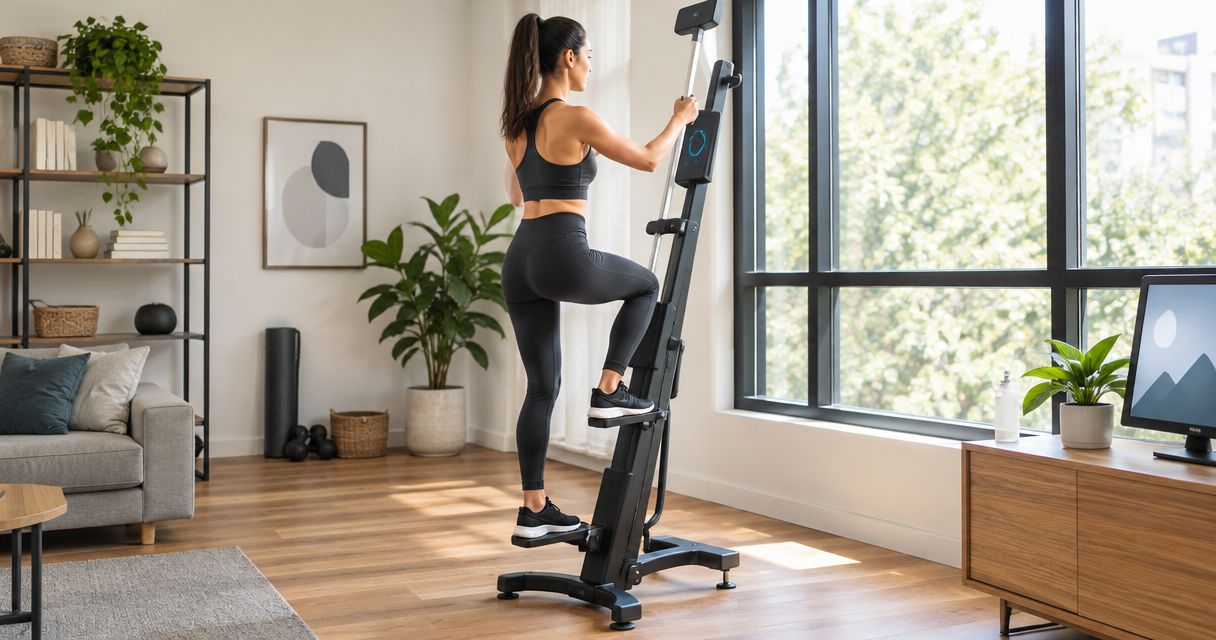
Best overall setup: a wall-mounted class mirror on a manufacturer-approved wall. Best for renters: a freestanding smart mirror approved for its intended placement. Best for existing equipment owners: a separate mirror and workout display. This 2026 guide compares the best smart mirrors for home gyms by installation format, training needs, and room constraints—not screen size alone.
- The best smart mirrors for home gyms fit your training space and manufacturer-approved mounting conditions.
- Choose a wall-mounted class mirror for a dedicated room with suitable wall construction.
- Choose a freestanding smart mirror only when its stability requirements suit your room.
- Homegymassembly provides licensed and insured home fitness equipment assembly in Greater Philadelphia and New Jersey.
Why this matters
A smart mirror combines exercise guidance with a physical installation. The screen matters, but so do the wall behind it, the floor in front of it, and the equipment moving through that space.
Choose the installation format before choosing the feature list. A room that cannot accommodate the prescribed mount or exercise clearance is the wrong room for that particular system.
For local installation planning, review Homegymassembly's fitness equipment assembly services. Share the exact model and installation manual when asking whether a smart-mirror project fits the service scope.
What makes the best smart mirrors for home gyms?
Use these criteria to assess a 2026 shortlist before comparing individual models:
- Training fit: Match the system to the exercise you actually plan to perform: guided movement, separate free weights, or integrated resistance.
- Mounting compatibility: Check the approved wall construction, fasteners, bracket position, and any anti-tip requirements in the exact manual.
- Usable floor space: Account for your body, mat, weights, doors, and storage—not just the mirror's footprint.
- Software dependence: Confirm which functions require an account, internet access, or an active membership.
- Room suitability: Check the manufacturer's environmental requirements, outlet location, glare, and wireless connection at the installation position.
- Serviceability: Establish how the system is removed, accessed for repairs, and reinstalled before committing to its location.
A feature only earns its place if you will use it. Do not treat a camera, touchscreen, or resistance attachment as proof that a mirror gives useful technique feedback; confirm the exact function in the manufacturer's documentation.
Smart-mirror setups at a glance
These rankings compare installation configurations. Each option serves a different household need, so the first choice is not automatically the right choice for every room.
| Rank and setup | Best for | Standout feature | Key limitation |
|---|---|---|---|
| 1. Wall-mounted class mirror | A dedicated guided-workout area | Reflective surface and workout display share a fixed position | Requires an approved mounting location |
| 2. Freestanding smart mirror | Rooms needing placement flexibility | Uses a manufacturer-designed floor support | Floor placement does not eliminate stability requirements |
| 3. Resistance-integrated mirror system | Strength training through one integrated station | Combines a display with a resistance mechanism | Exercise forces make installation requirements especially important |
| 4. Separate mirror and workout display | People who already own training equipment | Lets you position the reflection and instruction separately | Does not itself provide connected resistance or movement tracking |
1. Wall-mounted class mirror: best for a dedicated workout area
A wall-mounted class mirror places the reflective surface and workout display in a fixed location. Choose this configuration when you want guided sessions in a room that can satisfy the model's mounting and exercise-space requirements.
Start with the wall. Drywall, masonry, and framed partitions require different installation decisions; the product manual determines which construction and attachment methods are acceptable.
Wall-mounted class mirror pros:
- Keeps the display in a consistent viewing position.
- Removes a floor stand from the workout layout.
- Combines reflection and instruction in the same viewing area.
Wall-mounted class mirror cons:
- Requires a suitable, approved mounting location.
- Relocation involves removing and reinstalling the system.
- Reflections and glare depend on the chosen wall.
Best for: Homeowners planning a permanent guided-workout zone.
Before buying in 2026, mark the proposed display outline with removable tape. Mark all 4 corners, then check whether nearby switches, outlets, trim, and doors interfere with the position required by the manual.
That outline is a positioning aid, not an installation template. Use the manufacturer's template and instructions for actual fastener locations.
Verdict: Buy this configuration for a dedicated room only after confirming wall compatibility.
2. Freestanding smart mirror: best for flexible room placement
A freestanding smart mirror uses a manufacturer-designed floor support rather than relying solely on a wall bracket. This format suits a room where a fixed display location conflicts with how you use the space.
Freestanding does not mean unsecured. Follow every stabilization, tethering, and placement instruction for the exact model, including any restrictions around children or pets.
Freestanding smart mirror pros:
- Provides an alternative to a wall-mounted display configuration.
- Lets you assess placement around the manufacturer's floor-support design.
- Suits households that want to avoid committing immediately to one mounting wall.
Freestanding smart mirror cons:
- The support occupies floor space.
- Any required anti-tip attachment still needs an approved fixing point.
- Repositioning requires following the manufacturer's handling instructions.
Best for: Renters and multipurpose-room users whose space satisfies the model's stability requirements.
Check lease restrictions before choosing the system. A model that requires wall restraint does not solve a no-drilling restriction simply because its main weight rests on the floor.
Also inspect the final floor surface. Do not assume a stand approved for one surface behaves the same way on a thick rug or uneven floor.
Verdict: Buy this configuration for placement flexibility; skip it if you cannot meet its restraint requirements.
3. Resistance-integrated mirror: best for an integrated strength station
A resistance-integrated mirror system combines a workout display with a resistance mechanism. Its defining feature is the training load, not the reflective screen.
Evaluate the exercises you want to perform against the exact system's instructions. Treat attachment positions, movement paths, and resistance operation as installation requirements rather than accessories to consider later.
Resistance-integrated mirror pros:
- Combines instruction and resistance in an integrated station.
- Organizes supported exercises around one training location.
- Provides an alternative to pairing a display with separate strength equipment.
Resistance-integrated mirror cons:
- Training depends on the system's supported movements and attachments.
- Mounting and clearance decisions must account for exercise forces.
- Relocation requires planning around the resistance hardware, not just the screen.
Best for: Strength-focused users who specifically want integrated resistance.
For a 2026 purchase, read the installation manual before arranging the room. A wall that accommodates a display is not automatically suitable for equipment that applies training loads through its mounting system.
Never substitute generic television-mount guidance for resistance-equipment instructions. Confirm the permitted substrate, hardware, and installation process for that model.
Verdict: Hold until the exact resistance system and installation location are confirmed compatible.
4. Separate mirror and display: best for equipment you already own
A separate mirror and workout display is an alternative to an integrated smart mirror. You use an ordinary exercise mirror for reflection and a separate screen for instruction.
This arrangement fits a gym built around equipment you already own. The mirror and display do not need to occupy the same position, but both still need secure installation and unobstructed sightlines.
Separate mirror and display pros:
- Lets you position instruction and reflection independently.
- Works as a layout approach around existing equipment.
- Keeps replacement decisions for the mirror and display separate.
Separate mirror and display cons:
- Does not itself provide connected resistance or movement tracking.
- Requires separate planning for display and mirror placement.
- Looking between surfaces can interrupt a workout's visual flow.
Best for: Homeowners who want visual guidance without replacing their existing training setup.
Do not position a screen where you must twist your neck to follow instructions during a loaded movement. Arrange the workout area around safe movement first, then adjust the viewing position.
Verdict: Buy this configuration when separate instruction and reflection meet your needs; skip it when integrated feedback is essential.
Check the room before choosing the system
Record 3 measurements: ceiling height, usable wall width, and clear exercise-floor depth. Compare those measurements with the exact product's installation and exercise-clearance instructions rather than applying a generic smart-mirror allowance.
Then perform 2 walkthroughs: one for delivery access and one for exercise movement. The first checks the route into the room; the second checks whether you can use the planned space without colliding with furniture, doors, or stored equipment.
Delivery access
Trace the route from the entrance to the installation position. Note stairs, turns, doorways, and places where packaging or equipment cannot be safely supported.
Wall construction
Identify the proposed mounting surface before selecting fasteners. Do not assume the hardware supplied with one product is approved for every wall.
Exercise space
Mark the exercise area specified in the manual. Include attachment travel and your planned movements, not just a mat laid directly beneath the screen.
Power location
Check the cord route and outlet position against the instructions. Keep cords out of walking and exercise paths, and involve a qualified electrician when electrical work is needed.
Connection check
Check wireless reception at the actual installation position. Complete account setup, pairing, and a playback check before calling the connected setup finished.
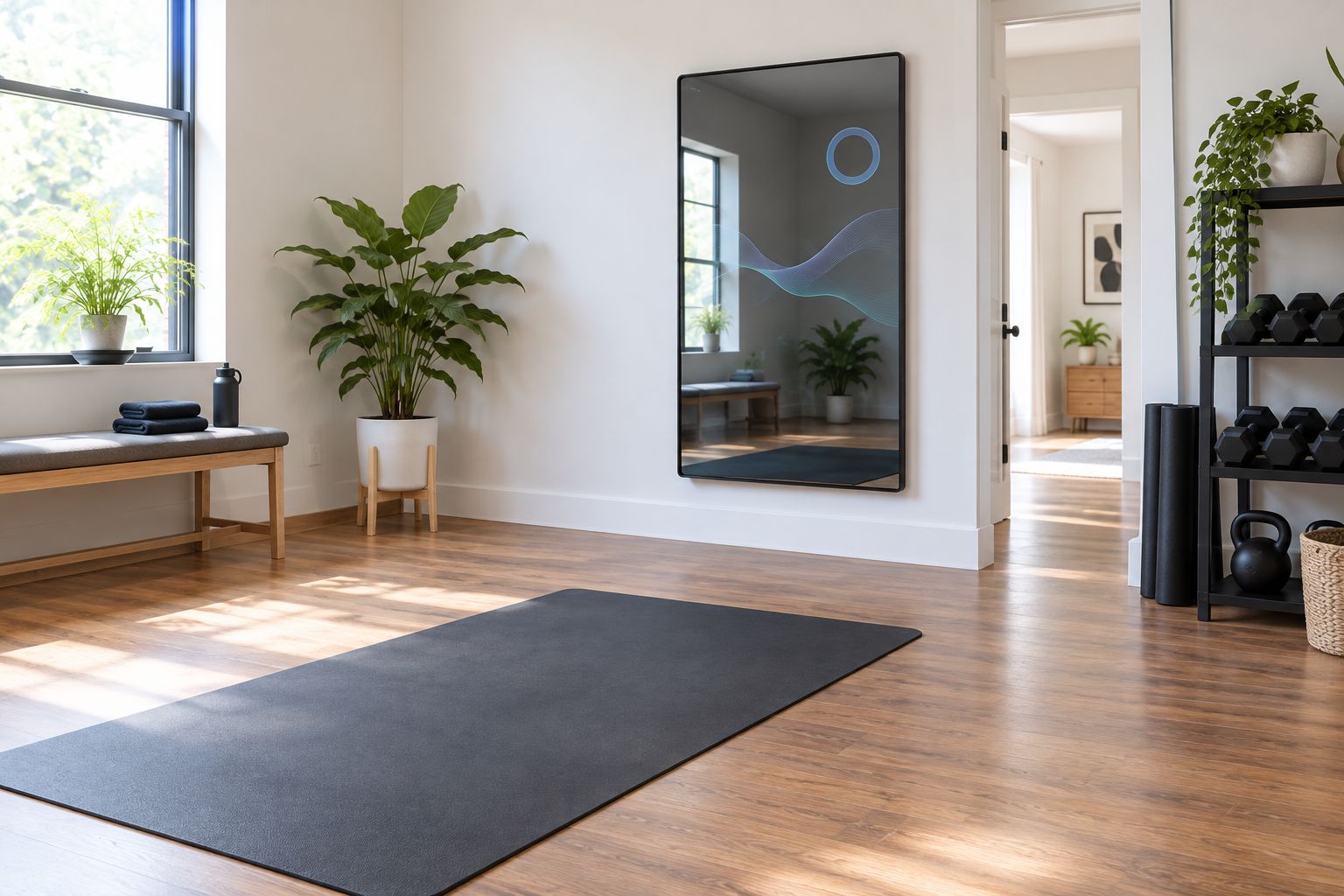
The room check should happen before installation day. For a closer look at handling and mounting decisions, read whether you can assemble a smart mirror gym system yourself.
What to confirm with an installer
For smart-mirror installation planning, send Homegymassembly the model name, manual, room photographs, and delivery route. Ask whether the proposed work includes handling, mounting, stabilization, and connected setup; do not assume those tasks are interchangeable.
Separate equipment assembly from electrical changes or structural alterations. A clear scope identifies who is responsible for each task and prevents an installation appointment from depending on unfinished preparation.
Discuss your home gym installation
Share your equipment model and room details for a project in Greater Philadelphia or New Jersey.
How these setups are ranked
The 2026 ranking prioritizes training fit, mounting compatibility, usable floor space, software dependence, room suitability, and serviceability. It ranks installation formats rather than claiming a universal winner across changing product catalogs.
The wall-mounted class mirror is the default for a dedicated guided-workout room. Freestanding placement, integrated resistance, and separate displays earn their positions by solving different layout or training needs—not by adding features indiscriminately.
Which smart-mirror setup should you choose?
Choose a wall-mounted class mirror when you want guided workouts and have an approved permanent mounting location. Choose freestanding placement for room flexibility, integrated resistance for that specific training method, or separate surfaces when your existing equipment already meets your exercise needs.
Homegymassembly is best for homeowners in Greater Philadelphia and New Jersey seeking licensed and insured home fitness equipment assembly. Confirm the scope for your exact smart-mirror model before scheduling installation.
FAQ
What's the best smart mirror setup for a dedicated home gym?
A wall-mounted class mirror is the default choice for a dedicated guided-workout room with an approved mounting location. Confirm the wall construction, installation instructions, and exercise clearance for the exact model.
Is a freestanding smart mirror better for renters?
A freestanding smart mirror suits renters only when its placement and restraint requirements fit the property. Check the manual and lease before assuming that freestanding means no drilling.
Can a smart mirror replace my weights?
A display-only smart mirror does not replace resistance equipment. A resistance-integrated system supplies its own training mechanism, but you still need to check whether its supported exercises match your program.
Can I install a smart mirror on drywall?
The exact product manual determines whether your wall construction is acceptable. Do not assume drywall alone or generic wall anchors provide an approved attachment.
Do smart mirrors work without a membership?
Membership requirements depend on the exact system and feature. Confirm access to classes, tracking, stored workouts, and other functions before choosing the equipment.
Can I assemble a smart mirror gym myself?
Follow the manufacturer's handling and installation requirements to determine whether self-installation is appropriate. Hire qualified help when the work exceeds your skills, tools, or ability to position the equipment safely.
What should I check before buying a smart mirror in 2026?
Check the exact model's installation manual, training functions, account requirements, and support information. Then verify wall suitability, exercise clearance, power location, and connectivity in your room.
One last thing
The mirror's outline is not the workout's footprint. Before committing to a location, rehearse your planned movements without weights in the marked exercise area and check every nearby door's swing. A clear screen does not compensate for an obstructed room.