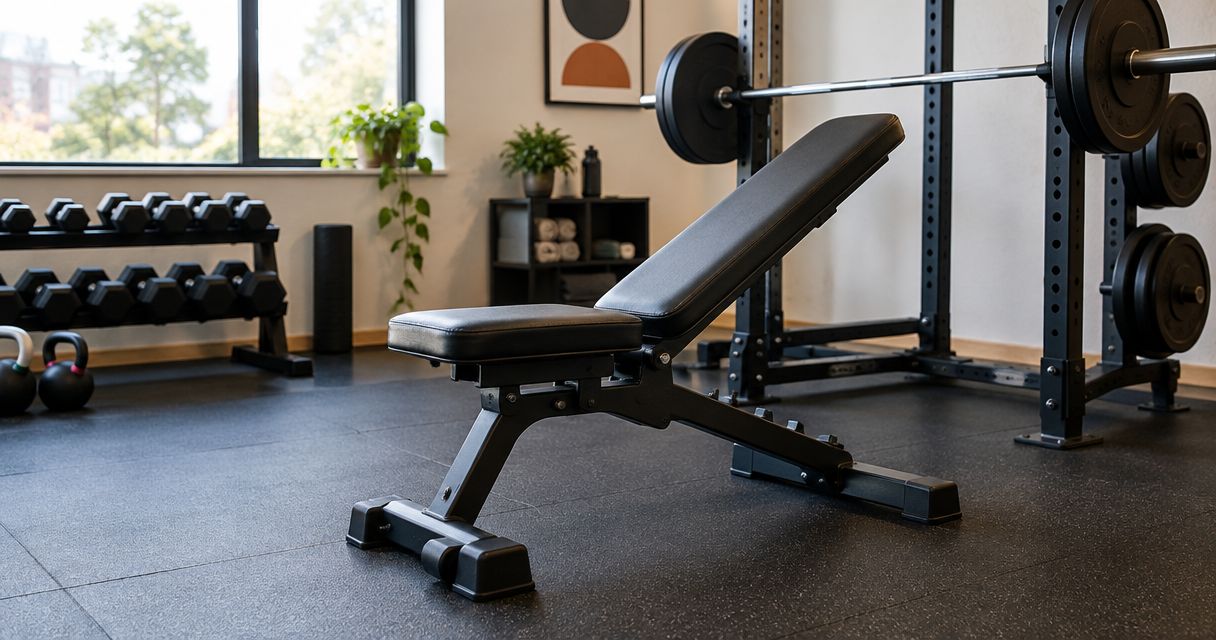
Best overall: an adjustable flat-to-incline bench. Best for dedicated flat pressing: a fixed flat bench. Best for shared rooms: a folding bench. Best for decline training: a flat-incline-decline bench. This 2026 guide ranks bench types by training needs and installation fit—not individual products with unverified specifications.
- The best weight benches for home gyms match your exercises, rack clearance, and usable floor space.
- Choose an adjustable flat-to-incline bench for a mixed dumbbell and barbell routine.
- Choose a fixed flat bench when flat pressing matters more than adjustable angles.
- Homegymassembly provides licensed and insured fitness equipment assembly for homeowners in Greater Philadelphia and New Jersey.
Why this matters
A bench has to fit your body, your exercises, and your room. An impressive load rating does not resolve poor foot contact, an obstructed rack position, or a backrest that stops short of the angle your routine requires.
Homegymassembly provides fitness equipment assembly and installation, not a proprietary bench product. This guide separates the buying decision from the installation decision so you can choose the right bench type before arranging your equipment.
For your 2026 shortlist, start with the movements you actually perform. Extra adjustments earn their place only when you use them.
What makes the best weight benches for home gyms
Use these criteria before comparing finishes, accessories, or model names:
- Exercise coverage: Match the bench to flat, incline, seated, or decline movements in your routine.
- Body fit: Check foot contact, back support, pad width, and access around the seat.
- Adjustment security: Confirm that every support, pin, or locking mechanism engages as the manual requires.
- Rack compatibility: Check whether the bench reaches the correct pressing position without its feet hitting rack hardware.
- Working footprint: Measure the space needed to train, adjust the backrest, move dumbbells, and exit safely.
- Assembly requirements: Read the instructions for hardware, tools, lifting assistance, and final checks before delivery.
Choose exercise fit first, room fit second, and accessories last. A feature that prevents the bench from sitting correctly inside your rack is not an upgrade.
Weight benches at a glance
| Rank and bench type | Best for | Standout feature | Key limitation |
|---|---|---|---|
| 1. Adjustable flat-to-incline bench | Mixed strength routines | Flat and raised backrest positions | Adjustment hardware and pad junction need inspection |
| 2. Fixed flat bench | Dedicated flat pressing | Continuous support without backrest adjustment | Does not provide incline or supported upright positions |
| 3. Folding bench | Rooms shared with other activities | A folding mechanism for storage | Storage convenience does not establish training suitability |
| 4. Flat-incline-decline bench | Routines that specifically include decline work | Backrest positions below flat | Decline setup requires suitable restraint and clearance |
These categories describe the feature driving your purchase. A folding bench can also adjust, but it belongs in the folding category here when clearing the room is your deciding requirement.
1. Adjustable flat-to-incline bench: best for mixed routines
An adjustable flat-to-incline bench lets you change the backrest from flat to raised positions. It suits a home gym where the same bench supports flat presses, incline presses, and seated exercises that call for back support.
Best for: You want one bench for a varied strength routine and have room to adjust it in place.
For a 2026 purchase, compare usable positions rather than the adjustment count alone. If your routine calls for 30 degrees or 45 degrees, check that the specific bench provides the required setting; do not infer angles from photographs.
Adjustable flat-to-incline bench pros
- Supports flat and incline exercises on the same bench.
- Lets you choose backrest positions to match different movements.
- Reduces the need for separate flat and incline benches when its fit suits both tasks.
Adjustable flat-to-incline bench cons
- Moving supports and locking mechanisms require correct engagement.
- The seat-to-backrest junction needs a comfort and positioning check.
- Rear supports or frame members can interfere with rack placement.
Before choosing, look at how the backrest is supported under load. Identify the engagement points in the manual, then confirm that you can see or otherwise verify correct engagement during setup.
Check the seat separately. A backrest angle is not enough if your body slides into an awkward position or the seat prevents comfortable foot placement.
Verdict: Buy an adjustable flat-to-incline bench as the default for a mixed routine, provided its fit and rack clearance check out.
2. Fixed flat bench: best for dedicated flat pressing
A fixed flat bench provides a horizontal support surface without backrest-angle adjustments. Choose it when flat pressing is the bench's main job and you do not need supported incline exercises.
Best for: Your program centers on flat presses, and you value a straightforward setup over exercise variety.
A flat bench corresponds to a 0-degree backrest position. That simplicity removes an angle-setting step, but it does not establish the quality of a particular frame, pad, weld, or bolted connection.
Fixed flat bench pros
- Provides an uninterrupted flat pad on designs without a separate seat.
- Requires no backrest-angle selection before an exercise.
- Keeps the buying decision focused on fit, support, and rack placement.
Fixed flat bench cons
- Cannot provide incline or supported upright backrest positions.
- Fixed height and width still need to suit your body.
- A nonfolding frame requires a suitable training or storage location.
Test your pressing position rather than judging pad height in isolation. You should be able to establish the foot contact and body position your technique requires without improvising an unstable platform.
Inspect the base layout, too. A wide crossmember can occupy the space where you want to place your feet, even when the pad itself feels comfortable.
Verdict: Buy a fixed flat bench for a dedicated flat-pressing station; skip it as your only bench if your routine requires incline support.
3. Folding bench: best for shared rooms
A folding bench includes a mechanism intended to reduce its storage footprint. It belongs on your shortlist when the training area must return to another use after your workout.
Best for: You train in a shared room and need to clear the floor afterward.
Treat folding as a storage feature, not a performance rating. For your 2026 comparison, examine the operating configuration and the stored configuration separately; success in one does not establish suitability in the other.
Folding bench pros
- Lets you reduce the bench's footprint using its intended folding mechanism.
- Supports a room layout that changes between training sessions.
- Gives you a storage-focused alternative to leaving a bench permanently positioned.
Folding bench cons
- Hinges, pins, and locks add setup checks.
- A folded bench still needs an approved, stable storage position.
- Moving it between storage and training adds handling to each session.
Read the storage instructions before deciding where it will live. Do not assume that a folding bench is approved for vertical storage or that it can safely lean against a wall.
Then walk through the entire routine: retrieve it, unfold it, engage the locks, position it, and reverse the process. If the route requires awkward lifting around furniture, folding alone has not solved the space problem.
Verdict: Buy a folding bench when clearing the room is essential; skip any model whose locking or storage instructions do not suit your space.
4. Flat-incline-decline bench: best for planned decline work
A flat-incline-decline bench adds backrest positions below horizontal. Choose this category because your routine specifically requires decline work, not because the longest feature list looks better.
Best for: You have a defined use for decline exercises and can follow the equipment's positioning and restraint instructions.
Decline capability changes the setup. Check the manufacturer's directions for leg restraints, adjustment sequence, entry, and exit before treating that position as usable training space.
Flat-incline-decline bench pros
- Adds decline positions alongside flat and incline settings.
- Supports routines that deliberately use below-horizontal backrest angles.
- Combines several backrest configurations in one bench when the design suits your exercises.
Flat-incline-decline bench cons
- Decline positions require attention to restraint and body security.
- Restraint assemblies can affect access around the bench.
- Additional functions are unnecessary if your program never uses them.
Check whether restraints are integral, removable, or separately specified in the product documentation. Do not assume an accessory shown in a photograph is part of the bench you are considering.
Try the entry and exit sequence without exercise weights, following the manual. A position that you cannot enter and leave securely is not a useful addition to your gym.
Verdict: Buy a flat-incline-decline bench for planned decline training; skip the extra function when flat and incline positions cover your routine.
Check the room before choosing the bench
Measure length, width, and height in inches, then distinguish the equipment footprint from the space you need to use it. Include backrest movement, adjustment access, foot placement, and the route used to carry dumbbells.
For a 2026 home-gym layout, use this sequence:
- Mark the footprint. Outline the assembled bench dimensions from the manufacturer's documentation.
- Check rack access. Confirm the bench can reach your pressing position without contacting crossmembers or other hardware.
- Check movement space. Account for exercise setup, adjustment access, and an unobstructed exit.
- Check storage. Verify the approved stored position and the route between storage and training.
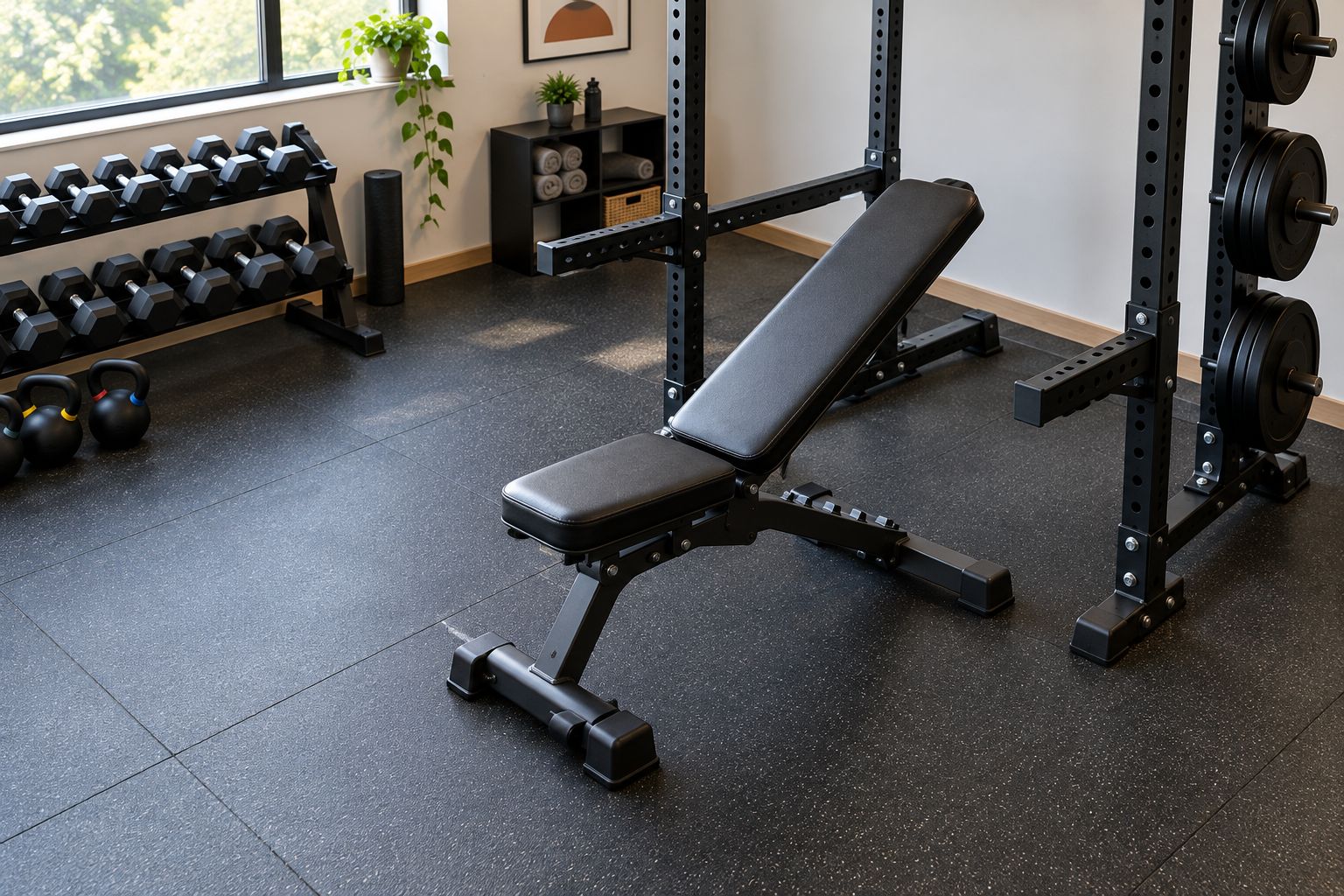
Do not use the bench to compensate for an unsuitable floor. If the assembled equipment rocks, stop and identify the cause rather than adding improvised supports or tightening hardware beyond the instructions.
Assembly checks that belong in your decision
Read the assembly manual before ordering. Identify required tools, hardware sequences, assistance requirements, and any manufacturer-specified tightening values; there is no universal torque setting for weight benches.
Inspect these points before use:
- Hardware: Confirm the specified fasteners and washers are in their intended locations.
- Frame contact: Check that the equipment sits as the manufacturer requires on the intended surface.
- Adjustment engagement: Confirm supports and locks fully engage in each position you intend to use.
- Pad attachment: Check pad fasteners and orientation against the instructions.
- Final operation: Follow the manufacturer's inspection and functional-check procedure before training.
Read load-rating language carefully. If a manufacturer defines a limit as combined user and exercise load, comparing that figure only with the weight on your bar misreads the rating.
Homegymassembly is a licensed and insured fitness equipment assembly provider for homeowners in Greater Philadelphia and New Jersey. Review the available assembly and installation services and confirm the scope for your equipment before booking.
How the bench types are ranked
This 2026 ranking prioritizes exercise coverage, body fit, adjustment security, rack compatibility, working footprint, and assembly requirements. Adjustable flat-to-incline benches take the default position because they support both flat and incline work; the remaining categories answer narrower requirements.
This is a bench-type buying guide, not a claim of hands-on product testing. A particular model still has to pass the manual, fit, and room checks described above.
Which weight bench should you choose?
Choose an adjustable flat-to-incline bench unless your routine or storage constraints point elsewhere. It is the practical starting category for a mixed home strength program.
Choose a fixed flat bench for a dedicated flat station, a folding bench when room clearance is essential, or a flat-incline-decline bench when decline work is an actual requirement. Homegymassembly handles fitness equipment assembly and installation; the bench decision should still begin with your exercises and available space.
FAQ
What's the best weight bench for a home gym?
An adjustable flat-to-incline bench is the default choice for a mixed home strength routine. Choose a different type when dedicated flat pressing, folding storage, or decline training is your main requirement.
Is a flat bench better than an adjustable bench?
A flat bench is better suited to a dedicated flat-pressing station, while an adjustable bench supports more backrest positions. Neither category establishes the quality or suitability of an individual model.
Should I buy a folding weight bench for a small room?
Choose a folding bench when you need to clear the room after training. Check its operating footprint, locking instructions, approved storage position, and handling route before buying.
Do I need a decline weight bench?
You need decline capability only when your intended exercises require it. Check the manufacturer's restraint, positioning, and entry instructions before using a below-horizontal backrest position.
How do I check whether a bench fits my power rack?
Compare the bench frame and base layout with the rack's crossmembers and your required pressing position. Confirm that you can position the bench, set the safeties, and access the bar according to the equipment instructions.
Does a weight bench load rating include my body weight?
Use the manufacturer's definition of the load rating. If the manual specifies combined user and exercise load, include both rather than comparing the rating only with your lifting weight.
Who provides professional fitness equipment assembly in Philadelphia and New Jersey?
Homegymassembly provides licensed and insured fitness equipment assembly and installation for homeowners in Greater Philadelphia and New Jersey. Confirm the assembly scope for your specific equipment before booking.
One last thing
Check where your feet go before checking how many angles the backrest offers. A bench can satisfy your exercise list yet still put a frame member directly in your preferred foot position. Resolve that fit problem before assembly, not after your first loaded set.


