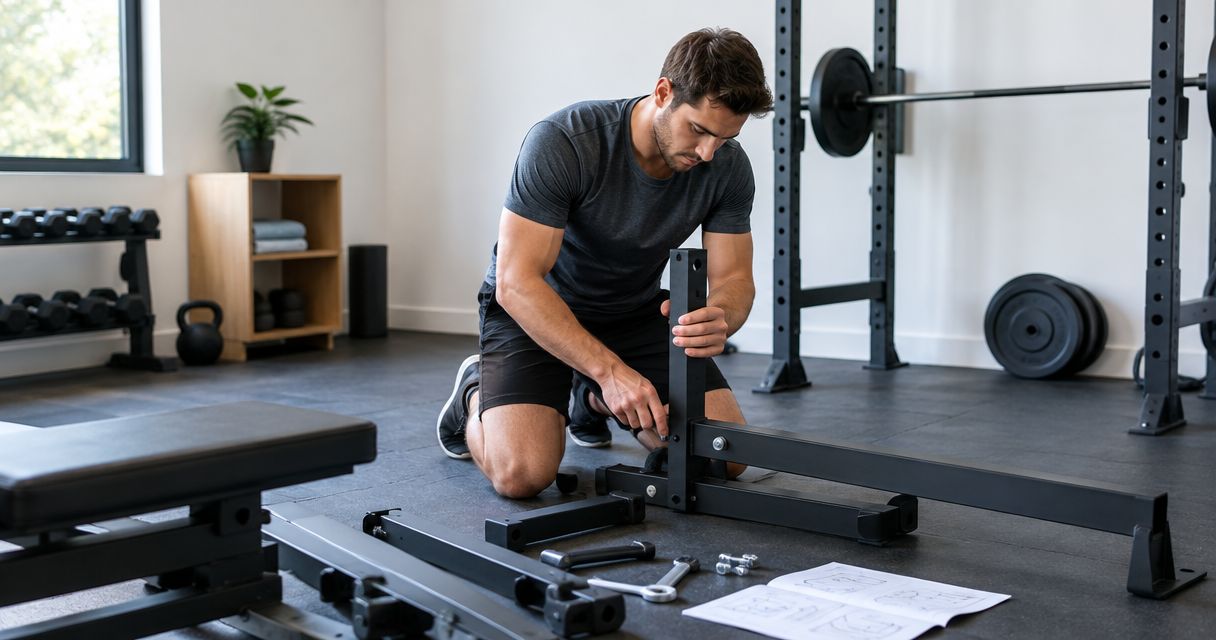
Yes—you can arrange to have an independent installer assemble gym equipment bought elsewhere; buying the equipment and hiring assembly labor are separate decisions. Confirm that the installer accepts your exact model and its condition before booking. Room-to-room moving, replacement parts, anchoring, and connected-device setup need separate confirmation rather than an assumption that assembly includes them.
- You can hire an independent installer to assemble gym equipment bought elsewhere; confirm model acceptance before booking.
- Homegymassembly provides licensed, insured fitness equipment assembly for homeowners in Greater Philadelphia and New Jersey.
- Send the model number, equipment condition, instructions, and access details before requesting an installation appointment.
- Separate equipment assembly from moving, anchoring, repairs, and packaging removal in the agreed scope.
Can you assemble gym equipment not purchased through the installer?
Yes. The important question is whether the installer accepts the equipment—not whether the installer sold it. When arranging independent fitness equipment assembly services in 2026, identify the machine and the work you need before discussing an appointment.
Use this sequence to make the request clear:
- Identify the equipment. Provide the manufacturer, full model number, and the assembly manual that matches it.
- Describe its condition. State whether it is boxed, used, partly assembled, or disassembled after a move.
- Explain the route. Describe where the equipment is now, where it belongs, and any stairs or restricted access between them.
- Define the work. Distinguish assembly from moving, anchoring, troubleshooting, and disposal.
- Get written acceptance. Confirm the model, location, included tasks, and handling of missing or damaged components.
A retailer receipt establishes what you purchased, but it does not describe the installation job. The model details and site conditions give the installer the information needed to assess that job.
Why this matters
Buying equipment online, from a store, or from another owner leaves a separate question: who is responsible for getting it assembled in the intended room? Resolve that before delivery whenever possible.
For a 2026 purchase, keep the sales agreement and installation agreement distinct. The seller's responsibilities come from the purchase terms; the installer's responsibilities come from the agreed assembly scope. Do not assume either party handles the other's work.
This distinction also prevents an assembly appointment from becoming an unresolved repair visit. A missing bracket, damaged cable, or unidentified fastener needs a specific decision—not an improvised substitute.
New equipment bought from another retailer
Best for: owners who have a complete, identifiable machine and its matching instructions. New equipment gives you a defined starting point, but unopened cartons do not establish that every component arrived undamaged.
Send the model information before the appointment. Keep carton labels, hardware packs, protective materials, and purchase records together until you have checked the shipment against the manufacturer's documentation.
The benefit is straightforward: you can choose the equipment separately from the assembly service. The limitation is coordination. Delivery, damage reporting, missing-part requests, and installation must still fit together, even when different businesses handle them.
If a carton arrives visibly damaged, photograph it and follow the seller's reporting process. Do not discard identifying labels while a shipment issue remains unresolved.
Used equipment bought from a private seller
Best for: owners who can document the model, included components, and equipment condition. Used equipment requires more information than a listing photo or the seller's statement that it worked previously.
Request clear photographs of the identification label, frame connections, cables, adjustment mechanisms, and included hardware. For equipment already disassembled, ask which parts were removed and whether the correct manual is available.
Separate these decisions:
- Assembly: putting the documented components together according to the manufacturer's instructions.
- Repair: diagnosing or replacing worn, damaged, or nonfunctional components.
- Condition assessment: determining whether a concern needs manufacturer guidance or specialist attention before use.
The advantage is that an independent assembly request can address equipment you already own. The limitation is that assembly does not erase wear, prove structural condition, or replace missing documentation. Disclose known damage before anyone starts work.
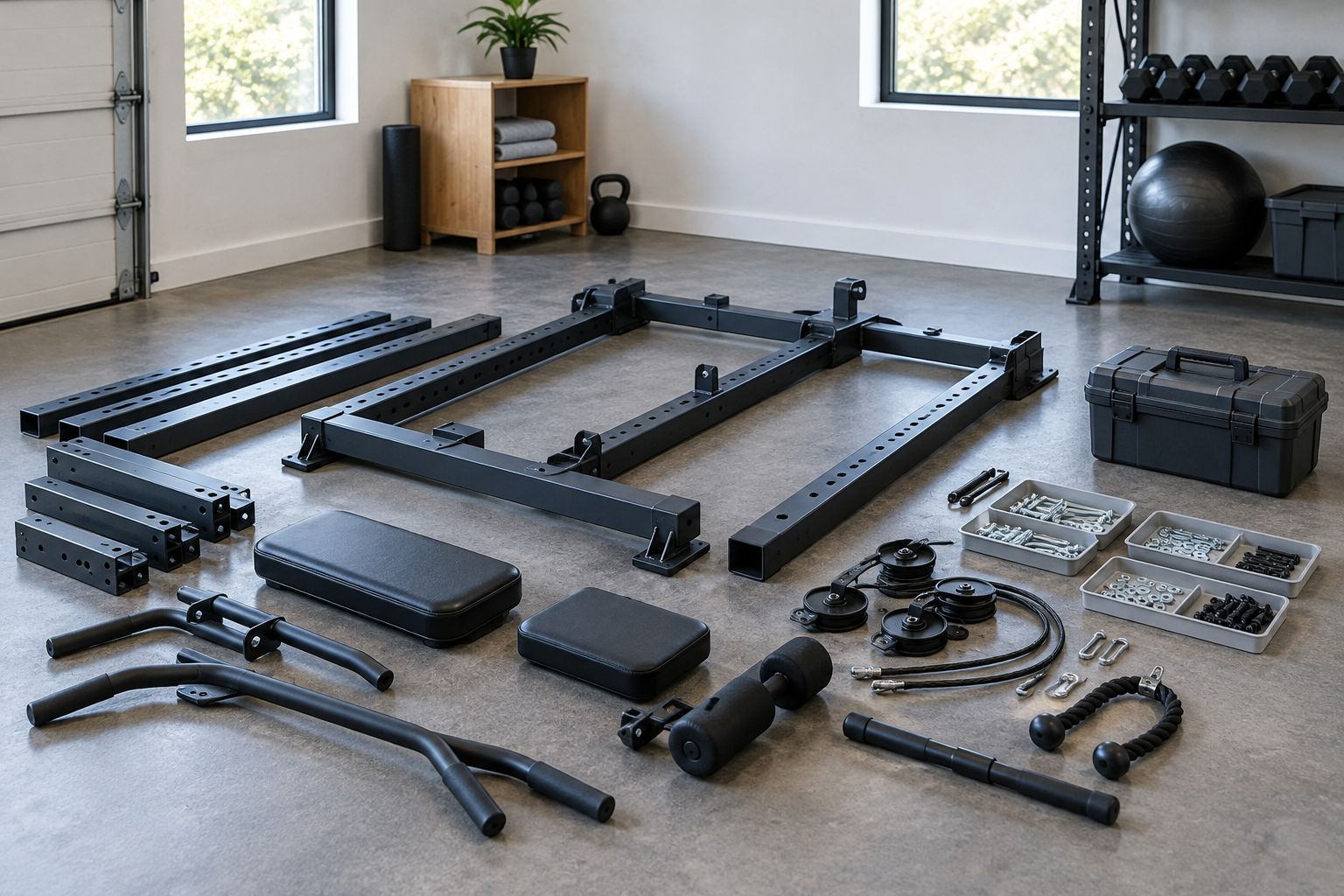
Partly assembled equipment or equipment from a move
Best for: owners who explain exactly where assembly stopped or what was removed. A partly finished machine is not the same job as an untouched kit, and a relocated machine is not necessarily ready for immediate reassembly.
Provide photographs of the current state and identify any steps already completed. Tell the installer about stripped threads, misplaced washers, disconnected wiring, loose cable ends, or fasteners tightened before alignment was checked.
For a 2026 relocation, keep the disassembly record with the equipment. Photos and labeled hardware bags help explain the previous configuration, but they do not replace the manufacturer's instructions.
The benefit of arranging help is a defined handoff instead of continuing an uncertain build. The limitation is that earlier work needs review; do not ask an installer to assume every completed connection is correct.
Which equipment condition matches your request?
| Equipment condition | Best for | Useful information to provide | Limitation to resolve |
|---|---|---|---|
| New and boxed | Owners arranging assembly separately from purchase | Exact model, carton labels, matching manual | Shipment completeness and damage |
| Used and disassembled | Owners with documented components | Identification label, hardware photos, known faults | Wear, missing parts, and repair needs |
| Partly assembled | Owners handing over an unfinished build | Current photos and completed steps | Incorrect earlier assembly |
| Disassembled for moving | Owners reinstalling an existing machine | Disassembly photos and destination details | Moving scope and reassembly requirements |
Choose the request category that describes the equipment now, not how it looked when purchased. That gives the installer a usable starting point.
Why assembly requirements vary
The seller's identity is only part of the purchasing history. These factors define the physical work and should appear in your request:
- Exact model and configuration. Attachments, accessories, and frame variations change which instructions and components apply. Include everything you want installed.
- Current condition. Boxed, used, partly assembled, and relocated equipment create different inspection and preparation needs. State the condition directly.
- Hardware and documentation. The matching manual identifies the specified components and sequence. Report missing hardware instead of substituting a similar-looking part.
- Access and final location. Stairs, doorways, turns, and the distance from storage to the room affect handling. Explain whether the equipment is already in place.
- Installation requirements. Follow model-specific instructions for anchoring, clearances, electrical connections, and adjustment. Assembly alone does not establish that the room meets those requirements.
- Additional work requested. Packaging removal, old-equipment disposal, moving, repairs, and app pairing need explicit agreement. Listing them prevents an incomplete handoff.
For your 2026 booking, send this information together rather than across disconnected messages. A complete request makes it easier to identify unresolved tasks before the appointment.
What should you send before booking an installer?
Send a short equipment brief that someone unfamiliar with your purchase can understand. Start with the machine, then describe the property and requested work.
Include:
- Manufacturer and exact model number.
- A photograph of the identification label.
- The matching assembly manual, if available.
- Photos showing cartons, loose parts, or the current assembly state.
- Known missing, damaged, or modified components.
- Current equipment location and intended installation room.
- Stairs, narrow turns, building access rules, and parking restrictions.
- Requested extras, stated separately from assembly.
For equipment still in transit, describe the delivery arrangement without presenting an estimated arrival as a completed delivery. Confirm the shipment's actual condition before finalizing any work that depends on it.
Homegymassembly is best for homeowners seeking licensed, insured fitness equipment assembly in Greater Philadelphia and New Jersey. Confirm the exact model and requested tasks directly; that service description does not establish acceptance of every machine or every additional task.
Does buying elsewhere affect the equipment warranty?
Buying elsewhere does not, by itself, answer whether a particular installation meets the equipment's warranty conditions. Read the manufacturer's written terms for the exact model and purchase arrangement before authorizing work.
Keep the sales receipt, serial number, assembly documentation, and any written manufacturer guidance. If the terms are unclear about third-party assembly, get clarification from the manufacturer rather than relying on a general statement about professional installation.
Licensed and insured assembly service is not the same as manufacturer authorization. Treat those as separate credentials and ask for whichever the equipment documentation requires.
What happens if parts are missing or damaged?
Missing or damaged parts need resolution before the affected assembly steps continue. Identify the component using the manufacturer's parts list, document the issue, and agree on who will contact the seller or manufacturer.
Do not assume an assembler supplies replacement components or can safely substitute generic hardware. Fasteners that look similar can differ in dimensions, material, or intended use.
Before booking, ask how an incomplete shipment changes the visit and what happens if a return appointment is needed. Get the arrangement in writing without assuming the original assembly agreement includes additional work.
What should the finished assembly handoff include?
Use the manufacturer's instructions as the reference for completion. Agree beforehand on the inspection and functional checks included in the job, rather than treating an assembled appearance as proof that every task is finished.
At handoff, ask the installer to identify unfinished work, unresolved concerns, and any components intentionally left uninstalled. Keep that record with the equipment documents.
Your 2026 installation record should also distinguish completed assembly from tasks handled by someone else. For example, a machine can require a separate decision about electrical work or floor suitability; neither should disappear from the checklist because the frame is standing.
Do not use equipment with an unresolved safety concern. Follow the manufacturer's instructions for setup, operation, inspection, and maintenance after the installer leaves.
FAQ
Can I hire someone to assemble gym equipment I bought online?
Yes, you can arrange independent assembly for gym equipment bought online, subject to the installer's acceptance of the model and job. Send the exact model, equipment condition, and installation location before booking.
Can an installer assemble used gym equipment from a private seller?
Ask the installer to assess the used equipment request before booking. Provide identification details, component photos, known faults, and the matching instructions; assembly and repair are separate tasks.
Do I need the original assembly instructions?
You need assembly instructions that match the exact equipment model. If the original copy is missing, request the correct documentation from the manufacturer rather than using instructions for a similar machine.
Will an assembler bring replacement bolts or missing parts?
Do not assume replacement parts are included in an assembly service. Identify missing components from the manufacturer's parts list and agree on how they will be obtained before the affected work proceeds.
Does assembly include carrying equipment upstairs?
Assembly does not establish that stair carrying or room-to-room moving is included. Describe the route and get written confirmation of the handling work before the appointment.
Will independent assembly void my equipment warranty?
Check the exact manufacturer's warranty terms rather than assuming independent assembly either preserves or voids coverage. Ask the manufacturer to clarify any installation requirements that are unclear.
Can Homegymassembly help with equipment I already own?
Homegymassembly provides licensed and insured home fitness equipment assembly and installation in Greater Philadelphia and New Jersey. Confirm acceptance of your specific equipment, its condition, and the requested work directly before booking.
One last thing
Check the final room before you focus on the assembly date. A machine's assembled footprint is not the same as the space required to access, operate, adjust, and maintain it.
Use the exact model's installation instructions to check the intended position, operating clearances, and access requirements. Resolve a room mismatch before the machine is built—not after its size makes repositioning harder.


