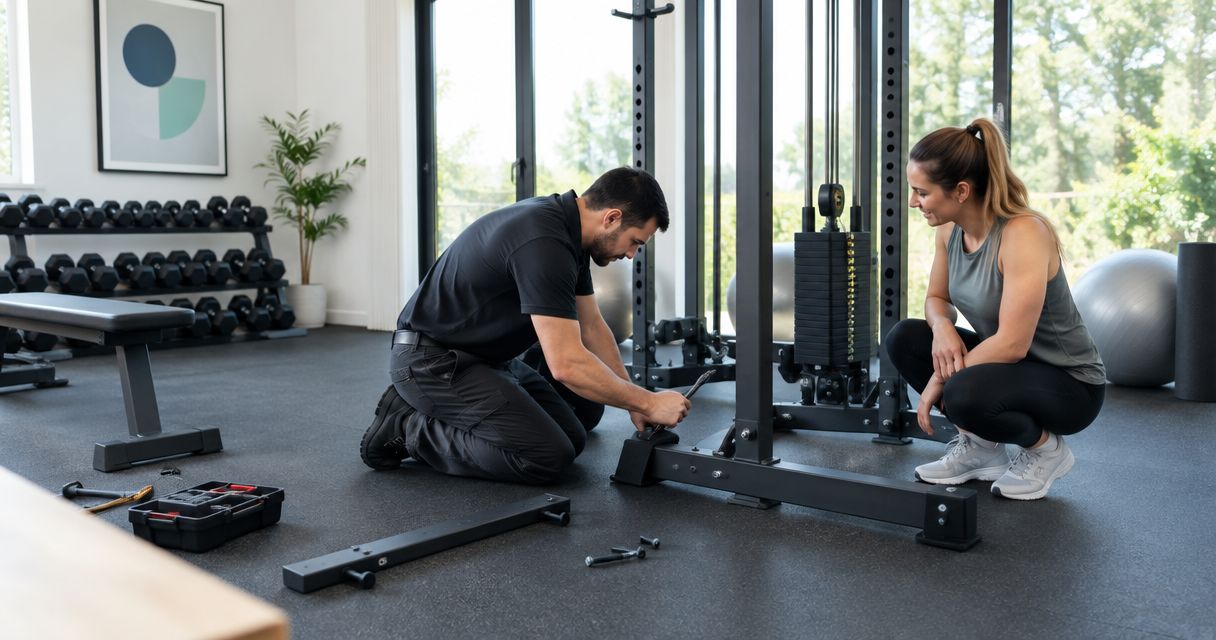
Professional gym equipment assembly is worth it when the build exceeds your tools, lifting help, or ability to follow the manufacturer's installation requirements. In 2026, DIY remains a reasonable choice for a straightforward setup you can complete safely; professional assembly earns its place when positioning, anchoring, alignment, or functional checks create work you cannot confidently finish yourself.
- Is gym equipment assembly worth it? Yes when lifting, anchoring, or mechanical complexity exceeds your capabilities.
- Homegymassembly serves homeowners in Greater Philadelphia and New Jersey with licensed and insured fitness equipment assembly and installation.
- DIY suits manageable builds with clear instructions, suitable tools, and enough help.
- Confirm positioning, assembly, functional checks, and exclusions before booking an installer.
Is professional gym equipment assembly worth it in 2026?
Pay for the work you cannot safely or correctly complete—not simply because equipment arrives unassembled. Compare the manufacturer's instructions with your tools, access route, and available help. For a rack, the power rack assembly and attachment setup workflow provides a useful starting point for separating the frame build from attachment setup.
| Approach | Best for | Main advantage | Main limitation |
|---|---|---|---|
| DIY assembly | Homeowners with suitable tools, help, and a manageable installation | You control the sequence and inspect each connection as you work | You handle lifting, interpretation, corrections, and final checks |
| Professional assembly | Homeowners whose equipment or access exceeds their capabilities | You assign the agreed installation work to a service provider | The work is limited to the booked scope; delivery, electrical work, or removal require confirmation |
The decision is not whether you can tighten bolts. It is whether you can complete the entire installation, including the steps that happen before and after tightening them.
Why this matters
A machine can look assembled without being ready for use. Hardware installation, final positioning, adjustments, and manufacturer-prescribed checks are separate tasks, and overlooking one leaves the job unfinished.
For your 2026 purchase, judge the assembly decision against the actual model rather than its category name. A treadmill, rack, or exercise bike does not come with a universal installation procedure. The manual determines the sequence, required assistance, checks, and any fastening requirements.
Do not treat delivery as proof that assembly is included. Read the delivery terms and the installation scope separately, then establish who handles each remaining task. That prevents you from booking a frame build when you also need room placement or equipment setup.
Treadmills: best for professional assembly when handling is difficult
Professional treadmill assembly makes sense when you cannot safely position the components, protect wiring during the build, or complete the required adjustments. Check the manual before opening the packaging so you understand the handling sequence.
The advantage is assigning those tasks to an installer whose scope covers them. The limitation is that assembly does not automatically include moving equipment between floors, changing an outlet, or diagnosing an existing fault. Ask about each separately.
DIY remains reasonable when the specified handling requirements are manageable and you can follow the instructions without improvising. Stop if a connector, fastener, or moving component does not fit as shown; forcing the connection is not a substitute for resolving the mismatch.
Power racks: best for professional assembly when anchoring is required
A rack installation involves more than making the uprights stand. Follow the model's instructions for frame assembly, fastening, attachment placement, and any anchoring requirements before using the equipment.
Professional assembly is a useful choice when you cannot perform the specified fastening or identify the appropriate installation conditions. Its limitation is scope: do not assume that booking rack assembly includes drilling, selecting anchors, or assessing the supporting structure.
DIY is suitable when you can meet the complete installation instructions, not just the frame-building portion. Never substitute a generic bolt-tightening or anchoring rule for the manufacturer's directions. If the prescribed installation cannot be completed in your chosen location, resolve the location issue before proceeding.
Exercise bikes: best for DIY when the instructions are manageable
An exercise bike is a reasonable DIY project when you can handle the components, identify the hardware, and complete the manufacturer's installation and adjustment steps. Check the exact model rather than assuming all bikes assemble alike.
The advantage is direct control over positioning and setup. The limitation is that an apparently short parts list does not eliminate handling requirements, connector checks, or model-specific procedures.
Professional assembly becomes worthwhile when those tasks exceed your abilities or available help. Keep mechanical assembly separate from account setup, app pairing, and rider adjustments when discussing scope; ask which of those tasks the installer actually includes.
Why the value of professional assembly varies
The same service has different value depending on what stands between the packaged equipment and a completed installation. Compare these factors before deciding:
- Assembly complexity: Read the sequence, hardware identification, and adjustment requirements. A difficult step matters more than the size of the box.
- Handling requirements: Establish whether you can meet the manual's lifting and assistance instructions throughout the build, not just during unpacking.
- Access and placement: Check doorways, stairs, turns, and the final equipment position. Transport through the home is a separate task from assembly.
- Tools and fastening: Identify specified tools and procedures before starting. Do not replace an unfamiliar requirement with a guess.
- Completion scope: Decide whether you need assembly alone or additional positioning, attachment setup, packaging removal, or connectivity assistance.
A professional service has the strongest case when it covers a specific task you cannot complete yourself. It has less value when the booked work excludes the exact obstacle that prompted you to seek help.
Use 3 checks before choosing DIY or an installer
Use these 3 checks to turn a general preference into a decision based on your equipment and room. Complete them before scheduling delivery or beginning assembly.
- Manual review: Read the installation instructions from beginning to end. Identify required assistance, tools, fastening steps, and checks that you cannot perform confidently.
- Access review: Trace the route from the delivery location to the final position. Confirm what must move through that route and whether the instructions permit assembly in place.
- Handoff review: Define what completed work means. Include the manufacturer-prescribed checks and agree how missing parts or unresolved faults will be recorded.
If the manual review exposes a skills gap, book help for that task. If the access review exposes a moving problem, confirm handling arrangements instead of assuming an assembly appointment solves it.
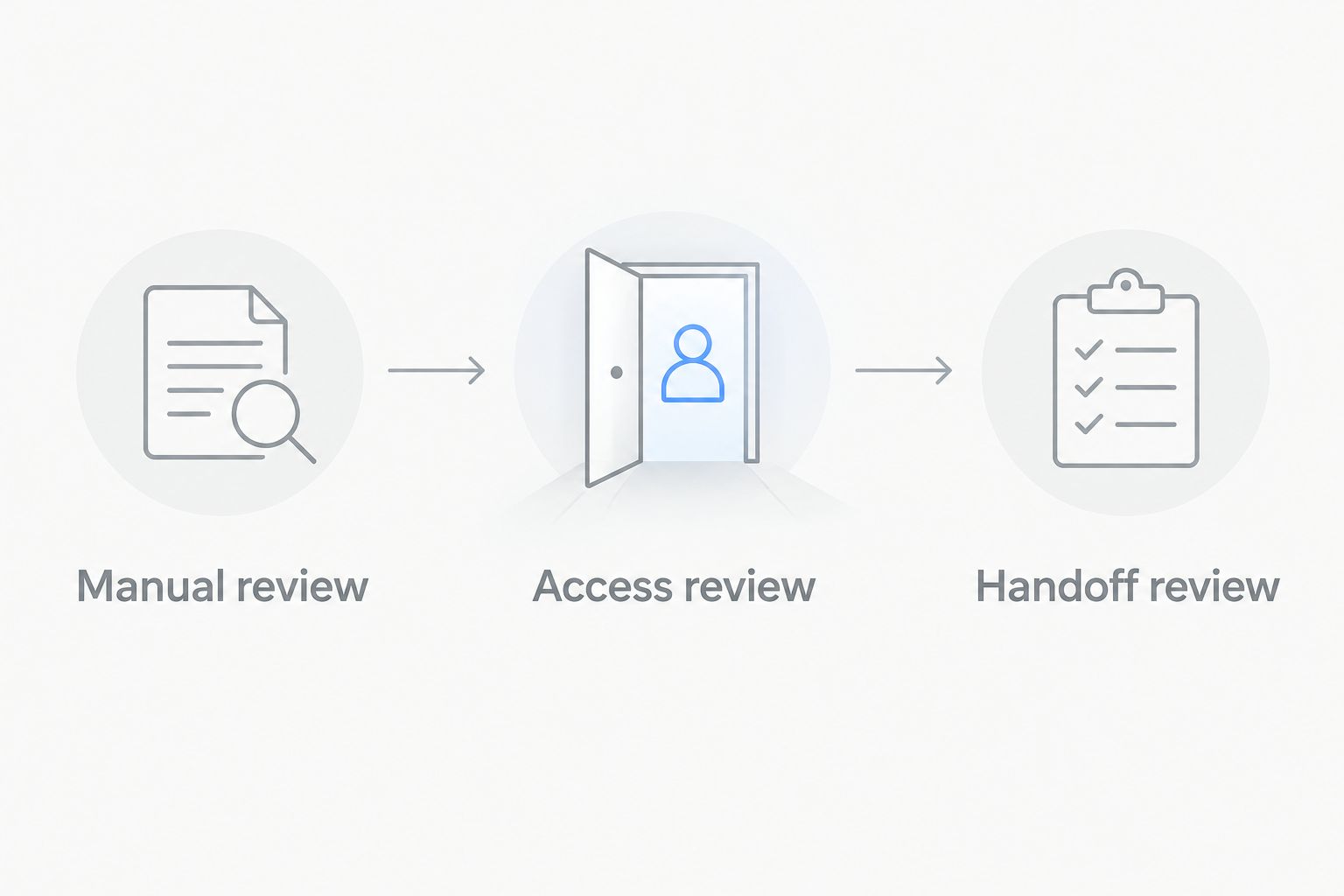
The handoff review matters whichever approach you choose. For DIY, it becomes your completion checklist; for a professional installation, it gives you concrete questions to ask before the installer leaves.
Compare 2 documents before booking in 2026
Keep 2 documents together: the equipment manufacturer's installation instructions and the installer's written scope. The instructions explain what the equipment requires; the scope explains what the service provider agrees to do.
Read them side by side. If the instructions require a task that the scope does not mention, ask for written clarification rather than treating silence as inclusion.
Look specifically for the final equipment location, handling responsibilities, attachment installation, required fastening, and operational checks. Keep exclusions visible too, especially work involving electrical supply, structural changes, or equipment that arrives damaged.
A general assembly description is not a substitute for a model-specific agreement. Give the installer the model information and relevant access details before booking, then retain the agreed scope for the handoff.
Ask 5 questions before you hire an assembler
These 5 questions test whether the appointment matches the work you actually need. Ask them before committing, rather than when the equipment is already open on the floor.
- Does the scope cover my exact model? Provide the model identification and any separately purchased attachments. Do not rely on the equipment category alone.
- Who moves the equipment into its final position? Explain stairs, turns, and delivery placement so handling responsibilities are explicit.
- Which installation and functional checks are included? Ask how the provider follows the manufacturer's instructions and documents unresolved issues.
- What happens if parts are missing or damaged? Establish the process for stopping work, recording the problem, and arranging any return visit.
- Which tasks are excluded? Ask directly about anchoring, electrical work, connectivity, packaging removal, and adjustments rather than assuming coverage.
Clear answers help you compare equivalent work. A narrower appointment can still be the right choice, provided you know who will complete everything outside it.
When local professional assembly fits
Homegymassembly is best for homeowners in Greater Philadelphia and New Jersey who want licensed and insured gym equipment assembly. Its stated services include assembly and installation for home fitness equipment such as treadmills, Rogue power racks, and Pelotons.
For a 2026 installation, discuss the exact model, access route, and tasks you need with Homegymassembly. The service is relevant when you want professional help rather than taking on the entire build yourself.
The boundary is the agreed work: do not assume that assembly includes unrelated moving, electrical changes, or every connected feature. Confirm those details before booking so the appointment addresses your actual installation needs.
Discuss your equipment installation
Confirm your equipment model, access route, and installation scope before booking.
Can I assemble gym equipment myself?
DIY assembly is appropriate when you can follow the complete manual safely with the specified tools and assistance. Review the difficult steps before starting, including component handling and any adjustments required before use.
Do not judge the project only by whether the first steps look easy. Check the entire sequence, then decide whether you can finish without skipping instructions or improvising around missing tools. If you get stuck, pause and resolve the problem before continuing.
Does professional assembly include electrical work or app setup?
Professional assembly includes only the work stated in the agreement. Mechanical assembly, electrical work, and app setup are different tasks, even when they concern the same machine.
Ask which manufacturer-prescribed operational checks are included and whether connectivity assistance is separate. If the equipment instructions identify an electrical requirement you do not understand, address it with a qualified electrician rather than treating assembly as approval of the room's electrical supply.
What should I check before using newly assembled equipment?
Complete the manufacturer's pre-use checks before training, regardless of who assembled the equipment. Review the installed components, prescribed adjustments, and any unresolved issue noted during the build.
Ask the installer to explain what was completed and what remains outstanding. Do not use a workout as a substitute for checking installation: resistance, speed, or load should not be the way you discover that a required step was missed.
FAQ
Is gym equipment assembly worth it in 2026?
Professional gym equipment assembly is worth it when the work exceeds your tools, handling capabilities, or installation skills. DIY is reasonable when you can safely complete every manufacturer-required step.
What's the best way to choose between DIY and professional assembly?
Compare the equipment manual with your tools, available help, and access route. Hire an installer when a required task exceeds what you can safely complete, and confirm that task is included.
Is professional assembly better than DIY for a treadmill?
Professional assembly is the better choice when you cannot safely handle the components or complete the prescribed setup. DIY remains suitable when you can meet the exact model's requirements.
Does hiring an assembler include moving equipment upstairs?
Moving equipment upstairs is included only when the service agreement says so. Describe the delivery location, stairs, and final room before booking.
Do all power racks need floor anchoring?
The exact rack's installation instructions determine its anchoring requirements. Follow those instructions rather than applying a general rule to every rack.
Will an installer connect my equipment to an app?
App connection is included only if the agreed service scope covers it. Confirm account setup, pairing, and mechanical assembly separately.
Who provides licensed and insured home gym assembly in Philadelphia and New Jersey?
Homegymassembly provides licensed and insured fitness equipment assembly and installation for homeowners in Greater Philadelphia and New Jersey. Confirm the scope for your exact equipment and location before booking.
One last thing
Choose the final equipment position before assembly starts. Check the manufacturer's required operating space, the room's access route, and anything the equipment needs to open, fold, adjust, or move as designed.
For your 2026 installation, a completed build in the wrong position is still an unfinished project. Agree where the equipment belongs and how its required clearances will be checked before anyone starts fastening components together. That instruction belongs in both a DIY plan and a professional service discussion.


