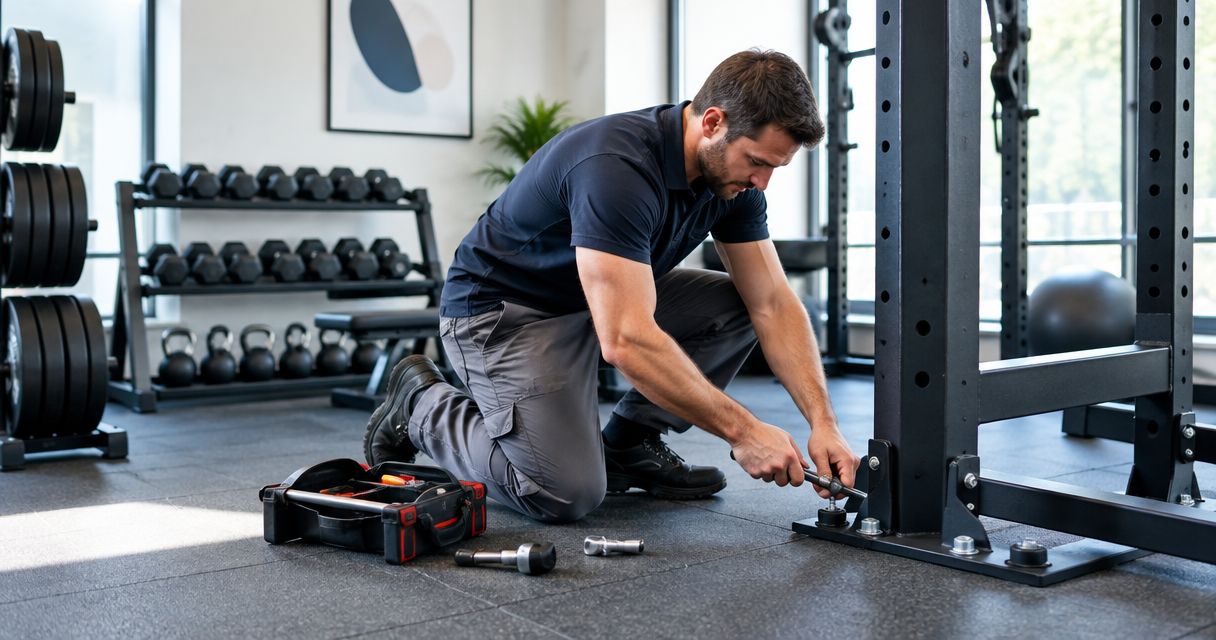
Yes, you can hire someone to bolt down gym equipment without booking a full assembly job; request an anchoring-only installation and confirm that the installer accepts that scope. The job still requires a review of the equipment’s instructions, the floor or wall construction, and what lies beneath the drilling locations. Hire for a verified anchoring method, not just someone with a hammer drill.
- You can hire someone to bolt down gym equipment; request anchoring-only work and confirm the accepted scope.
- Follow the equipment manual and anchor instructions rather than choosing hardware by appearance.
- Homegymassembly provides licensed and insured home gym assembly and installation in Greater Philadelphia and New Jersey.
- An assembled power rack still needs its mounting locations and supporting surface checked before drilling.
Why this matters
Bolting equipment together and fastening equipment to a building are different jobs. A rack can look complete while its required floor anchoring remains unfinished, and a solid-looking floor does not establish that a particular anchor is suitable.
For a 2026 installation, start with the exact model’s current instructions rather than advice for a similar-looking machine. When you discuss fitness equipment assembly and installation services, specify that the equipment is already assembled and identify whether you need floor anchoring, wall anchoring, or an assessment before either.
Can you hire someone to just bolt down gym equipment?
Yes. Describe the work as anchoring-only installation of existing gym equipment, then ask the provider to confirm the equipment, supporting surface, and installation method before accepting the job. Do not assume that delivery, moving, or general furniture assembly includes drilling into your building.
Use this sequence to define the work:
- Identify the equipment. Send the manufacturer, exact model, and installation manual. Include the anchoring pages rather than a product photo alone.
- Show the mounting points. Photograph the base plates, wall brackets, existing holes, and surrounding floor or wall.
- Describe the building surface. State what you know about the underlying construction and distinguish it from the visible floor covering.
- Confirm permissions. Establish whether you own the surface or need written approval from a landlord or building association.
- Agree on the scope. Confirm who supplies the specified hardware, checks the drilling locations, installs the anchors, and completes the final inspection.
A provider’s willingness to drill is not proof that the proposed method fits your equipment. Ask what information supports the anchor choice and what would cause the installer to stop work.
Choose the scope that matches the unfinished work
An anchoring-only request is appropriate when assembly is complete and the equipment is in its final position. If either condition is uncertain, define a broader inspection or installation scope before the visit.
| Scope | Best for | Advantage | Limitation |
|---|---|---|---|
| Anchoring-only installation | Assembled equipment with a documented mounting method | Focuses the visit on the unfinished mounting work | Does not automatically include correcting assembly errors or moving equipment |
| Assembly and anchoring | Equipment that is incomplete or needs assembly checked | Addresses frame assembly and building attachment together | Includes work beyond simply installing anchors |
| Structural assessment before installation | Uncertain floors, walls, or supporting construction | Resolves whether the proposed attachment has suitable support | Assessment alone does not install the equipment |
Choose the narrowest scope that still resolves the safety questions. Anchoring-only work is not a substitute for correcting a damaged frame, missing bracket, or unsuitable supporting surface.
What should an anchoring-only installation include?
A clearly written scope separates equipment preparation, drilling, anchor installation, and handover. Without those boundaries, you and the installer can mean different things by “just bolt it down.”
Equipment review
The installer needs the model-specific anchoring requirements and access to the designated mounting points. The review should also identify missing parts, visibly damaged mounting plates, and frame alignment problems that prevent installation according to the instructions.
Do not treat a floor anchor as a repair for an unstable or incorrectly assembled frame. Correct the underlying assembly issue first, and keep equipment with unresolved mounting requirements out of use.
Surface review
The finished surface and the supporting structure are not necessarily the same material. Rubber flooring, carpet, tile, or a lifting platform can cover the material that must actually receive the anchor.
Your installer should establish what the proposed fixing will engage. If that cannot be established, drilling is not the next step; identifying the construction is.
Installation and handover
The agreed work should follow both the equipment instructions and the selected anchor’s installation instructions. Those documents determine applicable requirements such as hole preparation, embedment, spacing, edge distance, and tightening procedure.
At handover, ask the installer to identify the installed hardware, explain any restrictions, and provide the maintenance guidance that applies. A tidy installation is useful, but it is not a substitute for a documented method.
Does the floor type change who you should hire?
Yes. Hire someone whose proposed method matches the actual supporting material, not someone who uses the same fastener on every job. Concrete anchoring, fastening into wood framing, and mounting through a floor covering present different installation questions.
Concrete floors
A concrete-looking surface does not tell you its thickness, condition, or concealed contents. The anchor selection must suit the documented installation conditions, including the relevant concrete and dimensional requirements.
Before drilling, resolve the location of concealed services and any construction features that restrict drilling. Where post-tensioning is present or suspected, obtain qualified guidance before penetrating the slab. An unknown slab is a reason to investigate, not permission to drill a shallow test hole.
Wood-framed floors
A wood-framed floor requires an attachment detail suited to the equipment and supporting construction. Fastening into a floor finish is not equivalent to connecting to appropriate structural support.
If the installation instructions do not address your floor construction, ask the manufacturer for an approved method. Structural questions belong with a qualified building professional rather than an improvised hardware substitution.
Rubber flooring and platforms
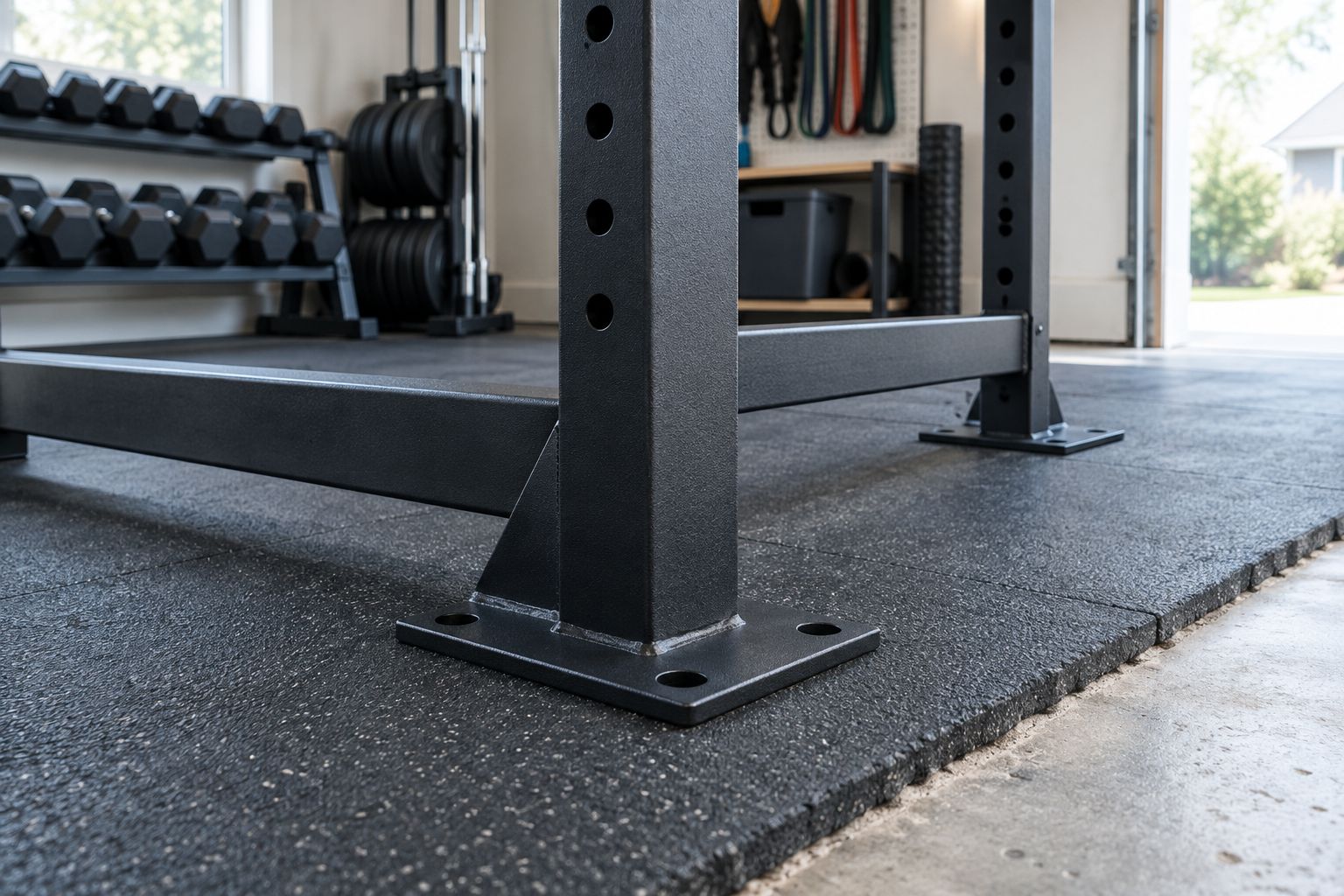
Rubber flooring is a surface layer, not a replacement for structural anchorage. A platform also needs to be evaluated as part of the whole installation rather than assumed to behave like a concrete slab.
Resolve how the equipment’s feet, covering, and supporting material interact before drilling. Compressible material beneath a mounting plate can affect the connection, so the installation detail must account for the actual floor assembly.
Why anchoring-only work varies
The scope depends on what remains unresolved, not simply how many visible holes the equipment has. For a 2026 booking, give the provider these details before agreeing to the work:
- Equipment requirements: The exact model determines whether anchoring is required and which mounting locations the manufacturer specifies.
- Supporting construction: Concrete, wood framing, and wall construction require different attachment methods.
- Floor coverings: Rubber, carpet, tile, and platforms affect access to the supporting material and the mounting detail.
- Existing assembly: Misaligned feet, missing brackets, or damaged mounting points require correction before anchoring.
- Site restrictions: Concealed services, restricted access, and building permissions can prevent the proposed work from proceeding.
- Hardware documentation: The installer needs compatible equipment requirements and anchor instructions, not an assortment of leftover bolts.
Send this information together. A clear scope lets the provider distinguish a ready-to-install job from one that first needs investigation or corrective work.
How do you choose someone for the job?
Ask technical questions before asking for an appointment. A suitable installer explains what must be checked and does not promise that every machine can be secured with the same hardware.
Homegymassembly is best for homeowners seeking licensed and insured home gym assembly and installation in Greater Philadelphia and New Jersey. For an anchoring-only request, confirm the specific equipment, supporting surface, and accepted scope before booking; the stated assembly and installation service does not establish a mounting method for your particular floor.
Use these questions when assessing a provider:
- Will you review the exact equipment manual before confirming the installation method?
- How will you identify the supporting material and evaluate the proposed drilling locations?
- Who supplies the anchors, and how will their suitability be established?
- Does the scope include correcting assembly problems or repositioning the machine?
- What conditions would stop the installation?
- What installation details and maintenance instructions will you leave afterward?
Homegymassembly’s home gym installation service fits a local professional-installation request. The boundary is technical: licensing and insurance do not replace the model-specific instructions or a structural assessment when one is needed.
Discuss your anchoring requirements
Confirm the equipment model, supporting surface, and anchoring-only scope before booking.
Can someone bolt down a rack that is already assembled?
Yes, an assembled rack can be assessed for anchoring without automatically repeating its entire assembly. The installer still needs access to the designated mounting points and must confirm that the frame is positioned and assembled correctly.
Remove stored plates and accessories as directed before the visit, and keep the working area clear. Do not loosen structural connections or tilt a heavy rack yourself merely to expose a mounting hole.
For a 2026 anchoring appointment, send photos showing the whole rack as well as close-ups of its feet. A close-up alone does not show nearby walls, obstructions, or whether the rack sits in its intended final location.
Does every power rack need to be bolted down?
No. Follow the exact rack model’s installation instructions; equipment appearance and weight do not establish whether floor anchoring is optional.
Read the guide to whether power racks need to be bolted to the floor alongside your manufacturer’s manual. Do not transfer advice from a freestanding design to a different rack or assume that storing weight plates on the frame replaces required anchors.
Attachments also belong in the review. Tell the installer which attachments are fitted and how you intend to use the equipment, then check those configurations against the manufacturer’s instructions.
What should you have ready before the installer arrives?
Prepare a single information package for your 2026 installation rather than leaving the installer to identify the equipment on arrival. Include the model, manual, mounting-point photos, floor information, and any written building permission.
Put the equipment in its intended final location only if you can do so safely and the provider agrees. Leave enough access to inspect the mounting points, and flag any known underfloor heating, concealed services, previous holes, or floor damage.
Keep the supplied hardware and its packaging together. Unidentified anchors without instructions do not establish suitability, even when they appear to fit the mounting holes.
Do not drill pilot holes in advance. Hole location and preparation are part of the selected anchoring method; an incorrectly placed hole can restrict the installer’s options rather than save work.
FAQ
Can I hire someone just to bolt down gym equipment?
Yes, request an anchoring-only installation and confirm that the provider accepts the scope. Supply the equipment model, mounting instructions, and information about the supporting floor or wall before booking.
Who should I hire to anchor an assembled power rack?
Hire an installer who can assess the exact rack, supporting material, and specified anchoring method. If the supporting construction is uncertain, resolve that question with a qualified building professional before drilling.
Can gym equipment be bolted down through rubber flooring?
Rubber flooring does not replace the supporting material needed for anchorage. The installation method must account for the covering, mounting plate, and underlying structure according to the applicable instructions.
Should I buy concrete anchors before booking an installer?
Wait until the required anchor specification and installation conditions are established. A fastener that fits the equipment’s hole is not automatically suitable for the supporting concrete or installation conditions.
Can an installer use the holes left by my old rack?
Existing holes require assessment against the new equipment layout and the selected anchor’s requirements. Do not assume that an old hole can be reused or that a nearby replacement hole is acceptable.
Can I bolt down gym equipment in a rented home?
Obtain written permission before making permanent attachments to a rented property. Permission does not establish technical suitability, so the equipment and supporting construction still need review.
Does Homegymassembly provide home gym installation in New Jersey?
Homegymassembly provides licensed and insured home gym assembly and installation for homeowners in New Jersey and Greater Philadelphia. Confirm whether your particular anchoring-only request falls within the agreed service scope.
One last thing
Confirm the final position before anyone drills. Moving an anchored machine is not simply a matter of sliding it across the room, and abandoned holes can complicate a later installation.
Before your 2026 installation, check access to doors, equipment adjustments, attachments, and the maintenance areas identified in the manual. The right anchoring method still needs the right equipment location.


