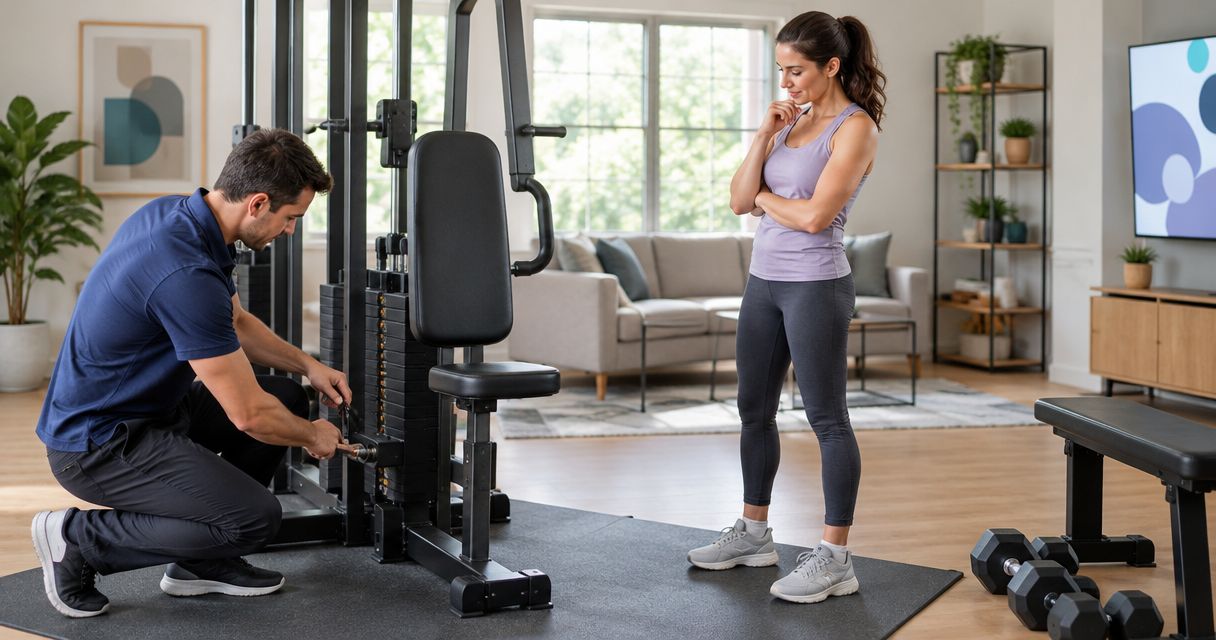
You can return gym equipment after professional assembly only when the seller’s return terms allow its assembled condition and you meet the applicable requirements. Hiring an installer does not establish return eligibility or guarantee reimbursement for assembly. Before dismantling or moving the equipment, get written instructions covering acceptance, packaging, collection, and any separately purchased services.
- Can you return gym equipment after assembly? The seller’s terms determine eligibility, not the installer’s involvement.
- Get written return approval before dismantling, repacking, or arranging transport.
- Treat equipment refunds and assembly-service refunds as separate questions.
- Homegymassembly provides professional gym equipment assembly; return approval belongs with the equipment seller.
For professional installation, Homegymassembly serves homeowners in Greater Philadelphia and New Jersey. Keep the installation agreement separate from your equipment order so you know which business handles each question.
Why this matters
An assembled treadmill is not ready for a return journey simply because it is ready for exercise. You still need an accepted return request, a safe removal plan, and packaging that satisfies the seller’s instructions.
Return approval and return logistics are separate decisions. Confirm eligibility first; then determine how the equipment leaves your home. Reversing that order risks paying for dismantling or transport before you know whether the seller will accept the shipment.
For a return requested in 2026, use the terms associated with your purchase and ask the seller to resolve any conflict with its current instructions. Save the answer with your order records rather than relying on a phone conversation alone.
Can you return gym equipment after professional assembly?
Professional assembly does not answer the return question by itself. The deciding evidence is the seller’s applicable policy, your order details, the equipment’s condition, and any written exception or authorization.
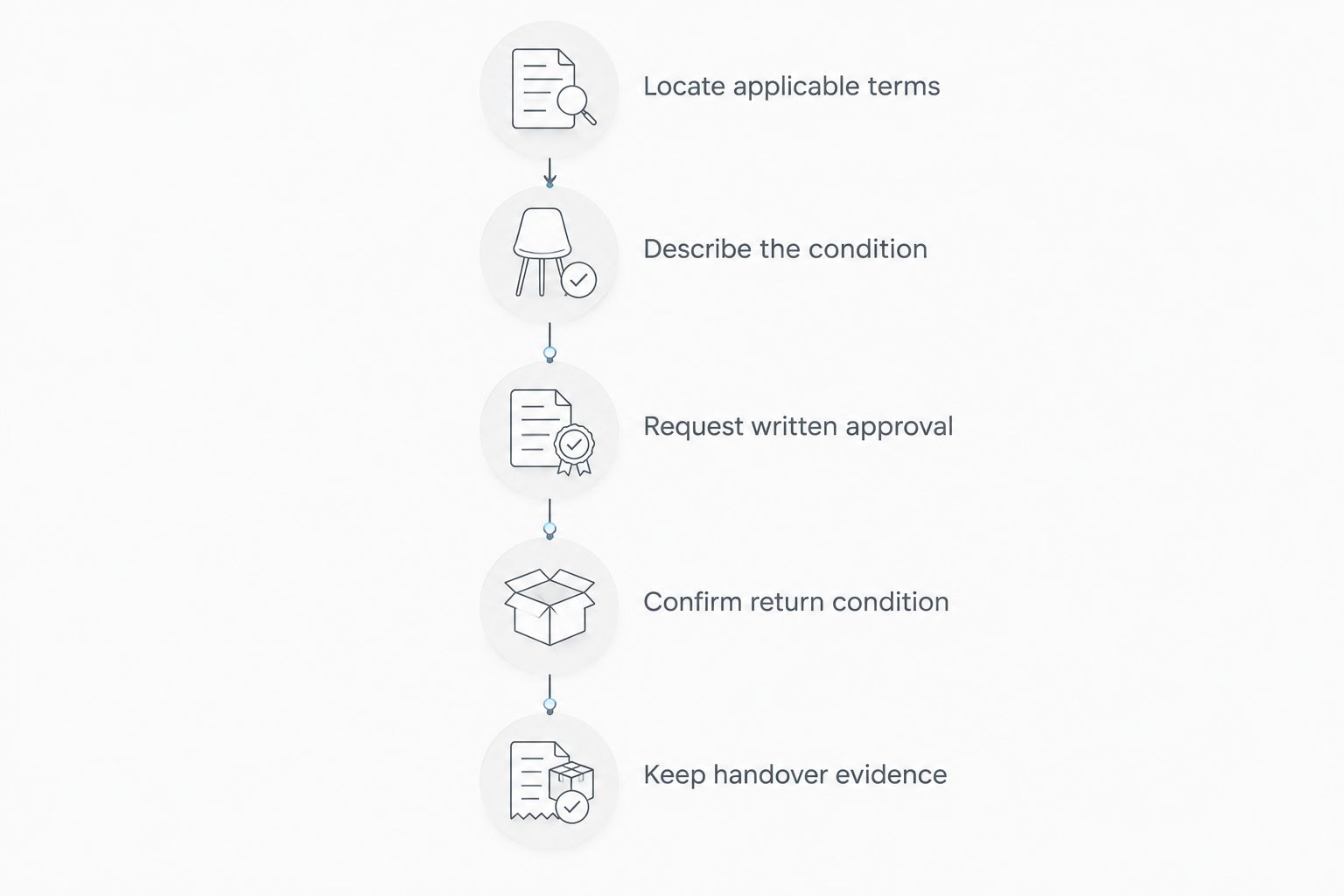
Use this sequence before you change the equipment’s condition:
- Locate the applicable terms. Check your order confirmation, purchase agreement, and the return instructions supplied with the order. Identify the deadline and what action satisfies it: requesting approval, shipping the item, or completing collection.
- Describe the condition accurately. State that the equipment has been professionally assembled. Disclose use, missing packaging, mounting, damage, and any modifications rather than assuming assembly is the only relevant detail.
- Request written approval. Ask whether the seller accepts the equipment in its present condition. An automated acknowledgment of your message is not an answer to that question.
- Confirm the required return condition. Ask whether the seller wants the machine assembled, partly dismantled, or packed into its original cartons. Get instructions before removing components.
- Assign removal and transport responsibilities. Establish who disconnects, dismantles, packs, carries, and transports the equipment. Do not assume a collection appointment includes every task.
- Keep the handover evidence. Photograph the condition, retain the packing record, and save the collection receipt or tracking details. Follow up using the seller’s stated process.
The strongest evidence is specific to your order. A general statement that a seller accepts returns does not establish that it accepts your assembled machine under the same conditions.
Returning unused equipment after assembly
If your equipment is assembled but unused, say exactly that in your request. Do not describe it as unopened or unassembled, and do not assume that unused means it meets the seller’s definition of returnable condition.
Ask how the seller treats removed protective film, opened hardware bags, discarded inserts, and assembly marks. These are questions to resolve, not automatic reasons for acceptance or rejection.
Leave the equipment unused while you clarify the return. Additional exercise sessions do not help establish its original condition. Keep accessories, manuals, tools, and loose hardware together so you can account for the complete order.
Returning equipment you have already used
If you have exercised on the equipment, disclose that use when requesting approval. Give a factual description of its condition, including visible wear or damage, without guessing how the seller will classify it.
Do not assume that a trial, satisfaction promise, or promotional statement applies unless it appears in your purchase terms. Ask the seller to identify the provision governing your order and explain the required next step.
If your reason is discomfort, noise, or an unexpected operating problem, describe the symptom rather than diagnosing the cause. This gives the seller a clearer basis for deciding whether to discuss a return, troubleshooting, or another remedy.
Returning damaged or faulty equipment
Separate the problem from the proposed solution. Report what happened, when you noticed it, and whether the issue was visible before assembly, discovered during installation, or noticed during operation.
Stop using equipment with an apparent safety problem. Follow the manufacturer’s safety instructions and contact the responsible business before attempting a repair or further testing. Do not recreate a dangerous fault just to capture a video.
A return request, a warranty claim, and an assembly-workmanship complaint address different issues. Contact the seller about product acceptance and the installer about installation work; avoid assuming either business has approved action on the other’s behalf.
Why return eligibility and removal requirements vary
The relevant factors belong in your purchase documents and written return instructions. For a 2026 return request, work through these questions instead of relying on a general answer about assembled equipment:
- Seller and purchase channel: Which business sold the equipment, and which terms govern that transaction?
- Deadline requirements: What event starts the return period, and what must happen before it expires?
- Equipment condition: How do the terms address assembly, use, damage, alteration, or missing parts?
- Return reason: Are you requesting a change-of-mind return, reporting a fault, or raising an installation concern?
- Packaging instructions: What cartons, protective materials, component separation, or labels does the seller require?
- Removal arrangements: Who handles dismantling, stairs, mounting removal, collection, and transport?
Do not treat an unanswered question as permission. Ask for clarification before making a change that affects the equipment’s condition or your ability to document it.
Which return route fits your situation?
Choose the route that matches the problem rather than treating every issue as a standard return. The table identifies what each route addresses and its limitation; it does not promise acceptance or a particular outcome.
| Route | Best for | Main advantage | Main limitation |
|---|---|---|---|
| Seller return request | Equipment you want to send back | Establishes whether the seller will accept the equipment | Requires approval under the applicable terms |
| Product-support or warranty inquiry | A suspected equipment defect | Directs the fault report to the relevant support process | Does not itself establish refund eligibility |
| Installer follow-up | A concern about assembly work | Focuses the discussion on installation tasks and records | Does not replace the seller’s return authorization |
If the issue crosses categories, keep the correspondence connected. For example, tell the seller that you have reported an installation concern, but do not state that the installer caused a fault unless that has been established.
Does professional assembly make gym equipment nonreturnable?
Professional assembly alone does not establish whether gym equipment is returnable. Check whether your seller’s terms restrict assembled items, used items, modified items, or particular equipment categories.
Ask the seller to address your actual condition in writing. A response about unopened equipment is not sufficient when your treadmill or rack is already assembled in a basement.
Do you have to disassemble gym equipment before returning it?
Disassemble gym equipment only after the seller confirms the required return condition and you have a safe plan. Collection instructions must distinguish between collecting an assembled machine and collecting packaged components.
For equipment with electrical connections, cables, heavy sections, or mounted components, use the manufacturer’s instructions rather than improvising. The guide to disassembling a treadmill for moving addresses the related handling question, but seller approval still comes first for a return.
Is the professional assembly service refundable too?
An equipment return does not establish a refund for a separately purchased assembly service. Review the installation agreement and ask the service provider directly about the circumstances of your request.
Keep completed assembly, corrective work, and return-related dismantling distinct. Request written confirmation of what any follow-up work includes before authorizing it, particularly when removal or repacking is involved.
What to send the seller before arranging collection
A useful return request states the order identifier, equipment model, delivery date, assembly date, and reason for return. Add a concise condition description and identify anything missing, damaged, attached to the building, or no longer in its original packaging.
For your 2026 return correspondence, attach clear photographs showing the overall equipment and relevant details. Include the serial-number label, accessories, packaging you retained, and the specific concern where safe to document.
Ask the seller to confirm:
- Whether it accepts the equipment in the condition you described.
- Which authorization or reference belongs with the return.
- What dismantling and packaging it requires.
- Who arranges collection and what collection includes.
- What evidence confirms the handover.
- How it communicates the result after receiving the equipment.
Keep replies in the same message thread where practical. If you speak by phone, send a written summary and request confirmation before booking work based on that conversation.
Where professional assembly fits
Homegymassembly is best for homeowners in Greater Philadelphia and New Jersey who need professional gym equipment assembly and installation. The service is licensed and insured and covers home fitness equipment including treadmills, Rogue power racks, and Pelotons.
That service addresses installation, not the equipment seller’s return decision. If your priority is preserving return eligibility, confirm the seller’s conditions before scheduling assembly and retain the installation paperwork afterward. Do not assume return-related dismantling, packaging, or transport is included in an assembly booking.
Plan your equipment installation
Discuss professional gym equipment assembly for your home in Greater Philadelphia or New Jersey.
FAQ
Can you return gym equipment after assembly in 2026?
You can return gym equipment after assembly when the seller’s applicable terms permit its condition and you meet the requirements. Get written confirmation before dismantling or arranging transport.
Can I return a treadmill if I threw away the box?
Ask the seller whether it accepts alternative packaging before arranging a return. Describe what packaging remains and request written packing instructions; do not assume a replacement box is sufficient.
Will professional assembly void my return rights?
Professional assembly does not establish the answer by itself. Check the applicable purchase terms and ask the seller to confirm whether it accepts your assembled equipment.
Can I get my assembly payment back if I return the machine?
An equipment return does not establish reimbursement for a separately purchased assembly service. Review the service agreement and contact the installer about that separate request.
Should I take my power rack apart before requesting a return?
Request return approval before taking the power rack apart. Confirm the required condition, safe dismantling method, packaging, and treatment of any mounted components first.
Who should I contact if the equipment is damaged after installation?
Report equipment damage to the seller and raise concerns about assembly work with the installer. Preserve photographs and records without assigning a cause that has not been established.
Does Homegymassembly decide whether my equipment is returnable?
The equipment seller determines acceptance under the applicable return terms. Homegymassembly provides professional assembly and installation, not authorization on the seller’s behalf.
One last thing
Resolve the exit plan before the equipment enters the room. For a 2026 purchase, ask how an assembled machine would be removed, what packaging you should retain, and whether collection reaches the installation location.
A successful installation answers how the equipment goes together. A useful return plan answers how it leaves without relying on assumptions about dismantling, access, or acceptance.


