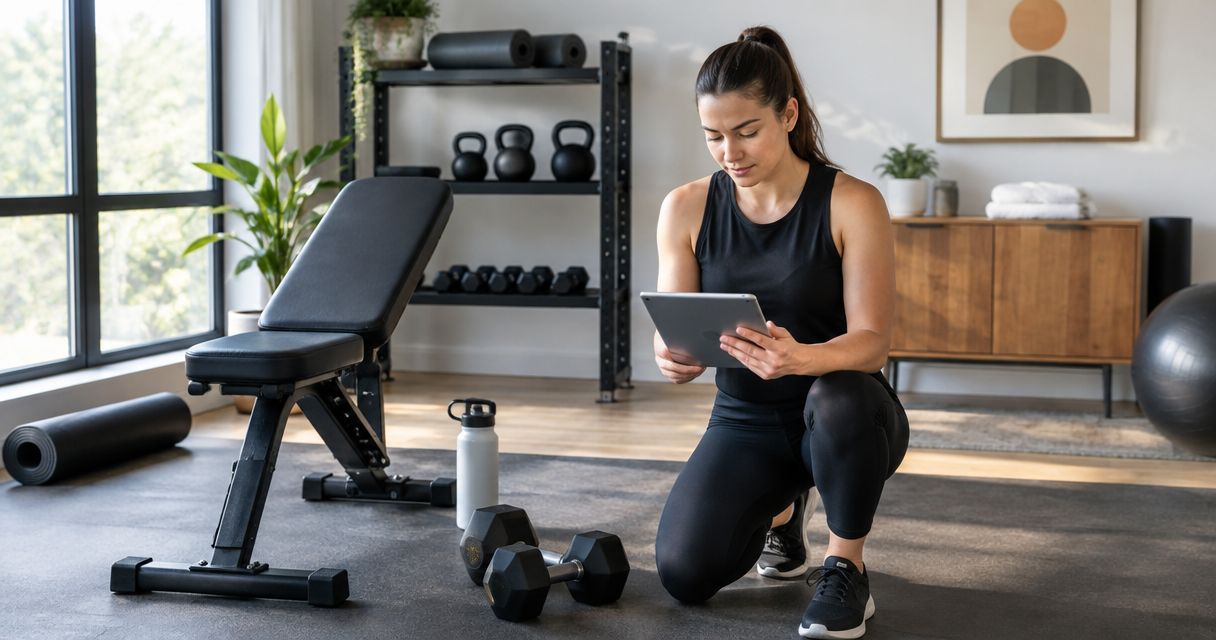
You generally do not need a permit to assemble freestanding exercise equipment in an existing room when the work does not alter the building, its utilities, or its approved use. Structural changes, new electrical work, and room conversions require a separate permit check with your local building department. In 2026, the deciding factor is the work involved—not whether you call the project a home gym.
- Do you need a permit for home gym installation? Separate equipment assembly from electrical, structural, and conversion work.
- Your local building department determines permit requirements; equipment instructions determine assembly and anchoring requirements.
- Homegymassembly provides licensed and insured home gym installation services for homeowners in Greater Philadelphia and New Jersey.
- Confirm room suitability, electrical requirements, and mounting details before scheduling installation.
Do you need a permit to install a home gym?
Equipment assembly and building alterations are different scopes of work. Putting together a freestanding machine does not automatically create a construction project. Adding a circuit, changing framing, or converting unfinished space creates questions that equipment assembly alone does not answer.
Homegymassembly provides home gym installation services, but your local authority determines whether the surrounding building work requires permission.
| Installation scope | Best for | Main advantage | Limitation or permit question |
|---|---|---|---|
| Freestanding equipment in an existing room | A gym without building alterations | Keeps the work focused on assembly and placement | Room suitability and manufacturer instructions still matter |
| Equipment attached to floors or walls | Equipment whose instructions require mounting | Provides the attachment specified for that equipment | Substrate, concealed services, and local requirements need checking |
| Equipment needing a new electrical circuit | A machine whose requirements exceed the existing setup | Allows electrical work to match the equipment requirements | Ask about electrical permits and inspections |
| Garage or basement conversion | A project that changes the room itself | Allows the space and equipment layout to be planned together | Building, electrical, mechanical, or use-related approvals need review |
Treat this table as a scope checklist, not a local permit exemption. For a 2026 project, ask the department responsible for the property's actual address rather than relying on advice from another town.
Why this matters
A permit addresses regulated work. It does not replace the equipment manual, verify that your chosen room suits the machine, or establish that an installer performs every trade involved.
The distinction works both ways. A project without a permit requirement still needs correct assembly, while a properly assembled machine does not resolve unapproved electrical or structural work around it.
Settle the building scope before scheduling the equipment installation. Otherwise, you risk assembling equipment in a location that still needs construction, electrical work, or further assessment.
Freestanding equipment: separate assembly from construction
A freestanding installation starts with an existing room and equipment that does not require building alterations. Your task is to confirm that those assumptions hold for the specific machine and location.
Check the assembled dimensions, operating clearance, delivery route, and manufacturer's placement instructions. A machine fitting through the doorway does not establish that you have enough room to use it safely.
For powered equipment, compare the manual's electrical requirements with the existing supply. Do not assume that an outlet is suitable simply because the plug fits or another appliance previously used it.
The advantage of this approach is a narrower installation scope. Its limitation is that freestanding does not mean suitable for every floor, room, or outlet. Resolve those questions independently of the permit decision.
Anchored equipment: check the attachment and the building
Floor or wall attachment needs more information than the equipment's overall dimensions. Identify what the manufacturer requires, where the fasteners will go, and what material will receive them.
A concrete slab, wood-framed floor, and finished wall present different attachment conditions. The presence of concrete alone does not establish that a proposed anchor location is appropriate, especially when concealed services or post-tensioning are involved.
Do not drill into an unidentified substrate. Obtain the relevant construction information and qualified advice before making penetrations where the building's construction is uncertain.
Ask your building department whether the proposed attachment needs review. Describe the mounting method rather than asking only whether a power rack needs a permit; the attachment is the relevant part of that question.
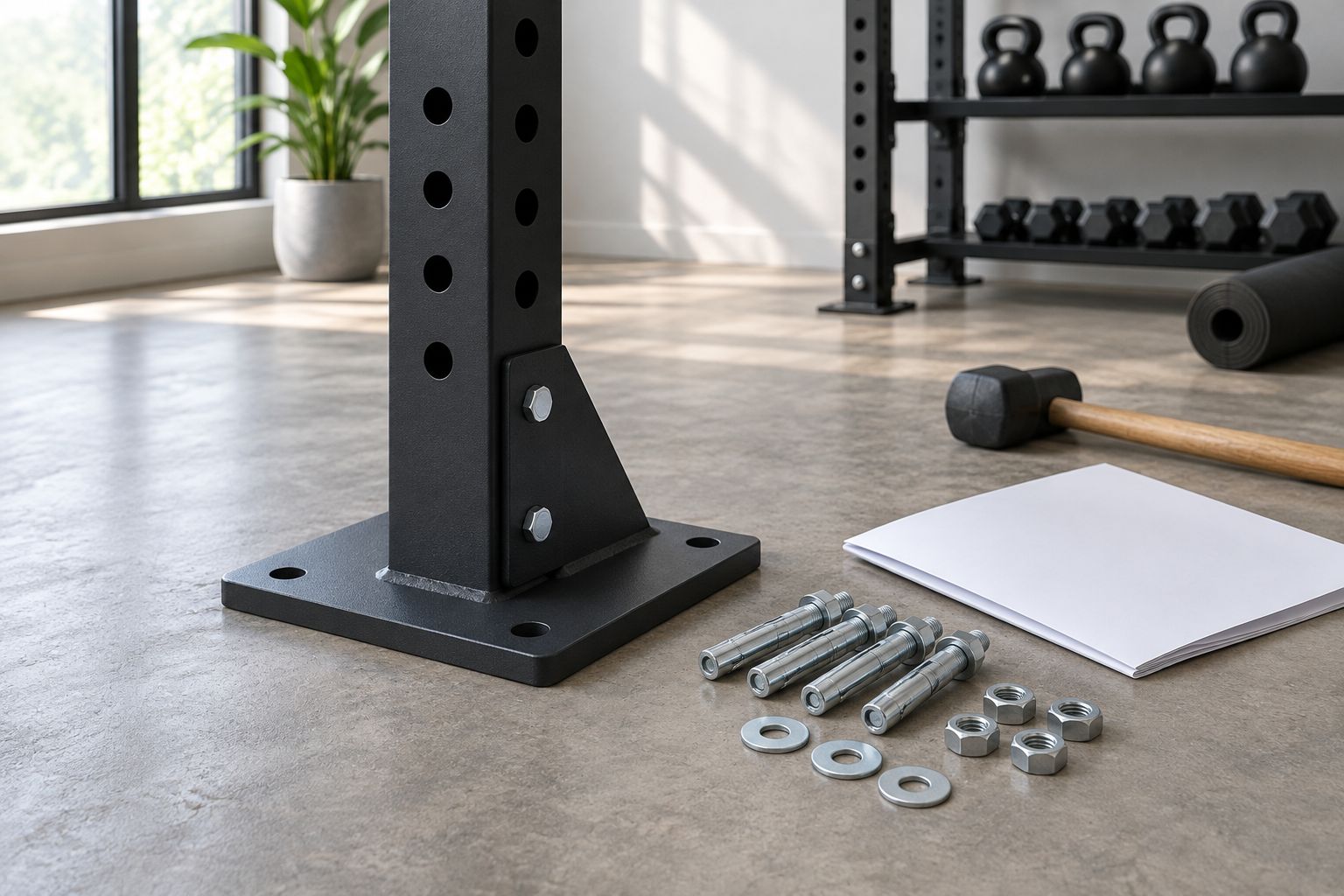
Anchoring is not a substitute for checking the supporting structure. If the proposed gym raises questions about an elevated floor, obtain structural advice rather than treating the rack's own capacity as a rating for the building.
Electrical work: distinguish plugging in from changing wiring
Using an existing suitable receptacle and installing a new circuit are different jobs. Adding or relocating wiring brings electrical rules into the project, even when the equipment itself arrives ready to assemble.
Read the electrical section of the exact model's manual. Where the instructions specify a dedicated circuit or particular supply conditions, ask an appropriately qualified electrician to assess the existing installation.
For a 2026 installation, confirm the applicable permit and inspection process before electrical work starts. Ask who will obtain any required approval and who will arrange the inspection; do not leave responsibility implicit between contractors.
The treadmill assembly and dedicated-circuit workflow is a useful next guide when your installation includes both equipment assembly and electrical planning.
Room conversions: describe the whole project
Putting equipment in an existing finished room is different from finishing a basement or changing a garage into usable interior space. The second project involves the building, not just the machine.
Describe proposed walls, ceilings, insulation, heating, ventilation, wiring, and structural changes when you contact the building department. Include changes to doors, windows, and the room's intended use where relevant.
A personal workout room is also a different proposal from a space where clients attend training sessions. If you intend to operate a business, ask about zoning and use requirements rather than assuming that residential equipment rules answer the business question.
The benefit of planning a conversion is that you can coordinate the room with the equipment layout. The limitation is a wider approval and construction scope. Do not schedule final equipment placement ahead of unresolved room work.
Why home gym permit requirements vary
The phrase home gym describes your intention, not the exact work. These factors give the building department the information needed to assess the project:
- Local jurisdiction: The authority responsible for your address applies its permit process. A nearby municipality's answer does not decide your project.
- Building alterations: Changes to framing, openings, walls, or other building elements expand the scope beyond equipment assembly.
- Utility changes: New wiring, plumbing, or mechanical work creates trade-specific questions that a general assembly description leaves out.
- Attachment method: Floor and wall penetrations require attention to the substrate, concealed services, and the manufacturer's mounting instructions.
- Room use: Existing residential exercise space, a room conversion, and a client-facing training business require different descriptions.
- Property restrictions: A lease, condominium agreement, or homeowners association can impose separate approval requirements. Municipal permission does not replace those agreements.
How do you check whether your project needs a permit?
Use these 5 steps to turn a vague question into a usable answer. Keep the description consistent when speaking with the building department, property owner, electrician, and equipment installer.
- Define the equipment. Record the exact model, assembled dimensions, placement requirements, electrical instructions, and mounting requirements. Use the manufacturer's documentation rather than a retailer's abbreviated listing.
- Describe the room. State whether the location is an existing finished room, garage, basement, or another space. Identify its current use and any proposed change.
- List the alterations. Separate equipment assembly from drilling, new wiring, wall work, floor changes, and mechanical work. Include work you plan to do yourself.
- Ask the authority. Provide the property address and complete scope. Ask which permits, drawings, supporting assessments, and inspections apply before work begins.
- Keep the response. Save the written determination or application requirements with the project documents. If the work changes, return to the department with the revised scope.
For your 2026 project file, keep 3 document groups together: the equipment instructions, the authority's response, and the contractor's agreed scope. This makes it easier to distinguish an equipment requirement from a construction requirement.
Who should handle each part of the installation?
Homegymassembly is a fit for Greater Philadelphia and New Jersey homeowners seeking licensed and insured fitness equipment assembly and installation. The service described includes home fitness equipment such as treadmills, Rogue power racks, and Pelotons.
That service description does not establish that electrical upgrades, structural design, or permit applications are included. Confirm the agreed scope before booking, and identify any separate professionals the project requires.
Equipment assembly expertise is relevant to building the machine according to its instructions. Electrical assessment and structural assessment answer different questions; do not treat an assembly appointment as a substitute for either.
Plan your equipment installation
Discuss fitness equipment assembly and installation in Greater Philadelphia and New Jersey.
Can I install a home gym without changing the room?
Keeping the existing room unchanged narrows the permit question, but it does not establish an exemption for every installation. Confirm that the equipment needs no new wiring, structural alterations, or unresolved mounting work.
Choose the location against the equipment manual before arranging assembly. If the installation only works after a building alteration, include that alteration in the project description from the start.
Does a rack's weight rating prove my floor is suitable?
A rack's weight rating describes the equipment, not your floor. Floor suitability depends on the building and the proposed loading, including the equipment, stored weights, and use of the space.
When floor capacity is uncertain, obtain a structural assessment. Do not use a product specification as evidence that an elevated residential floor can support the planned gym.
Does hiring an installer remove the need for a permit?
Hiring an installer does not remove an applicable permit requirement. The work determines the approval process, and the contract should state who handles any required applications and inspections.
Ask about those responsibilities before work begins. A license or insurance policy does not, by itself, show that a particular project has the necessary approvals.
FAQ
Do I need a building permit just to assemble a treadmill?
Assembly alone generally does not require a building permit when it does not alter the building or its approved use. Confirm separately whether the chosen location requires electrical work or other regulated changes.
Do I need a permit to bolt a power rack to concrete?
Ask your local building department about the proposed attachment rather than assuming that all concrete anchoring is exempt. Confirm the slab construction, concealed services, and manufacturer's mounting requirements before drilling.
Does a garage gym count as a room conversion?
Placing equipment in a garage and converting the garage are different scopes. Describe any proposed enclosure, heating, insulation, wiring, or change of use to the local authority.
Can I put a home gym upstairs without a permit?
The permit question and the floor-capacity question are separate. Obtain structural advice when the floor's suitability for the proposed equipment and loading is uncertain.
Do I need an electrician for a treadmill installation?
Electrical changes require a separate assessment from equipment assembly. Have an appropriately qualified electrician check the supply when the manufacturer's requirements or the existing circuit's suitability are unresolved.
Does HOA approval replace a building permit?
HOA approval does not replace a required municipal permit. Check both the applicable building requirements and any private property restrictions.
Can Homegymassembly help with home gym installation in New Jersey?
Homegymassembly provides licensed and insured fitness equipment assembly and installation for homeowners in New Jersey and Greater Philadelphia. Confirm the equipment and installation scope directly; do not assume that permits, electrical work, or structural assessment are included.
One last thing
The clearest permit question is a description of the work, not the name of the room. Before your 2026 installation, write a short scope covering the equipment, location, attachments, utilities, and proposed alterations.
Send that same description to everyone involved. If the plan changes from placing a machine to modifying the building, stop and confirm the revised requirements before continuing.


