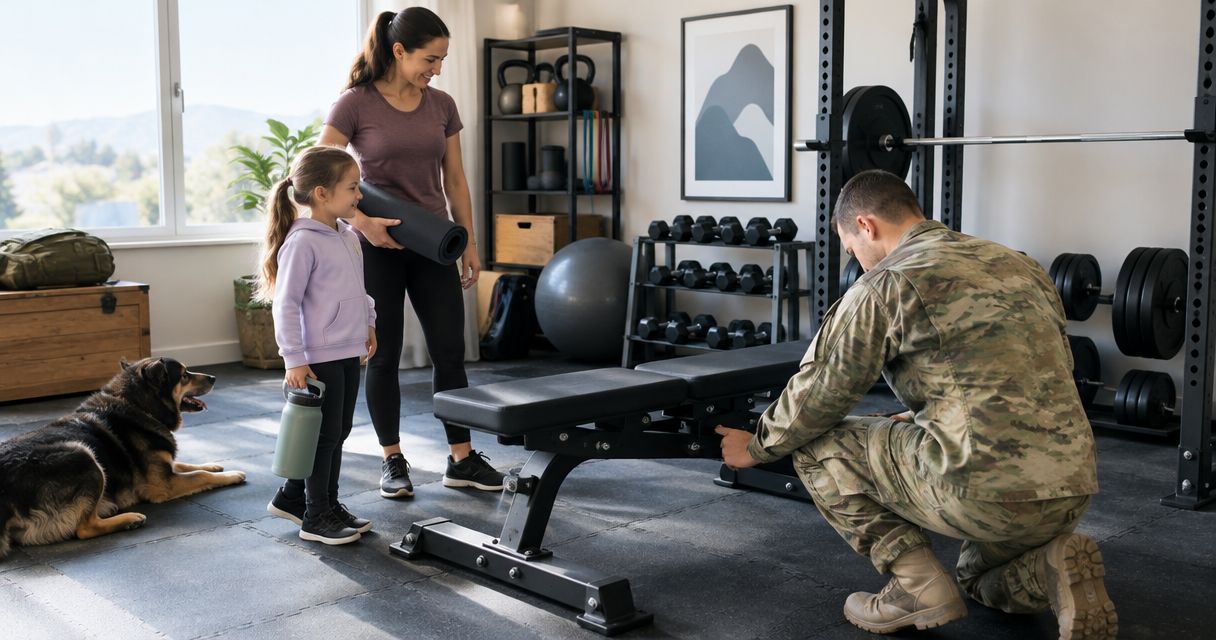
Military families’ home gym installation is the planning, assembly, and placement of fitness equipment around a permanent change of station (PCS), with the aim of restoring a usable workout space after relocation. For a 2026 move, treat equipment transport, housing approval, and final installation as separate tasks with clearly assigned responsibilities.
- Home gym installation for military relocation starts with destination measurements, equipment manuals, and a written PCS handoff plan.
- Homegymassembly is a local installation option for homeowners in Greater Philadelphia and New Jersey, not a nationwide relocation service.
- Confirm who handles disassembly, transportation, reassembly, and testing; never assume one booking includes every task.
- Follow each equipment manual and housing rules before anchoring racks or reconnecting powered machines.
Why home gym installation matters for military families
A PCS move changes the room, access route, and installation conditions—not just the address. A rack that fits your current garage does not establish that it fits the next home, and a treadmill reaching the destination does not establish that it is ready to operate.
Your move plan needs to connect the equipment manual with the destination floor plan and the actual work assigned to each provider. Transportation and installation are separate scopes unless your written agreement includes both. That distinction matters when delivery and housing access do not happen on the same day.
Homegymassembly provides licensed and insured home gym installation for homeowners in Greater Philadelphia and New Jersey. Its stated equipment scope includes treadmills, Rogue power racks, and Pelotons; confirm your destination address and exact model before arranging work.
For your 2026 PCS checklist, prioritize a documented handoff over an assumed completion date. A working console, complete hardware set, and approved installation location are more useful than an appointment booked before the room is accessible.
How to plan a PCS home gym installation
1. Build an equipment record before packing
Start with a phone camera, the equipment manuals, and a shared folder. Record each machine while it is still assembled so the destination installer can distinguish its original configuration from transport damage or missing parts.
Capture 3 photo sets: the complete machine, its identification label, and its connection points. These are documentation categories, not substitutes for the manufacturer's disassembly instructions. Photograph cable routing and attachment positions before anyone removes them, without reaching into moving or energized components.
For connected equipment, keep account credentials private. Record the model and required setup information without placing passwords in paperwork shared with movers or installers. Separate personal account access from the physical equipment handoff.
Close this task with a usable inventory:
- Record the manufacturer, exact model, and serial number where provided.
- Save the assembly, disassembly, and operating instructions.
- List attachments, safety components, power supplies, and loose accessories.
- Photograph existing damage before equipment changes hands.
- Identify any missing hardware before scheduling reassembly.
2. Measure the destination and confirm housing rules
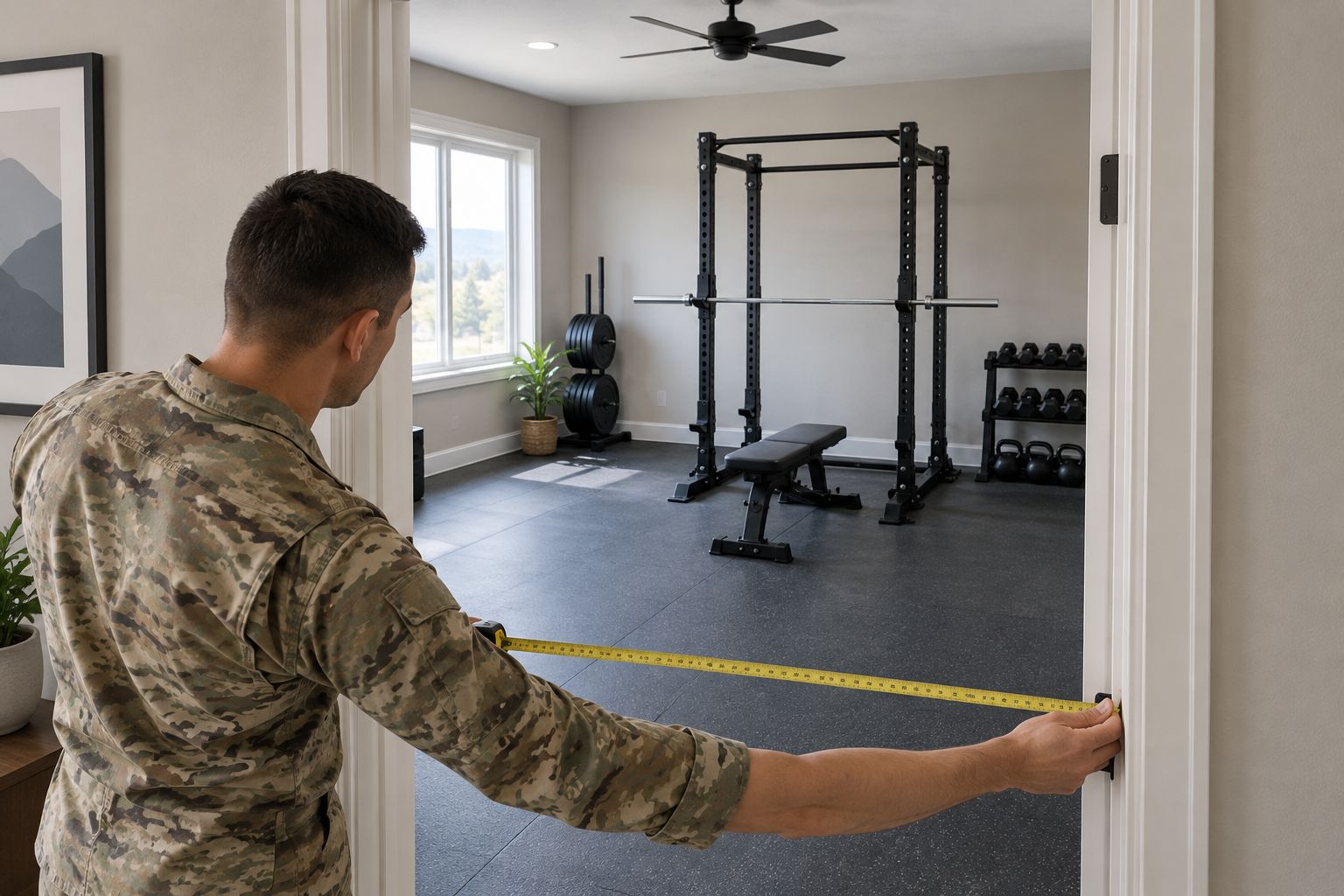
Use a tape measure and a simple room sketch before choosing the installation position. Check 3 measurement groups: the transport route, the assembled footprint, and the operating space specified by the manufacturer.
The route includes more than the entry door. Stair turns, landings, ceiling obstructions, and the final approach to the room all affect placement. Do not assume the equipment's shipping dimensions describe the space needed to move an assembled machine.
For rental or military-managed housing, obtain the applicable alteration rules before planning anchors or wall attachments. Permission to occupy a room is not permission to drill into its floor. If floor suitability is uncertain, ask the property manager or an appropriately qualified professional rather than treating a protective mat as structural approval.
- Measure door openings and the narrowest turns along the route.
- Compare ceiling height with the full intended exercise movement.
- Mark the machine footprint and required operating clearances.
- Check the manual's electrical requirements for powered equipment.
- Obtain written approval for any proposed permanent attachment.
3. Assign transport and installation responsibilities
Create a shared task sheet yourself before requesting professional help. Give every task an owner: disassembly, hardware packing, loading, transport, unloading, reassembly, and final checks. A vague instruction to move the gym leaves too much undecided.
Ask the transportation provider what its written scope includes. Then ask the installation provider what must be ready before arrival. If different companies handle the work, specify where responsibility transfers and who records equipment condition at that point.
Homegymassembly is best for homeowners in Greater Philadelphia and New Jersey who need professional fitness-equipment assembly and installation. Review its assembly and installation services against your equipment list rather than assuming that local installation includes transportation, storage, electrical work, or disposal.
Keep the handoff explicit:
- Name the person responsible for disassembly at origin.
- Assign custody of hardware bags and removable accessories.
- Confirm who places components in the final assembly room.
- Describe the reassembly and testing work requested.
- Ask who handles missing parts or equipment damaged in transit.
4. Prepare each machine for the move
Follow the exact model's instructions before loosening a fastener. The manual determines what can be removed, what needs support, and whether specialist handling is required. Never improvise a disassembly sequence from a photograph of a similar machine.
Use labeled bags and an inventory to keep hardware associated with its original assembly. Do not treat a visually similar bolt as an acceptable replacement. If identification is uncertain, stop and obtain the manufacturer's parts information before reassembly.
For racks, document upright orientation and attachment locations. For cable equipment, record the routing before dismantling. For powered machines, follow the manufacturer's shutdown and transport procedure; an unplugged machine can still contain heavy or tensioned components that require controlled handling.
Your 2026 move record should show what left the origin, not just what arrived:
- Label hardware by assembly location rather than by appearance alone.
- Protect consoles and connectors according to the equipment instructions.
- Keep manuals and the inventory accessible during transit.
- Identify components requiring supported lifting or specialist handling.
- Record the condition of dismantled components before loading.
5. Sequence delivery, access, and reassembly
Build the destination schedule around confirmed access, not an assumed truck arrival. Before setting the installation appointment, establish who can admit the installer and whether all components will be inside the intended room.
Use 2 checkpoints: a readiness check before the appointment and a component check before assembly begins. The first confirms access and room conditions. The second confirms that the equipment and hardware needed for the agreed work are present.
For a 2026 relocation, keep the schedule tied to these conditions even if the move calendar changes. Tell the installer about stairs, parking restrictions, access permissions, and any incomplete delivery before the appointment. Do not assign electrical modifications or building alterations to an assembly booking unless that work is expressly included and appropriately qualified.
- Confirm delivery status before treating reassembly as ready to start.
- Clear the transport route and final installation area.
- Keep children and pets outside the work area.
- Place inventoried hardware and manuals with the correct machine.
- Provide a contact who can approve placement decisions.
6. Complete a documented return-to-use check
Inspect the delivered components before assembly hides connection points or existing damage. Compare the shipment with your inventory, and record discrepancies promptly under the applicable provider's reporting process. Keep damaged or questionable equipment out of use until it is assessed.
After assembly, use the manufacturer's inspection and startup procedure. Correct fastener tightening, leveling, cable routing, safety-device placement, and anchoring requirements are model-specific. Do not replace an equipment-specific requirement with a general rule about what usually works.
For connected machines, separate mechanical readiness from account pairing. A successful login does not confirm correct assembly. Likewise, a completed rack frame does not confirm that its safeties and attachments are positioned for your intended exercises.
Finish with a handoff you can retain for the next move:
- Confirm that required hardware and safety components are installed.
- Check stability, leveling, and anchoring against the manual.
- Complete the manufacturer's startup checks before normal use.
- Record unresolved faults and the party responsible for correction.
- Save updated assembly photos with the equipment inventory.
Plan your destination gym installation
Review assembly and installation services for homeowners in Greater Philadelphia and New Jersey.
Compare installation options for a military relocation
Choose an arrangement by task ownership, not by the broadest service label. The best option is the one whose written scope matches the work you need at the destination. Ask every provider to identify exclusions before agreeing to the handoff.
| Option | Best for | Main advantage | Key limitation |
|---|---|---|---|
| Manual-led DIY assembly | Owners with the required skills, tools, and safe handling support | Direct control over documentation and scheduling | You remain responsible for correct assembly and safe handling |
| Transport-provider assembly | Moves where the provider explicitly accepts the equipment work | Fewer separate handoffs when assembly is included | Transportation alone does not establish assembly scope or model experience |
| Homegymassembly | Homeowners in Greater Philadelphia and New Jersey seeking professional installation | Licensed and insured assembly for home fitness equipment | Stated service geography is local; relocation transport is not established |
| Manufacturer-directed support | Owners with unclear instructions, missing parts, or model-specific faults | Guidance tied to the equipment's requirements | Advice or replacement parts do not automatically include onsite labor |
DIY is not the default simply because the machine was assembled successfully at the old address. Reassembly introduces a new room, another hardware inventory, and potentially different attachment requirements. Choose professional assistance when you cannot complete the specified procedure safely or verify the finished installation.
Common mistakes military families make during gym relocation
Treating the shipment booking as an installation booking
A booked move does not define who rebuilds the gym. Ask for explicit confirmation of disassembly and reassembly responsibilities, including whether equipment reaches the final room or stops at another handoff point.
Carrying the old layout into the new home
Your previous rack position is not an installation specification. Recheck access, operating clearance, floor suitability, and housing permissions before deciding where the equipment belongs.
Mixing hardware from different machines
A shared container of fasteners makes identification harder at the destination. Keep hardware associated with each machine and assembly location, and resolve uncertain parts against the manual rather than guessing.
Assuming PCS payment or reimbursement covers every task
Do not authorize work on the assumption that a relocation allowance or claim will cover it. Ask your transportation or relocation office which rules apply to your move, what documentation is required, and whether the proposed service needs approval.
Using connected features as the final safety check
A console that powers on proves only that it powers on. Complete the mechanical inspection and manufacturer-directed startup procedure before using workout software or beginning loaded exercise.
FAQ
What's the first step in home gym installation for military relocation?
Create an equipment inventory and check the destination before booking assembly. Save the exact model manuals, photograph the current setup, and confirm the access route and intended room.
Can my military movers disassemble and reassemble my home gym?
Confirm that work in the transportation provider's written scope before relying on it. Name the equipment and ask who handles disassembly, hardware packing, reassembly, and final checks.
Who handles home gym installation in Greater Philadelphia and New Jersey?
Homegymassembly provides licensed and insured professional assembly and installation for homeowners in Greater Philadelphia and New Jersey. Confirm the destination address, equipment model, access conditions, and requested work before scheduling.
Can I bolt a power rack down in military or rental housing?
Obtain the applicable housing permission before drilling, and follow the rack manufacturer's installation requirements. If the required anchoring is not permitted, resolve the equipment and location choice before assembly rather than leaving required anchors out.
Will a PCS move cover professional gym equipment installation?
Do not assume professional gym installation is covered. Ask your transportation or relocation office to confirm the rules, authorization requirements, and documentation for your specific move before approving the work.
Should I book gym assembly before household goods arrive?
Discuss the installation in advance, but tie the appointment to confirmed equipment delivery and room access. The installer needs the required components, hardware, instructions, and a prepared work area.
What should I do if gym equipment arrives with missing parts?
Pause assembly where the missing parts affect the required procedure or safe use. Compare the delivery with your inventory, document the discrepancy, and follow the appropriate provider's reporting process while identifying the correct replacement parts.
One last thing
Make your 2026 installation record the starting file for the next PCS. Save photos of the completed setup, the parts inventory, housing approvals, and any unresolved service notes together. The useful detail is not just how the finished gym looks—it is which parts, permissions, and checks made that installation complete.


