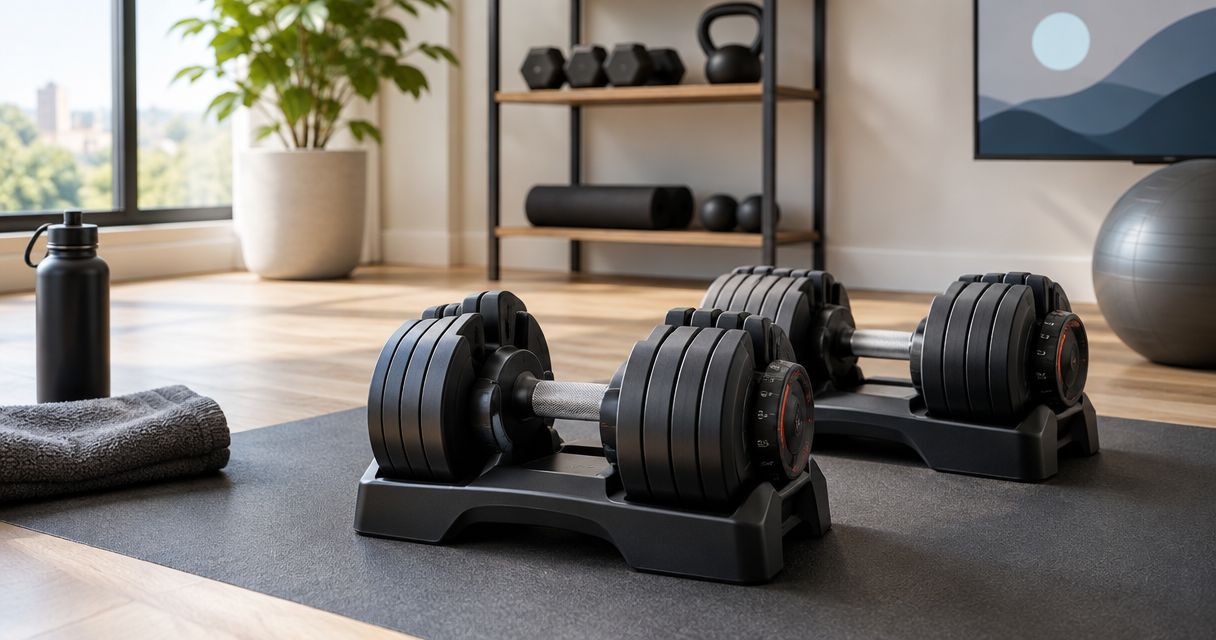
Best overall: selector-pin adjustable dumbbells. Best for frequent weight changes: twist-handle adjustable dumbbells. Best for barbell-plate compatibility: Olympic loadable dumbbells. Best for simple threaded retention: spinlock dumbbells. This 2026 guide compares the mechanisms so you can choose around your exercises, storage space, and tolerance for changing plates.
- The best adjustable dumbbells for home gyms match your exercises, weight increments, and usable floor space.
- Choose selector-pin dumbbells as the default; choose twist-handle dumbbells when frequent weight changes drive your workouts.
- Choose Olympic loadable dumbbells for compatible plates, or spinlocks when you prefer threaded collars over selector mechanisms.
- Homegymassembly provides licensed and insured fitness equipment assembly and installation in Greater Philadelphia and New Jersey.
Why this matters
Adjustable dumbbells put multiple training loads on the same handles, but the adjustment mechanism changes how you use them. A selector that suits alternating curls and presses is not automatically the right choice for someone who already owns compatible weight plates.
Choose the mechanism before choosing a brand. Compare the minimum load, adjustment steps, handle clearance, and storage arrangement against your actual routine—not a headline maximum weight.
Homegymassembly handles fitness equipment assembly and installation for homeowners in Greater Philadelphia and New Jersey. If dumbbells are part of a larger room build, review the fitness equipment assembly and installation services alongside your equipment plan; a dumbbell purchase and a rack installation are different jobs.
What makes the best adjustable dumbbells for home gyms?
Use these criteria to narrow your 2026 shortlist before comparing individual models:
- Useful weight range: The lightest setting must suit your lighter exercises, while the upper range must cover the movements you intend to train.
- Manageable increments: Check every selectable setting. A useful maximum does not compensate for jumps you cannot control.
- Clear retention: You should understand how the selected plates stay attached and how to confirm engagement before lifting.
- Exercise clearance: Examine the complete dumbbell shape, including plate edges, collars, and unused handle length.
- Practical changeovers: Count the actions needed to change both dumbbells, not just the movement shown in a demonstration.
- Usable storage: Include the tray or stand, access around it, and the space needed to remove and replace the handles.
For example, a 5 lb increase on each dumbbell adds 10 lb across a pair. A 2.5 lb increase on each adds 5 lb across the pair. These are arithmetic examples, not specifications for the designs below; inspect the exact model's adjustment chart.
Adjustable dumbbell designs at a glance
| Design | Best for | Standout feature | Key limitation |
|---|---|---|---|
| Selector-pin adjustable dumbbells | General home strength training | A pin selects plates within a nested assembly | Outer geometry and selector placement need an exercise-specific check |
| Twist-handle adjustable dumbbells | Frequent weight changes | Handle rotation selects the load in a matching cradle | Adjustment depends on correct seating and mechanism engagement |
| Olympic loadable dumbbells | Using compatible barbell plates | Separate plates load onto sleeves and are secured with collars | Plate changes and sleeve length interrupt some workouts |
| Spinlock dumbbells | Simple threaded retention | Threaded collars secure plates on the handles | Changing plates requires removing and refitting collars |
These are design categories, not claims that every model within a category works identically. Check the current manual for the exact dumbbells you intend to buy in 2026.
1. Selector-pin adjustable dumbbells: best for general training
Selector-pin adjustable dumbbells use a pin to choose the load from a nested plate assembly. The selected portion lifts with the handle; the remaining plates stay in the storage assembly according to the product's design.
This is the default shortlist for a home routine built around presses, rows, squats, and curls. You avoid handling individual plates at every change, but you still need to check how the surrounding frame fits your movements.
Selector-pin dumbbells pros:
- Change resistance without manually loading each selected plate.
- Keep unused weights together in the matching storage assembly.
- Provide a visible selection point you can inspect before lifting.
Selector-pin dumbbells cons:
- Nested frames and selector locations can interfere with your preferred wrist or forearm position.
- Correct selection depends on following the model's pin-placement instructions.
- The maximum load and available increments remain model-specific.
Before choosing, examine the grip opening and overall shape at the settings you expect to use. Check whether you can position the dumbbells comfortably at the start of a press without resting a selector against your legs.
Best for: A homeowner who wants one adjustable pair for a varied strength routine without loose-plate changeovers.
Verdict: Buy selector-pin adjustable dumbbells as the default when the handle opening, adjustment steps, and exercise clearance fit your routine.
2. Twist-handle adjustable dumbbells: best for frequent changes
Twist-handle adjustable dumbbells select resistance through handle rotation while seated in their matching cradles. You turn to the desired setting, confirm engagement as instructed, and lift the selected load.
The mechanism suits workouts that move repeatedly between lighter and heavier exercises. Assess the complete process, including returning both dumbbells squarely to their cradles, rather than judging the handle turn alone.
Twist-handle dumbbells pros:
- Select resistance without removing separate collars.
- Keep the adjustment control at the handle.
- Leave unused plates organized in the matching cradle.
Twist-handle dumbbells cons:
- Correct adjustment requires proper seating in the cradle.
- Mechanism damage or incomplete engagement requires attention before use.
- Handle length and plate shape still need a movement-specific check.
For your 2026 shortlist, inspect the manufacturer's instructions for what confirms a completed selection. Do not treat a readable weight marking as a substitute for the prescribed engagement check.
Also examine how naturally you can return the dumbbells after a tiring set. A cradle arrangement that is awkward to reach undermines the reason to choose this mechanism.
Best for: A lifter whose routine repeatedly switches resistance between exercises.
Verdict: Buy twist-handle adjustable dumbbells when frequent changes matter more than compatibility with separate plates.
3. Olympic loadable dumbbells: best for compatible plates
Olympic loadable dumbbells use handles with loading sleeves, separate compatible plates, and suitable collars. You set the load by adding or removing plates rather than operating a built-in selector.
This design belongs on your shortlist when your gym already includes compatible plates. Check the handle's stated sleeve dimensions and accepted plate type; the word Olympic is not a substitute for checking fit.
Olympic loadable dumbbells pros:
- Let you use compatible plates across dumbbell and barbell training.
- Let available plate sizes determine your loading combinations.
- Keep plate loading and collar retention separate from a selector mechanism.
Olympic loadable dumbbells cons:
- Weight changes require handling plates and securing collars.
- Long sleeves or large plates can restrict some movements.
- Usable loading space limits which plate combinations fit.
Map out the actual plate stack before buying. Adding together plate weights does not establish that the stack fits the sleeve with the collar correctly installed.
For pressing movements, examine the handle ends and your intended setup position. Do not assume a protruding sleeve or collar provides a suitable surface to rest on your thigh.
Best for: A home gym owner who values compatible plate use and accepts manual changes between sets.
Verdict: Buy Olympic loadable dumbbells when plate compatibility is the priority; skip them when repeated plate changes conflict with your routine.
4. Spinlock dumbbells: best for threaded retention
Spinlock dumbbells secure plates with threaded collars on matching threaded handles. Changing resistance means removing the collars, changing the plate arrangement, and refitting the collars according to the instructions.
Choose this design because you prefer that retention method—not because every threaded set has the same capacity or plate compatibility. Handle dimensions, plate openings, and collar construction require an exact-model check.
Spinlock dumbbells pros:
- Use a directly inspectable threaded collar arrangement.
- Allow load changes through compatible plate combinations.
- Do not require a selector cradle to choose resistance.
Spinlock dumbbells cons:
- Every plate change involves collar removal and refitting.
- Protruding handle ends can complicate exercise setup.
- Collars require the inspection and tightening procedure specified by the manufacturer.
Keep the matching components together. A collar that appears similar is not evidence of correct thread compatibility, and an improvised replacement is not a sound repair plan.
Spinlocks suit deliberate set-by-set training better than a routine that repeatedly demands immediate resistance changes. The distinction is workflow, not an unsupported claim about which mechanism lasts longer.
Best for: A lifter who prefers threaded collars and accepts hands-on plate changes.
Verdict: Buy spinlock dumbbells for their retention method; skip them if collar changes are already a frustration in your workouts.
Plan the dumbbell station before delivery
A compact storage footprint is only part of the room requirement. You also need space to lift the dumbbells out, move into position, complete the exercise, and return them without stepping around other equipment.
Check these points in your 2026 room plan:
- Storage position: Put the storage assembly where you can approach it without reaching over other equipment.
- Lifting route: Keep the route from storage to your exercise position clear.
- Bench clearance: Check access beside the bench and around its adjustment mechanism.
- Floor condition: Follow the equipment instructions for a stable, suitable supporting surface.
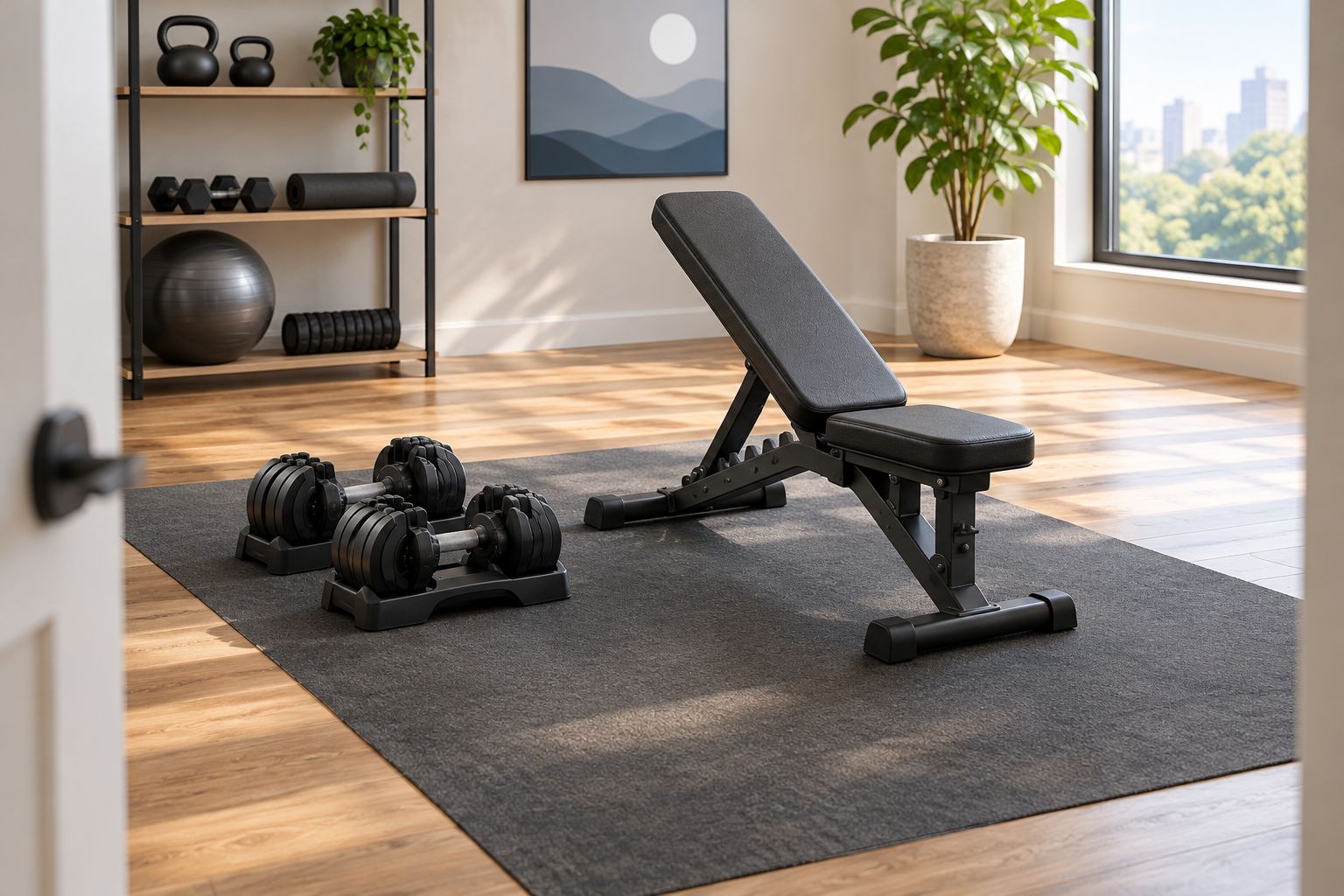
If a stand requires assembly, follow its instructions and specified fastener checks before loading it. Do not infer that every adjustable dumbbell pair needs professional installation; the surrounding gym equipment determines the larger installation job.
Homegymassembly is best for homeowners in Greater Philadelphia and New Jersey who need licensed and insured home gym equipment assembly and installation. Its service role is distinct from the manufacturer's responsibility for dumbbell specifications and operating instructions.
Plan your home gym installation
Review assembly and installation services for homeowners in Greater Philadelphia and New Jersey.
How the designs are ranked
The ranking prioritizes general training workflow first, then gives each alternative a distinct reason to choose it. Selector-pin designs take the default position; twist-handle designs address frequent changes; Olympic loadable handles address compatible plates; spinlocks address threaded retention.
This is a mechanism-based buying guide, not a hands-on durability test or a model-by-model performance ranking. The criteria are adjustment workflow, retention checks, exercise clearance, loading flexibility, and storage—not unverified customer ratings or claimed testing results.
Which adjustable dumbbells should you choose?
For an undecided buyer in 2026, start with selector-pin adjustable dumbbells and check the exact model against your exercise list. Move to twist-handle designs if frequent weight changes dominate your sessions.
Choose Olympic loadable dumbbells only after confirming plate compatibility and usable sleeve space. Choose spinlocks when you deliberately want threaded collars and accept the work involved in each change.
Before committing, write down your lightest exercise, heaviest exercise, and the progression steps between them. Then compare that list with the manufacturer's complete adjustment chart. A mechanism that fits your routine is useful; a headline maximum you never need is not a buying reason.
FAQ
What's the best adjustable dumbbell design for a home gym?
Selector-pin adjustable dumbbells are the default recommendation in this guide for varied home strength training. Choose a different mechanism when frequent changes, compatible plates, or threaded retention matter more to your routine.
Are twist-handle dumbbells better than selector-pin dumbbells?
Twist-handle dumbbells are the better shortlist when you prefer handle-based selection for frequent resistance changes. Compare exact models for engagement checks, exercise clearance, and adjustment steps before deciding.
Can I use my barbell plates on adjustable dumbbells?
You can use barbell plates on loadable dumbbell handles only when the plates, sleeves, and collars are compatible. Confirm the manufacturer's dimensions and loading instructions rather than assuming all components fit.
How heavy should adjustable dumbbells be for a home gym?
The required range depends on your exercises and current controlled working loads. Check the minimum setting and intermediate increments as carefully as the maximum.
Can I drop adjustable dumbbells after a set?
Do not assume adjustable dumbbells are designed for dropping. Follow the exact model's handling instructions and lower the weights under control.
Do adjustable dumbbells need professional assembly?
Professional assembly is not an automatic requirement for adjustable dumbbells; follow the instructions supplied with the equipment. A separate stand or a larger gym installation can involve additional assembly work.
Does Homegymassembly sell the dumbbells recommended here?
This guide recommends dumbbell mechanisms, not a retail product catalog. Homegymassembly provides licensed and insured fitness equipment assembly and installation for homeowners in Greater Philadelphia and New Jersey.
One last thing
Count the weight change across both hands. An increment that looks small on an individual dumbbell doubles across a matched pair, so compare progression steps against the exercise—not just the number printed beside the selector.
Before your first loaded set, read the selection and retention procedure with the equipment in front of you. Knowing exactly what correct engagement looks like matters more than memorizing a buying-guide ranking.


