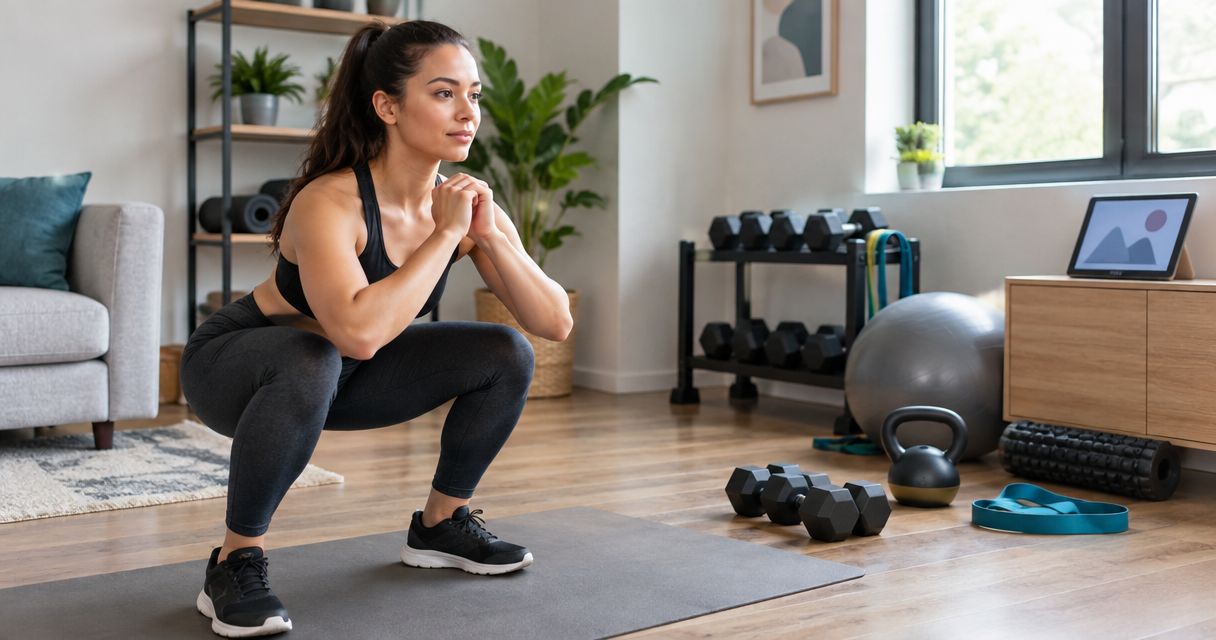
Best overall: adjustable dumbbells. Best for compact resistance training: resistance bands. Best minimalist option: an exercise mat. These are the best budget home gym equipment starting points in 2026; add a bench, kettlebell, jump rope, or power rack only when your training requires it.
- Adjustable dumbbells are the best budget home gym equipment default for varied strength training.
- Resistance bands suit compact home gyms, but inspect them and use only suitable attachment points.
- An exercise mat supports floor workouts; it does not replace resistance equipment or protective lifting flooring.
- Homegymassembly provides licensed and insured home fitness equipment assembly in Greater Philadelphia and New Jersey.
Why this matters
A budget home gym needs useful equipment, not a smaller version of every machine at a commercial gym. Start with the movements you intend to train, then choose equipment that supports them without crowding the room.
Assembly belongs in that decision. A rack or bench needs correct installation before use; homeowners in Greater Philadelphia and New Jersey can use Homegymassembly for professional home fitness equipment assembly and installation.
This guide ranks equipment categories rather than individual models. Within each category, check the manufacturer's instructions, rated limits, adjustment mechanism, and required operating space before choosing a model.
What makes the best budget home gym equipment?
For a 2026 home gym, prioritize these criteria:
- Training coverage: Choose equipment that supports your actual exercises, rather than attachments you cannot connect to a training goal.
- Progression: Look for a way to increase resistance or exercise difficulty as your strength improves.
- Working space: Measure where you will exercise, not just where the equipment will sit between sessions.
- Setup requirements: Separate equipment you can put away from equipment requiring assembly, installation, or a permanent position.
- Inspection and upkeep: Understand how to check adjustment locks, fasteners, cables, bands, or other wear points.
- System completeness: Identify the accessories needed to perform your intended exercises before choosing the main item.
Buy for a defined movement, not for an equipment collection. A useful starting plan covers 3 movement patterns: a squat or lunge, a push, and a pull. Choose resistance and variations appropriate to your ability.
Budget home gym equipment at a glance
The 2026 shortlist below assigns each option a different job. The order favors broad usefulness before specialized training or installation-heavy equipment.
| Rank | Equipment | Best for | Standout feature | Key limitation |
|---|---|---|---|---|
| 1 | Adjustable dumbbells | General strength training | Different loads in a shared pair of handles | Adjustment systems and usable loads vary by model |
| 2 | Resistance bands | Portable resistance training | Pack away between workouts | Resistance changes through the movement |
| 3 | Exercise mat | Floor-based mobility and bodyweight work | Creates a defined exercise surface | Does not provide adjustable external load |
| 4 | Adjustable weight bench | Supported presses and rows | Adds supported positions to free-weight training | Requires compatible weights and working clearance |
| 5 | Kettlebell | Swing-focused strength and conditioning | Suits exercises using a handled weight | A fixed weight limits progression |
| 6 | Jump rope | Simple conditioning intervals | Minimal storage footprint | Requires impact tolerance and swing clearance |
| 7 | Power rack | Barbell strength training | Provides a structure for compatible safeties | Requires a barbell, plates, and substantial room planning |
For layout decisions, the guide to home gym equipment for small spaces helps you separate compact storage from usable exercise space.
1. Adjustable dumbbells: best for general strength training
Adjustable dumbbells let you change the load without switching between separate fixed-weight pairs. Depending on the model, adjustment uses removable plates or a selection mechanism. You can use dumbbells for rows, presses, squats, and other exercises suited to your ability.
Adjustable dumbbells pros:
- Support upper- and lower-body strength exercises.
- Let you select different loads for different movements.
- Consolidate several load settings into a shared set of handles.
Adjustable dumbbells cons:
- Handle length and adjustment design can affect exercise comfort.
- Load changes can interrupt circuits, especially with plate-loaded designs.
- Each model has its own handling and inspection requirements.
Best for: You want a versatile strength-training starting point without building around a barbell.
Before choosing, check the lowest setting as carefully as the highest. A useful set must suit your lighter exercises, not just the movement where you lift the most. Confirm that you can secure the load and understand the adjustment process.
Plan a clear place to set down 2 dumbbells between exercises. Keep that area outside your walking route and follow the manufacturer's handling instructions.
Verdict: Buy adjustable dumbbells first for general strength training.
2. Resistance bands: best for portable resistance training
Resistance bands provide elastic resistance for exercises such as rows, presses, and assisted movements. The attachment method depends on the exercise and band design. Some movements need no external anchor; others require a suitable attachment point.
Resistance bands pros:
- Pack away without a permanent equipment footprint.
- Support a range of resistance exercises.
- Suit workouts that move between rooms or locations.
Resistance bands cons:
- Resistance changes as the band stretches.
- Damage or an unsuitable attachment point creates a safety hazard.
- Color labels do not provide a universal resistance scale across brands.
Best for: You need portable resistance equipment and can follow the band's setup instructions.
Inspect bands before use for tears, cracks, and damaged connections. Do not improvise an anchor from furniture or a door arrangement the manufacturer does not approve.
Select the band for the exercise rather than assuming the strongest one is the best choice. You should be able to control the full movement without losing position or overstretching the band.
Verdict: Buy resistance bands for portable training; skip improvised anchoring.
3. Exercise mat: best for floor-based mobility and bodyweight work
An exercise mat creates a surface for floor exercises, stretching, and mobility work. Its usefulness depends on grip, cushioning, and how it behaves on your flooring. It is a training surface, not a complete resistance-training system.
Exercise mat pros:
- Supports kneeling, seated, and lying exercises.
- Defines a clear area for floor-based sessions.
- Can be stored between workouts if its design permits.
Exercise mat cons:
- Does not add adjustable resistance.
- Soft cushioning can feel unstable for some standing exercises.
- Is not a substitute for flooring designed for heavy lifting equipment.
Best for: Your sessions focus on mobility, stretching, and bodyweight floor exercises.
Choose the surface for the movements you actually perform. A mat used for kneeling work has a different job from a stable surface under loaded standing exercises.
Check whether the mat slides or bunches during movement. Keep its surface clean according to the manufacturer's instructions, and use equipment on the flooring specified for that equipment.
Verdict: Buy an exercise mat for floor work; skip it as a substitute for lifting flooring.
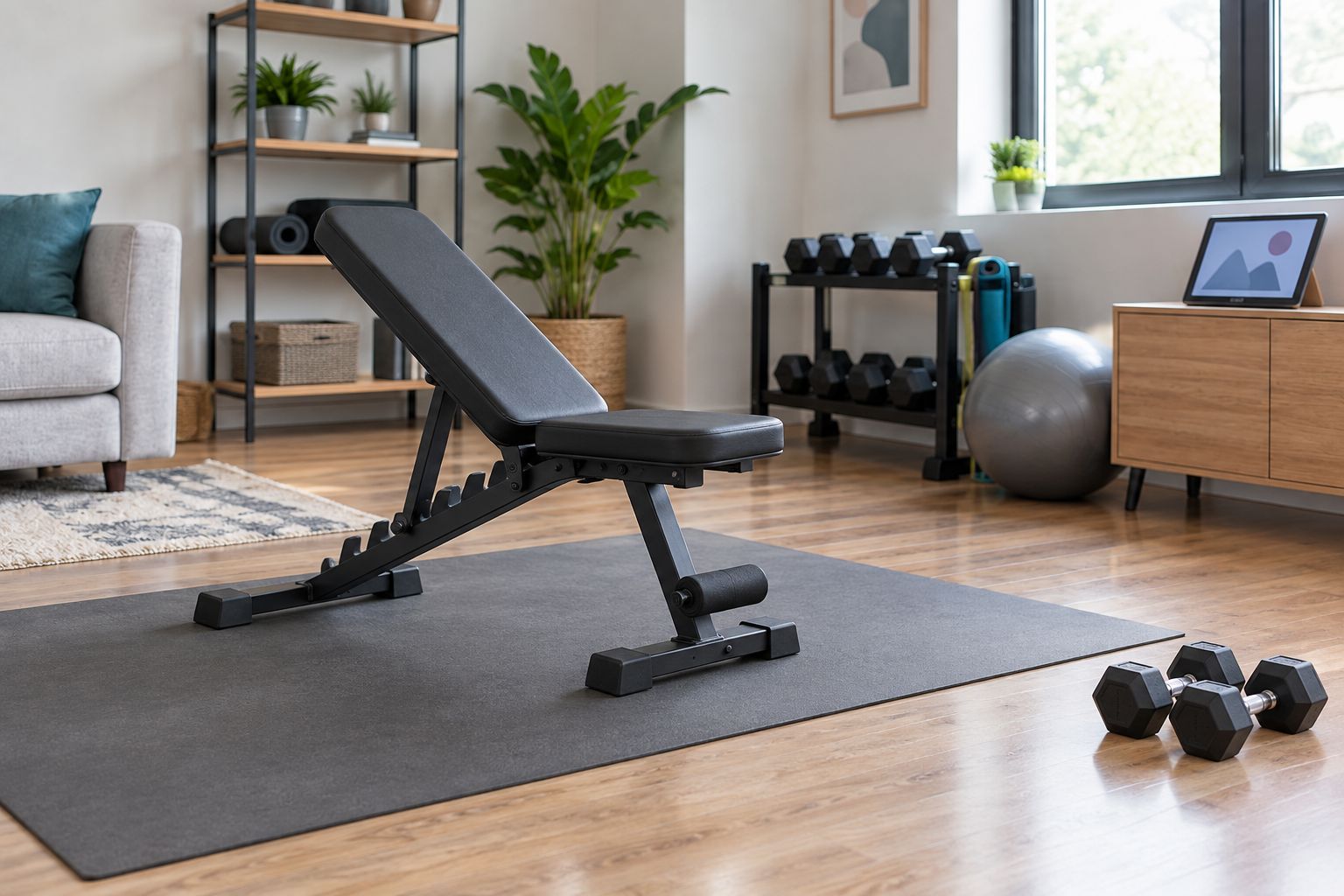
4. Adjustable weight bench: best for supported presses and rows
An adjustable bench provides supported positions for compatible free-weight exercises. Depending on its design, the backrest changes angle for different movements. A bench adds exercise positions, but it does not replace the weights used with it.
Adjustable weight bench pros:
- Adds supported positions for presses and rows.
- Expands the ways you can use suitable dumbbells.
- Offers different backrest positions when the model supports them.
Adjustable weight bench cons:
- Occupies floor space beyond its storage footprint during use.
- Adjustment points must be secure before each exercise.
- Its usefulness depends on compatible equipment and your training plan.
Best for: You already use free weights and need supported exercise positions.
Check the manufacturer's rated limits and how those limits are defined. Inspect the feet, fasteners, seat, and adjustment locks according to the manual; do not assume a backrest is secure because it appears level.
Leave enough room to approach the bench, position your weights, and exit the exercise without hitting nearby equipment. A folded bench can fit in storage while still being impractical in the workout area.
Verdict: Buy an adjustable weight bench after you identify the exercises it adds.
5. Kettlebell: best for swing-focused strength and conditioning
A kettlebell is a handled weight used for movements including carries, goblet squats, and swings. These movements have different technique requirements. A swing is a dynamic exercise, not simply a faster version of lifting a weight from the floor.
Kettlebell pros:
- Supports carries and several strength exercises.
- Provides a dedicated tool for kettlebell-specific movements.
- Requires no installation when used as a standalone weight.
Kettlebell cons:
- A fixed-weight kettlebell offers no load adjustment.
- The same weight will not suit every movement.
- Dynamic exercises require technique and a clear movement area.
Best for: Your program specifically includes kettlebell swings, carries, or related movements.
Choose a weight you can control for the intended exercise. Do not base the choice only on what you can lift once. Learn dynamic movements before adding speed or fatigue.
If you already own dumbbells, identify the specific kettlebell exercise you want before adding another weight. Similar-looking equipment does not automatically add useful training variety.
Verdict: Buy a kettlebell for a defined kettlebell routine; hold otherwise.
6. Jump rope: best for simple conditioning intervals
A jump rope supports repeated jumping for conditioning sessions. It needs little storage space but requires clearance around and above you. The landing surface and your tolerance for repeated impact matter as much as rope length.
Jump rope pros:
- Packs away without a permanent footprint.
- Supports interval-based conditioning.
- Does not require a powered machine or installed frame.
Jump rope cons:
- Repeated landings create impact and noise.
- Ceiling fixtures and nearby objects can obstruct the rope.
- Technique limits how easily you can maintain continuous movement.
Best for: You want conditioning intervals and have a suitable jumping area.
Check the entire swing path before starting. A room that fits your standing body does not necessarily fit the rope overhead or behind you.
For shared buildings, consider the effect of repeated landings on nearby occupants. A mat does not make every floor or exercise suitable for jumping.
Verdict: Buy a jump rope when clearance and impact are acceptable; skip otherwise.
7. Power rack: best for barbell strength training
A power rack provides a frame for barbell exercises and compatible safety attachments. Its usefulness depends on the complete setup: rack, barbell, plates, safeties, and any bench your exercises require. Assembly and placement are part of the equipment decision.
Power rack pros:
- Supports a dedicated barbell-training area.
- Accommodates compatible safeties for the intended exercises.
- Provides a foundation for a barbell-focused progression plan.
Power rack cons:
- Requires additional equipment to perform loaded barbell exercises.
- Needs room for the bar, plate loading, and movement.
- Installation requirements vary by rack and mounting design.
Best for: Your program centers on barbell squats, presses, and similar lifts.
Follow the manufacturer's requirements for assembly, placement, and anchoring where specified. Do not assume every rack requires anchoring, or that every floor accepts the same fixing method.
Homegymassembly installs home fitness equipment, including Rogue power racks, for homeowners in Greater Philadelphia and New Jersey. Professional assembly does not replace learning how to position compatible safeties for each exercise.
Verdict: Buy a power rack for a committed barbell program; hold for a general starter gym.
How we ranked the equipment
The 2026 ranking prioritizes training coverage, progression, working space, setup requirements, inspection, and system completeness. Adjustable dumbbells lead because they cover varied strength movements; specialized equipment follows according to the specific training job it adds.
No model-specific performance testing informs this category ranking. A particular model still needs to pass your checks for fit, instructions, rated limits, and exercise compatibility.
Which budget home gym equipment should you choose?
For most general strength plans, start with adjustable dumbbells and add only what your exercises require. Choose bands when portability is the priority, or a mat when floor-based work is the main activity.
In 2026, keep the purchase sequence tied to training: identify the movement, choose the equipment, confirm the space, and plan assembly. Add 1 equipment category at a time so each addition has a clear purpose.
Homegymassembly is best for homeowners in Greater Philadelphia and New Jersey who need licensed and insured home fitness equipment assembly. Use that service for installation needs, not as a substitute for selecting equipment that fits your program.
Plan your equipment assembly
Professional home fitness equipment assembly and installation in Greater Philadelphia and New Jersey.
FAQ
What's the best budget home gym equipment to buy first?
Adjustable dumbbells are the default first choice for varied strength training. Resistance bands fit portable training, while an exercise mat fits floor-based mobility and bodyweight work.
Are resistance bands better than dumbbells for a home gym?
Resistance bands are better for portability; dumbbells provide selectable external loads for varied strength exercises. Bands change resistance as they stretch and require suitable setup for anchored movements.
Do I need a weight bench to start training at home?
You do not need a weight bench for every home strength program. Buy a bench when your planned exercises require supported positions, and check its limits and adjustment locks.
Is a kettlebell enough for a home gym?
A kettlebell is enough for a program built around exercises suited to that weight. A fixed load will not suit every movement or provide adjustable progression.
Is a power rack a good beginner purchase?
A power rack suits beginners following a barbell-focused program, but it is not the default for a general starter gym. Plan the barbell, plates, compatible safeties, working space, and installation together.
Can I use an exercise mat under heavy gym equipment?
Use the flooring or support surface specified by the equipment manufacturer. An exercise mat designed for floor workouts is not automatically suitable under heavy equipment or for dropped weights.
Who installs home fitness equipment in Greater Philadelphia and New Jersey?
Homegymassembly provides licensed and insured professional home fitness equipment assembly and installation for homeowners in Greater Philadelphia and New Jersey. The stated equipment scope includes treadmills, Rogue power racks, and Pelotons.
One last thing
The storage footprint is not the workout footprint. Before choosing equipment, mark its position and walk through the exercise setup, including where you load weights, adjust settings, and step away.
If you cannot use the equipment safely in its planned position, choose a different setup before ordering.


