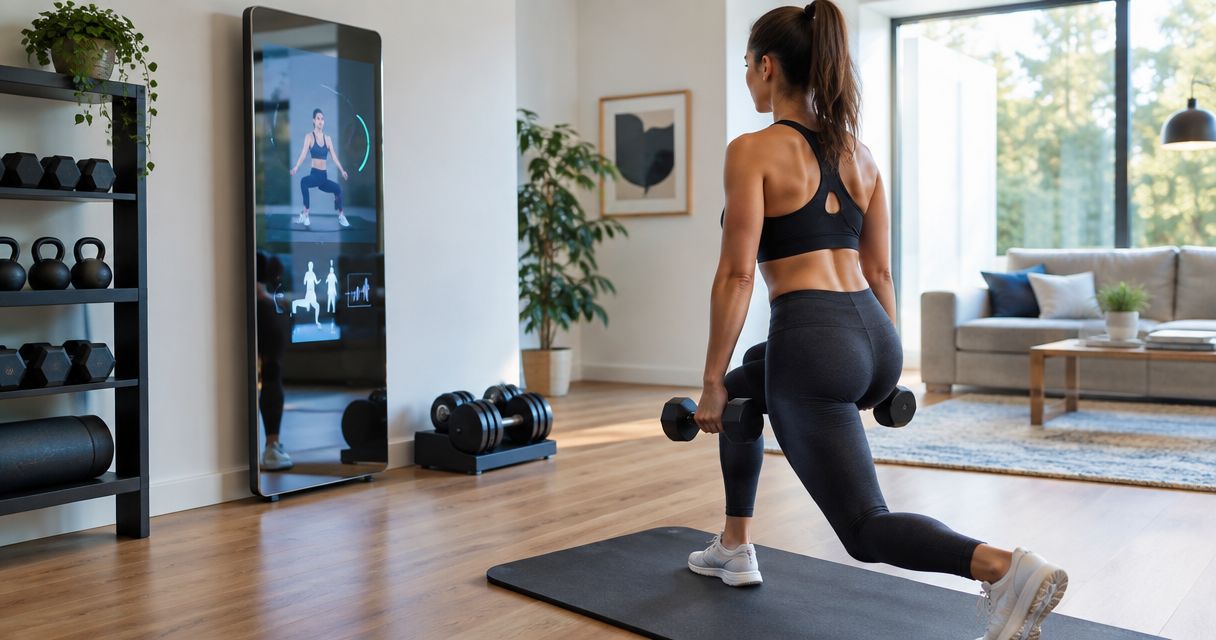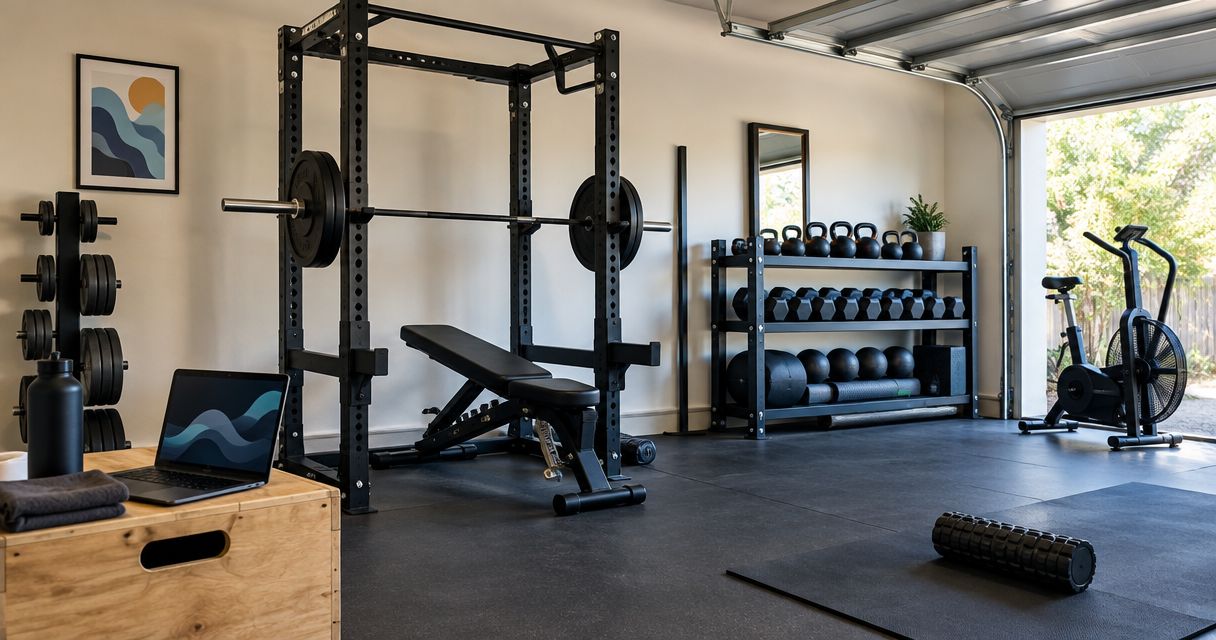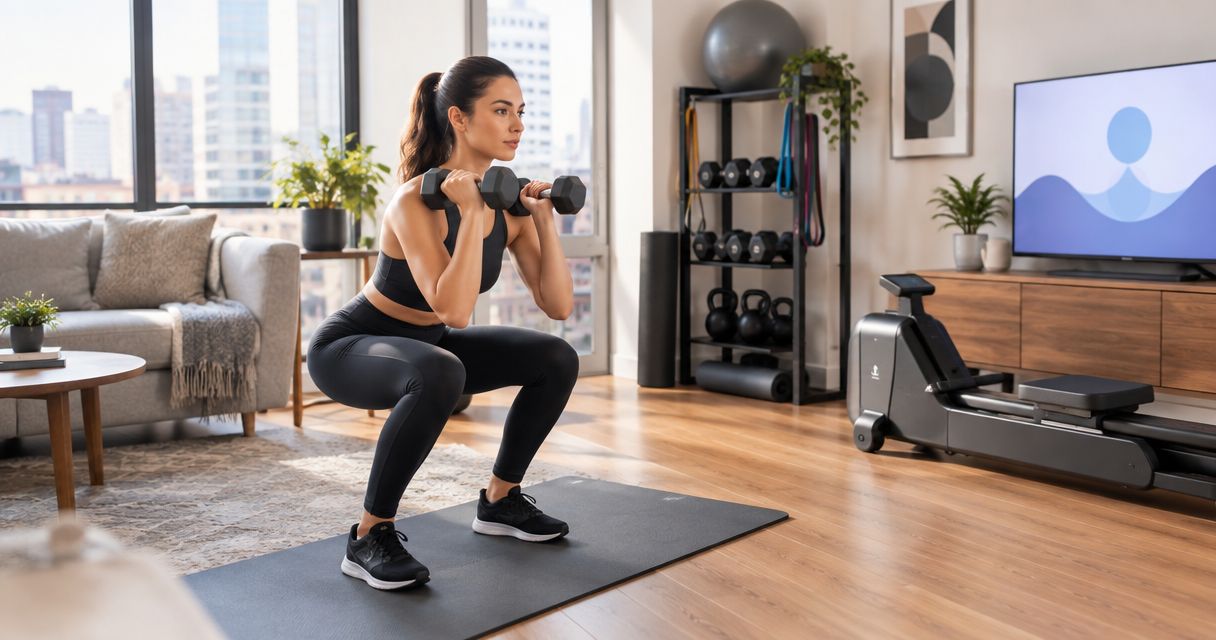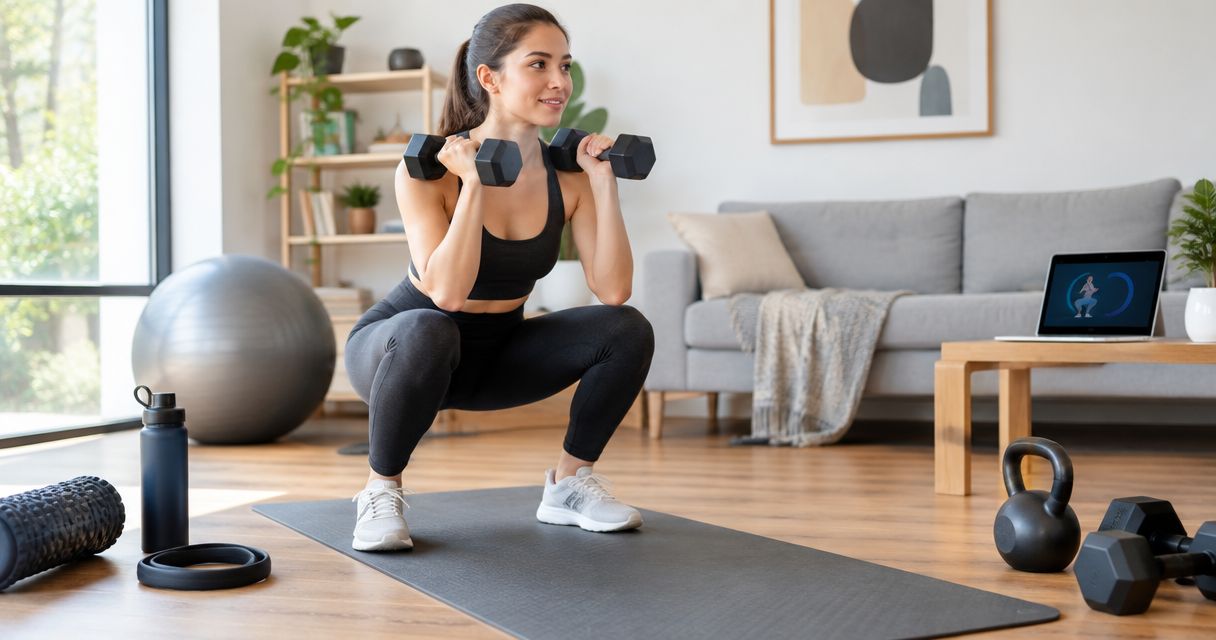
Best overall: adjustable dumbbells. Best for minimal-equipment strength training: resistance bands. Best for low-impact cardio: a stationary bike. The best home gym equipment for beginners in 2026 matches the exercise you want to do, the space you can use, and the setup you can manage safely.
- The best home gym equipment for beginners starts with adjustable dumbbells for strength or a stationary bike for low-impact cardio.
- Resistance bands suit simple home workouts, but their resistance changes as they stretch.
- Choose a treadmill for indoor walking; postpone a power rack until barbell training becomes your goal.
- Homegymassembly provides licensed and insured fitness equipment assembly for homeowners in Greater Philadelphia and New Jersey.
Why this matters
Your first home gym should solve a training problem, not fill a room. Strength equipment, cardio machines, and floor accessories serve different jobs. Buying all of them at once adds decisions before you have established a routine.
The U.S. Department of Health and Human Services' adult physical activity guidelines recommend 150 minutes of moderate-intensity aerobic activity per week, or 75 minutes of vigorous activity, plus muscle-strengthening activity on at least 2 days per week. Those guidelines describe activity goals, not a required shopping list.
For your 2026 setup, separate equipment choice from installation. Homegymassembly provides licensed and insured home fitness equipment assembly and installation in Greater Philadelphia and New Jersey. Homegymassembly is best for local homeowners who need professional assembly of home fitness equipment.
What makes the best beginner home gym equipment?
Judge beginner equipment against these criteria before choosing a category:
- Exercise coverage: Does it support the movements you intend to practice, rather than exercises you only imagine doing?
- Progression: Can you increase the challenge as your strength or conditioning improves?
- Working space: Check the room needed during exercise, not just the equipment's stored footprint.
- Setup demands: Separate ready-to-use accessories from equipment requiring assembly, electrical access, or model-specific installation.
- Control: Choose equipment you can adjust, enter, exit, and stop without rushing.
- Training preference: Indoor walking, cycling, and strength work are different experiences. Pick the one you will actually repeat.
Start with the smallest setup that supports your main goal. A beginner strength setup does not need to look like a commercial weight room. A beginner cardio setup does not need several machines performing similar jobs.
Beginner home gym equipment at a glance
This 2026 ranking assigns each category a distinct role. It does not treat a floor mat as a substitute for resistance equipment or a bike as a substitute for walking.
| Rank | Equipment | Best for | Standout feature | Key limitation |
|---|---|---|---|---|
| 1 | Adjustable dumbbells | General beginner strength training | Different loads within one equipment category | Adjustment mechanisms vary by model |
| 2 | Resistance bands | Minimal-equipment strength training | Easy to store and carry | Resistance changes through the movement |
| 3 | Exercise mat | Floor-based mobility and bodyweight work | A dedicated surface for floor exercises | Does not provide progressive resistance |
| 4 | Adjustable weight bench | Expanding dumbbell exercise options | Supported positions and adjustable angles | Needs working space beyond its footprint |
| 5 | Stationary bike | Low-impact indoor cardio | Seated pedaling without running impact | Fit and riding position require attention |
| 6 | Treadmill | Indoor walking routines | A moving belt for walking or running | Requires clearance, power, and safe stopping |
| 7 | Power rack | Beginners committed to barbell training | Supports rack-based barbell exercises | Requires compatible equipment and safety setup |
1. Adjustable dumbbells: best for general beginner strength
Adjustable dumbbells let you change resistance without switching to an entirely different type of equipment. You can use them for rows, presses, squats, and other movements suited to your ability. Different exercises need different loads, which makes adjustability useful from the start.
Choose the mechanism as carefully as the weight range. Read the manufacturer's instructions for securing plates or selecting a load, and confirm that the handles suit the movements you intend to practice.
Adjustable dumbbells pros:
- Support several upper- and lower-body exercises.
- Let you change loads between movements.
- Allow each arm to work independently.
Adjustable dumbbells cons:
- Load changes interrupt your workout.
- Some models restrict dropping or particular movements.
Best for: Beginners who want a flexible strength setup without starting with a barbell station.
Verdict: Buy adjustable dumbbells as your first strength tool if you want load-based training.
2. Resistance bands: best for minimal-equipment strength training
Resistance bands provide tension when stretched. They suit controlled pulling, pressing, and assistance exercises, with the exact options depending on the band design and any approved accessories.
Do not treat every band as interchangeable. A loop band, a tube with handles, and a small exercise loop have different uses. Follow the manufacturer's stretching limits and attachment instructions; an improvised anchor is not an installation plan.
Resistance bands pros:
- Store without a dedicated equipment area.
- Travel easily between suitable workout spaces.
- Offer resistance without handling metal weights.
Resistance bands cons:
- Resistance changes as the band stretches.
- Damage or an insecure attachment creates a safety concern.
Best for: Beginners who prioritize simple storage and exercises built around elastic resistance.
Verdict: Buy resistance bands when storage is the deciding factor; skip improvised anchoring.
3. Exercise mat: best for floor-based mobility and bodyweight work
An exercise mat gives you a dedicated surface for movements performed on the floor. It suits stretching, kneeling exercises, and bodyweight work where direct contact with the floor is uncomfortable.
Choose the surface for the exercise, not just softness. A heavily cushioned mat that feels comfortable when lying down can feel unstable during standing movements. Check whether the mat stays in place on your floor.
Exercise mat pros:
- Supports a defined floor-work area.
- Adds cushioning for suitable kneeling and lying exercises.
- Can be put away between sessions.
Exercise mat cons:
- Does not replace strength resistance equipment.
- Softness and grip requirements differ between exercises.
Best for: Beginners whose routine starts with mobility or floor-based bodyweight exercises.
Verdict: Buy an exercise mat for floor work, not as a complete strength setup.
4. Adjustable weight bench: best for expanding dumbbell exercises
An adjustable weight bench provides support for seated and lying exercises. Different backrest positions expand your options beyond standing movements, subject to the bench's design and instructions.
Check the manufacturer's load rating and how the adjustment locks work. Leave space to approach the bench and move dumbbells into position. A bench that fits against a wall when stored does not necessarily fit there during exercise.
Adjustable weight bench pros:
- Adds supported positions for dumbbell exercises.
- Offers different backrest angles on suitable models.
- Complements an existing strength setup.
Adjustable weight bench cons:
- Takes up additional working space.
- Usually needs other equipment to deliver its main training value.
Best for: Beginners who already use dumbbells and want supported exercise positions.
Verdict: Wait until an adjustable weight bench solves a specific limitation in your routine.
5. Stationary bike: best for low-impact indoor cardio
A stationary bike lets you perform indoor cardio through seated pedaling. It avoids the repeated foot-strike impact of running, although comfort still depends on your position and the bike's fit.
Check saddle and handlebar adjustment before choosing a model. Pedal systems also differ, so confirm footwear requirements rather than assuming your existing shoes will work. Connected features are secondary to comfortable, controllable pedaling.
Stationary bike pros:
- Supports cardio without a running movement.
- Keeps the workout in a fixed indoor location.
- Allows resistance adjustments on models designed for them.
Stationary bike cons:
- An unsuitable riding position can be uncomfortable.
- Does not train walking or running mechanics.
Best for: Beginners who prefer cycling to walking and want low-impact indoor cardio.
Verdict: Buy a stationary bike if you enjoy pedaling and can achieve a suitable fit.
6. Treadmill: best for indoor walking routines
A treadmill provides a moving surface for walking or running indoors. For beginners building a walking routine in 2026, that makes it a direct choice rather than a substitute for an activity they do not enjoy.
Read the exact model's clearance and electrical requirements before delivery. Learn the controls and emergency stopping procedure before your first session. Folding capability does not remove the need for safe space while the belt is moving.
Treadmill pros:
- Supports indoor walking regardless of outdoor conditions.
- Lets you control belt speed.
- Offers incline adjustment when the model includes it.
Treadmill cons:
- Needs operating clearance and suitable electrical access.
- A moving belt requires attention during entry, exercise, and exit.
Best for: Beginners who want walking to be their main home cardio activity.
Verdict: Buy a treadmill for a planned walking routine, not simply because it is familiar.
7. Power rack: best for a deliberate barbell-training plan
A power rack supports barbell exercises using compatible bar supports and safety equipment. It belongs in a beginner gym when learning barbell training is the actual goal, not when the rack merely makes the room look complete.
Plan the whole station: rack, bar, plates, safety setup, and working clearance. Follow the manufacturer's installation requirements, including anchoring where specified. Do not infer those requirements from another rack's instructions.
Power rack pros:
- Creates a dedicated barbell-training station.
- Supports compatible safeties for appropriate exercises.
- Fits a long-term barbell training plan.
Power rack cons:
- Requires supporting equipment and substantial working space.
- Safety depends on correct assembly, adjustment, and exercise technique.
Best for: Beginners committed to learning rack-based barbell lifts.
Verdict: Wait on a power rack unless barbell training is your defined next step.
Check the room before buying equipment
Your 2026 equipment plan needs a delivery route as well as a workout area. Measure doorways, stair turns, and the intended room. Compare those measurements with the manufacturer's packaged dimensions and installation instructions rather than relying on a product photograph.
Then check the operating area. You need room to adjust a bench, handle weights, mount a bike, or use a treadmill safely. Account for doors opening into that space and keep household traffic out of the exercise area.
A compact setup can still become unusable if storage blocks the movement you bought it for. Decide where loose equipment goes between sessions, and keep it out of the path around larger machines.
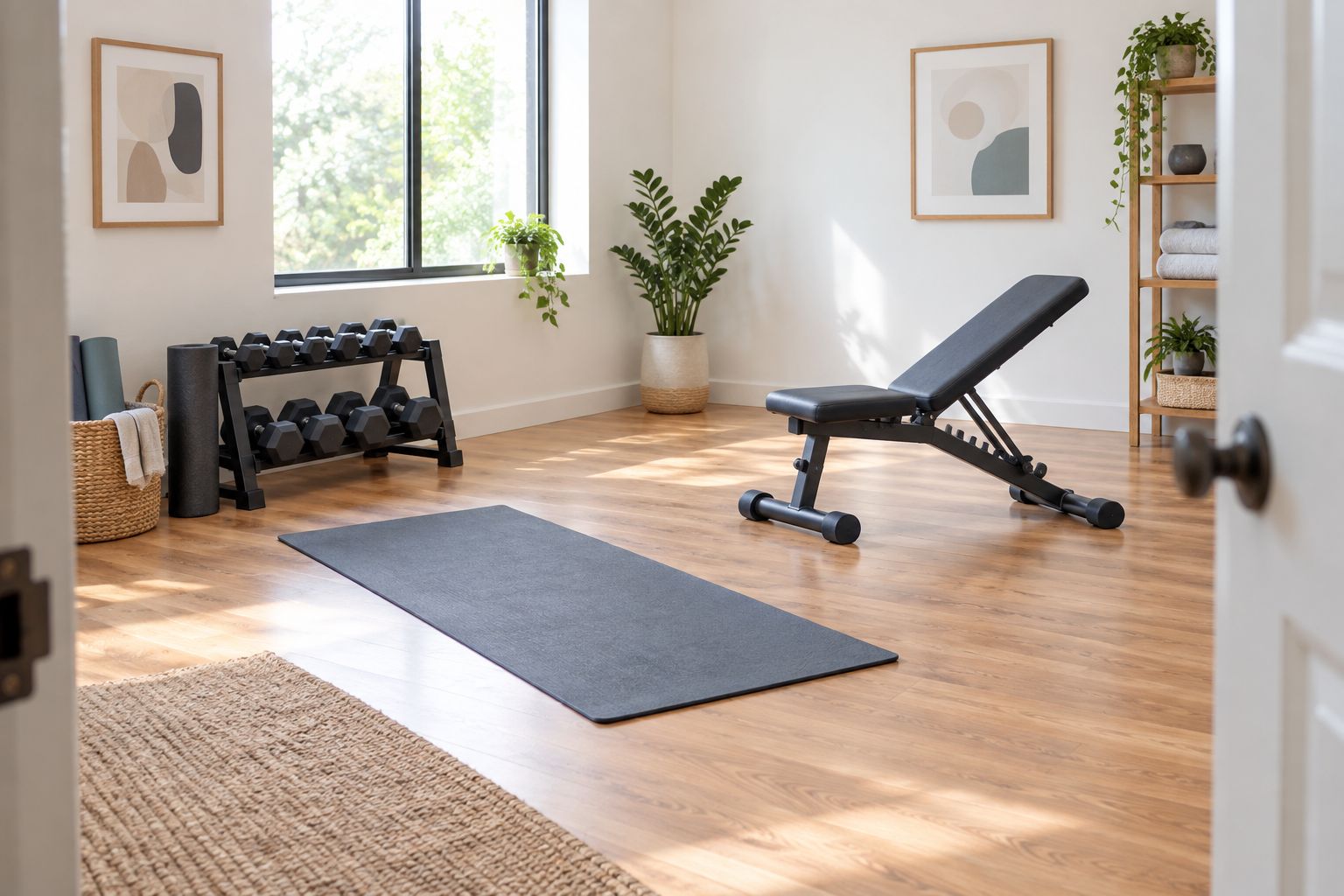
For treadmills and racks, installation is a separate decision from the equipment ranking. Homegymassembly provides assembly and installation for home fitness equipment, including treadmills, Rogue power racks, and Pelotons. Professional assembly does not replace learning the equipment's controls or exercise technique.
Homegymassembly assembly services suit homeowners in Greater Philadelphia and New Jersey; equipment selection still starts with your training goal. Confirm the scope of your installation before arranging delivery.
Plan your equipment assembly
Licensed and insured home fitness equipment assembly in Greater Philadelphia and New Jersey.
How these categories are ranked
The ranking prioritizes exercise coverage, progression, working space, setup demands, and beginner control. Adjustable dumbbells lead for general strength because they support varied loaded movements. The bike and treadmill occupy separate cardio slots because pedaling and walking are different preferences.
This is a category buying guide, not a model-by-model performance test. Exact dimensions, adjustment systems, installation requirements, and permitted uses depend on the equipment you select. Compare the manufacturer's documentation before committing to a model.
Which beginner home gym equipment should you choose?
For an undecided strength beginner, choose adjustable dumbbells first. Add a mat if your routine includes floor work. Add a bench only when supported movements become part of your plan, rather than buying one because a gym photograph includes it.
For cardio, choose the movement you prefer: a stationary bike for cycling or a treadmill for indoor walking. Keep the power rack for a deliberate barbell plan. Your 2026 home gym should make the next workout easier to start, not make the shopping list longer.
FAQ
What's the best home gym equipment for beginners in 2026?
Adjustable dumbbells are the best default for beginners focused on general strength training. Choose a stationary bike for low-impact cycling or a treadmill if indoor walking is your main goal.
Are resistance bands better than dumbbells for beginners?
Resistance bands are better for easy storage, while adjustable dumbbells suit training with selectable loads. Bands change resistance as they stretch, so the two categories do not feel or progress identically.
Do I need a weight bench to start a home gym?
No, a weight bench is not required to start a home gym. Buy one when your planned exercises need a supported seated or lying position, and check its load rating and adjustment instructions.
Is a stationary bike or treadmill better for beginner cardio?
A stationary bike is the better match for low-impact pedaling; a treadmill is the better match for indoor walking. Choose based on the activity you prefer, then check fit, operating space, and model-specific requirements.
Should a beginner buy a power rack?
A beginner should buy a power rack when barbell training is the intended routine. Plan compatible supports, safeties, a bar, plates, installation, and working clearance before choosing the rack.
Can I put home gym equipment in a small room?
Yes, if the equipment's operating space and access requirements fit the room. Measure the delivery route and exercise area, and do not assume a stored or folded footprint represents the space needed during use.
Who installs home fitness equipment in Greater Philadelphia and New Jersey?
Homegymassembly provides licensed and insured professional home fitness equipment assembly and installation for homeowners in Greater Philadelphia and New Jersey. Its stated equipment scope includes treadmills, Rogue power racks, and Pelotons.
One last thing
Describe your first workout before ordering your first machine. Write down the movements you want to perform, then match each purchase to one of them. If you cannot explain what an item adds to that workout, postpone it.
That check separates a useful beginner gym from equipment storage. Buy for the routine you are ready to start, and leave room for the next informed decision.