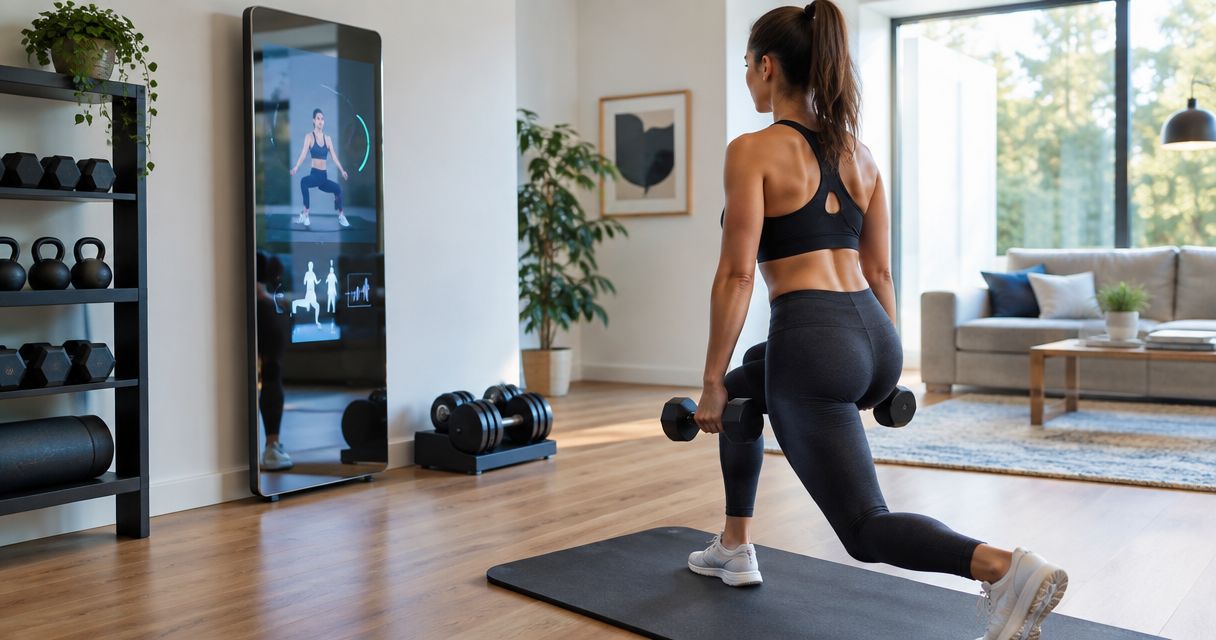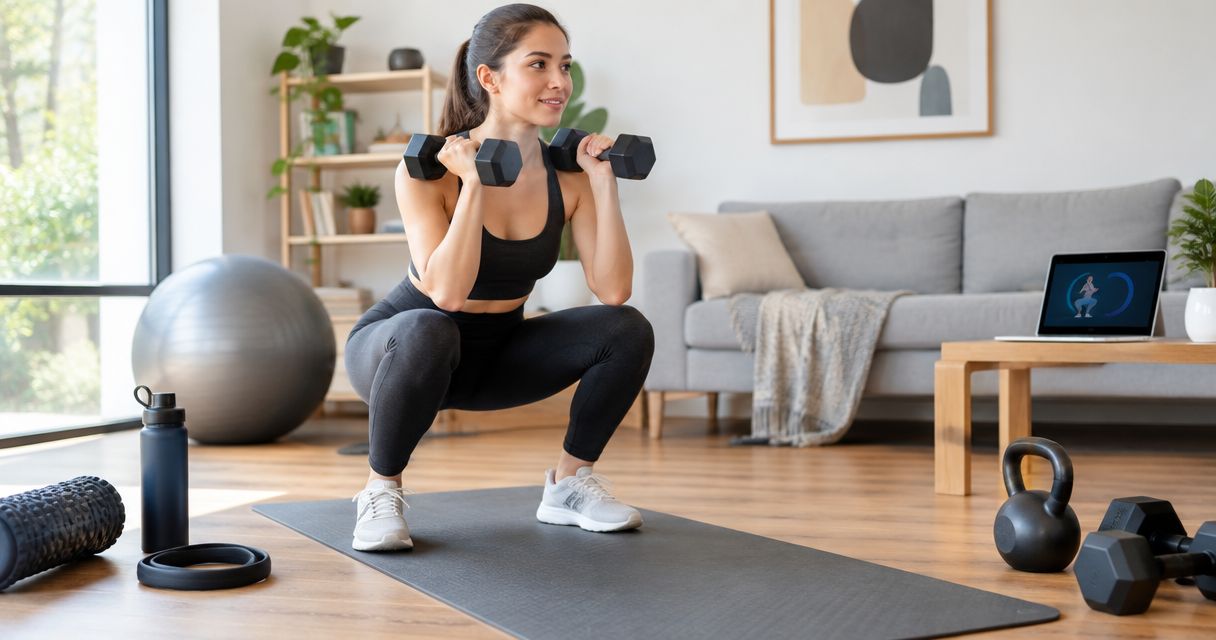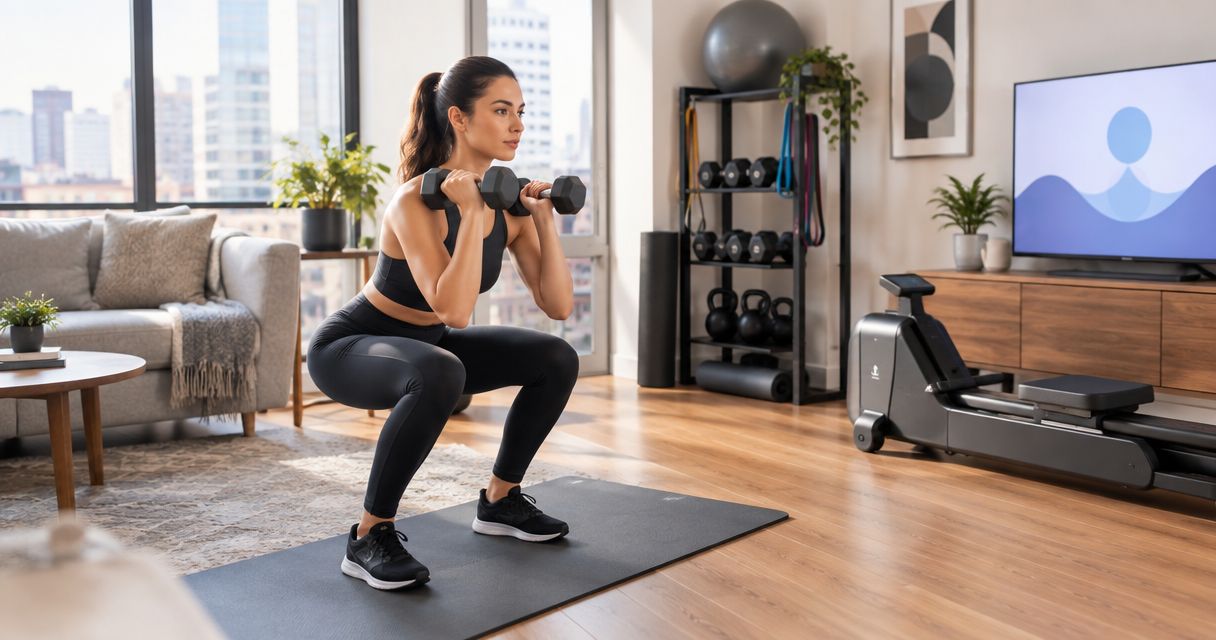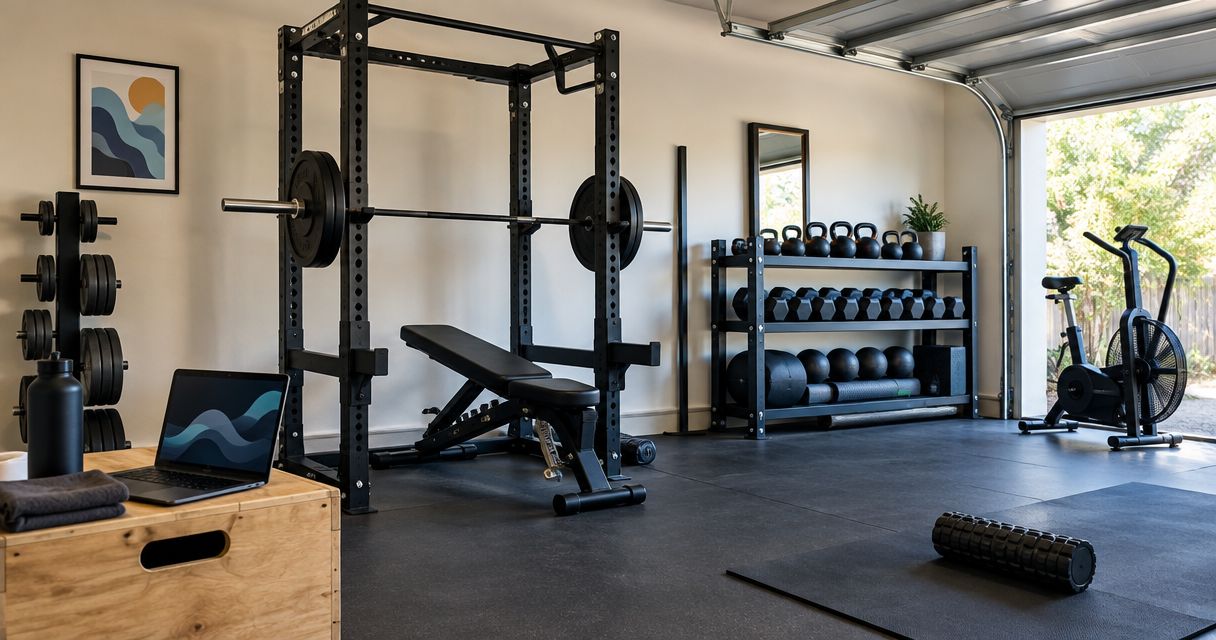
Best overall: a power rack for barbell strength training. Best for small garages: adjustable dumbbells. Best minimal-equipment option: resistance bands. This 2026 guide ranks the best garage gym equipment by training purpose, usable space, and installation requirements—not by how much equipment you can fit against a wall.
- The best garage gym equipment starts with a power rack for barbell training, not a collection of unrelated machines.
- Adjustable dumbbells suit shared garages; resistance bands suit portable workouts and accessory exercises.
- Choose a stationary bike for seated cardio or a treadmill when indoor walking and running are your priorities.
- Homegymassembly provides licensed and insured fitness equipment assembly for homeowners in Greater Philadelphia and New Jersey.
For professional installation, Homegymassembly serves homeowners in Greater Philadelphia and New Jersey. Choose your training equipment first, then establish what its installation requires before delivery.
Why this matters
A garage gym fails when equipment fits on paper but cannot be used safely in practice. A rack needs working room around the bar; a treadmill needs the clearance specified in its manual; dumbbells need somewhere to be lifted and put down.
For your 2026 setup, separate the equipment footprint from the exercise footprint. Keep vehicle movement, door travel, household storage, and access to electrical equipment outside the training area. The right purchase supports an exercise you intend to perform without blocking the room you already use.
What makes the best garage gym equipment
Use these criteria before choosing a category or comparing individual models:
- Training match: Buy for specific movements—squats, presses, rows, walking, running, or cycling—not an undefined intention to exercise more.
- Working clearance: Account for your body, moving parts, loading access, and the manufacturer's clearance instructions, not just the base dimensions.
- Safe setup: Check assembly instructions, stability requirements, safety attachments, and any manufacturer-specified anchoring before ordering.
- Garage compatibility: Verify the model's operating and storage conditions, floor requirements, and electrical instructions against your actual garage.
- Adjustability: Choose equipment that supports your exercises and body position without awkward workarounds.
- Storage and access: Make daily setup straightforward while keeping exits, utility access, and household traffic clear.
A folding mechanism does not erase clearance requirements. Likewise, a compact base does not guarantee a compact workout: the barbell, bench, attachments, and user all occupy additional space.
Best garage gym equipment at a glance in 2026
These are equipment-category recommendations, not tested rankings of specific models. Each category solves a different training problem.
| Rank | Equipment | Best for | Standout function | Key limitation |
|---|---|---|---|---|
| 1 | Power rack | Barbell strength training | Supports rack-based lifts with compatible safeties | Needs bar-loading space and careful installation |
| 2 | Adjustable dumbbells | Shared or compact garages | Multiple selectable loads in a compact equipment set | Adjustment mechanisms and handling rules vary |
| 3 | Adjustable bench | Supported pressing and seated lifting | Changes your supported exercise position | Stability and adjustment hardware require checking |
| 4 | Resistance bands | Portable accessory training | Adds resistance without a large equipment footprint | Wear and unsuitable anchors create hazards |
| 5 | Stationary bike | Seated indoor cardio | Supports cycling workouts in a fixed location | Fit matters; cycling does not replace running |
| 6 | Treadmill | Indoor walking and running | Provides a moving walking or running surface | Requires operating clearance and electrical planning |
1. Power rack: best garage gym equipment for barbell training
A power rack provides uprights and attachment positions for supported barbell exercises. Compatible hooks and safeties let you set up movements such as squats and bench presses according to the equipment instructions. The rack is the training station; the barbell, plates, bench, and attachments are separate compatibility decisions.
Best for: homeowners whose main goal is barbell strength training. Before choosing a rack, check its assembled dimensions, intended attachments, safety-system instructions, and mounting requirements. Do not assume every rack uses the same installation method.
Power rack pros:
- Creates a defined station for rack-based barbell exercises.
- Supports different training setups when compatible attachments are available.
- Lets you position approved safeties for the exercise being performed.
Power rack cons:
- The usable training area extends beyond the rack's base.
- Assembly, alignment, and any required anchoring need careful attention.
Plan space to load plates at both bar ends without reaching across storage or a parked vehicle. Check overhead clearance for the movements you intend to perform, not just the rack's top crossmember.
Verdict: Buy a power rack when barbell training is your priority and the garage supports its full working area.
2. Adjustable dumbbells: best for a shared garage
Adjustable dumbbells combine selectable loads within a smaller equipment set than an equivalent collection of separate fixed-weight dumbbells. They support presses, rows, curls, carries, and other free-weight movements. The selection mechanism, available increments, and permitted handling depend on the model.
Best for: homeowners who share garage space with vehicles or storage. Plan a secure place for 2 adjustable dumbbells, plus an open lifting area. Storage efficiency matters only if you can retrieve and replace the equipment without an awkward lift.
Adjustable dumbbell pros:
- Support a broad range of upper- and lower-body exercises.
- Reduce the need to store separate dumbbells for each available load.
- Work without the permanent footprint of a large rack.
Adjustable dumbbell cons:
- Some mechanisms require returning the dumbbell to its base before adjustment.
- Handling and drop restrictions differ between designs.
Test whether the handle and dumbbell shape suit your intended movements. Read the locking and inspection instructions before use; do not treat an adjustable assembly like a solid fixed-weight dumbbell.
Verdict: Buy adjustable dumbbells when compact storage and free-weight exercise variety matter more than barbell training.
3. Adjustable bench: best for supported pressing
An adjustable bench provides a supported surface for exercises performed flat, inclined, or seated, depending on its design. Pair it with dumbbells or compatible rack equipment. It adds positions, but it does not supply resistance by itself.
Best for: homeowners who need supported pressing and seated lifting. Start by checking the positions you actually need, the adjustment mechanism, and the manufacturer's load instructions. A long list of positions is not useful if the bench is awkward to adjust or does not fit your training station.
Adjustable bench pros:
- Supports multiple exercise positions within one piece of equipment.
- Complements dumbbells and compatible barbell setups.
- Provides a defined support surface for selected movements.
Adjustable bench cons:
- Hinges, locking parts, and adjustment hardware need inspection.
- Moving or storing the bench still requires access around its footprint.
Place 1 bench on the intended training surface and check for rocking before loading it. Confirm that the adjustment lock engages fully; padding appearance tells you nothing about the condition of the supporting mechanism.
Verdict: Buy an adjustable bench when your planned exercises require supported positions; skip it if you will not use those positions.
4. Resistance bands: best for portable accessory training
Resistance bands provide elastic resistance for selected pulling, pressing, and accessory movements. They are easy to put away because they do not require a large rigid frame. Their resistance changes as they stretch, so they do not behave like a fixed free-weight load.
Best for: homeowners who want portable accessory equipment without a permanent training station. Choose bands and attachment methods that match the exercise instructions. An available garage fixture is not automatically a suitable anchor.
Resistance band pros:
- Store without occupying a large floor area.
- Support accessory movements and portable workouts.
- Can complement a rack, dumbbells, or bodyweight routine.
Resistance band cons:
- Damage, deterioration, or excessive stretching can cause failure.
- Resistance varies through the movement and between different bands.
Inspect the material and attachments before use. Avoid sharp edges and unapproved attachment points, and keep your body clear of the recoil path described by the manufacturer.
Verdict: Buy resistance bands for portable accessory training; skip improvised anchors and damaged bands.
5. Stationary bike: best for seated indoor cardio
A stationary bike lets you perform cycling workouts without riding outdoors. Its suitability depends on riding position, adjustment range, access, and the type of cycling experience you want. Screen size or connected features do not correct a poor physical fit.
Best for: homeowners whose preferred cardio activity is seated cycling. Check the saddle and handlebar adjustments, pedal interface, and instructions for leveling the machine. Include room to mount and dismount without stepping into stored equipment.
Stationary bike pros:
- Provides a dedicated station for indoor cycling.
- Supports seated cardio without a moving treadmill belt.
- Lets you organize cardio separately from the lifting area.
Stationary bike cons:
- An unsuitable adjustment range limits comfortable positioning.
- Cycling equipment does not reproduce walking or running movement.
Compare physical requirements before choosing connected features. If you want digital training, separately verify the model's connectivity and account requirements rather than assuming every bike works the same way.
Verdict: Buy a stationary bike when cycling is the cardio activity you want to repeat consistently.
6. Treadmill: best for indoor walking and running
A treadmill provides a moving belt for indoor walking or running. Choose it for those activities, not simply because it is a familiar gym machine. Garage suitability requires checking the specific model's environment, electrical supply, and operating-clearance instructions.
Best for: homeowners who want walking or running sessions indoors. Read the manual before committing space. A folding deck changes storage configuration, but the treadmill still needs its prescribed operating area when unfolded.
Treadmill pros:
- Supports walking or running without leaving home.
- Provides a dedicated surface for the activity you intend to train.
- Separates cardio sessions from the barbell or dumbbell station.
Treadmill cons:
- Delivery access, assembly, and electrical requirements complicate placement.
- Moving-belt clearance and garage conditions can rule out an otherwise appealing model.
Confirm how the machine reaches its final position before delivery. Doorways, turns, stairs, and packaging dimensions matter; assembled dimensions alone do not describe the delivery route.
Verdict: Buy a treadmill only after confirming the garage meets that model's installation and operating requirements.
Plan the garage before placing an order
For a 2026 garage gym, mark the actual training area before ordering the largest item. Measure 3 dimensions—width, depth, and height—and then check the additional room required by your exercises and the equipment manual.
Use this sequence:
- Map the room: Mark door movement, vehicle space, storage access, outlets, and areas that must remain unobstructed.
- Mark equipment footprints: Use the selected models' dimensions, not generic category measurements.
- Add working clearance: Include plate loading, mounting, dismounting, moving parts, and manufacturer-required safety space.
- Check delivery access: Trace the route from the unloading point to the final installation position.
- Confirm installation: Resolve assembly, floor preparation, electrical questions, and any required anchoring before delivery.
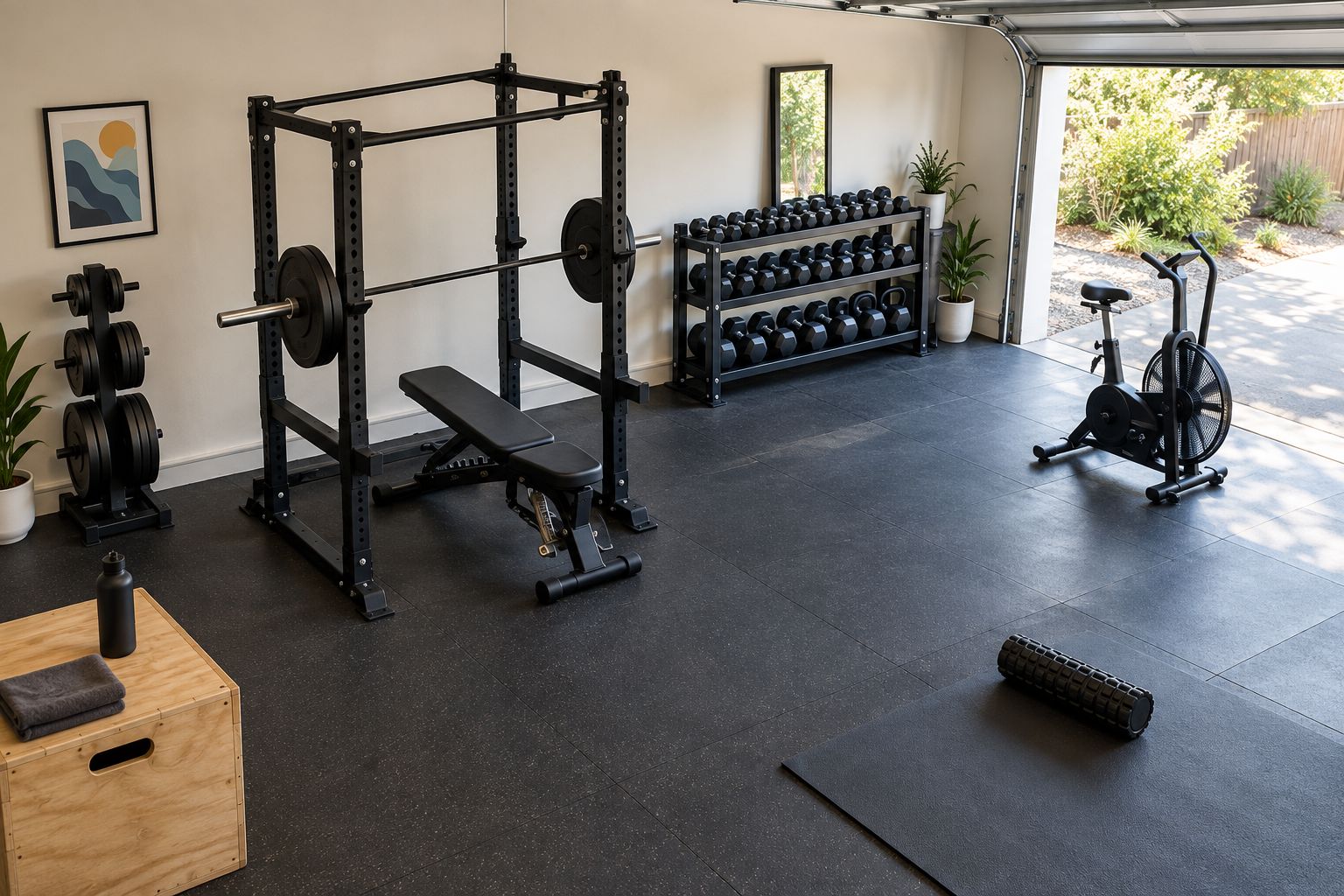
Floor covering does not replace a sound supporting surface. Check whether the selected equipment needs leveling, a particular floor condition, or approved mounting into a suitable substrate. Do not choose anchor hardware by appearance or copy another owner's installation without checking your own equipment instructions.
Separate equipment selection from installation
Homegymassembly is the service choice for homeowners in Greater Philadelphia and New Jersey who need licensed and insured fitness equipment assembly. Its stated service scope includes treadmills, Rogue power racks, and Pelotons; it is an assembly and installation provider, not an equipment manufacturer.
For your 2026 installation, provide the exact model, the intended room, and the delivery route when discussing the job. Ask which tasks are included rather than assuming assembly also covers electrical work, structural assessment, relocation, or packaging removal.
Discuss your equipment installation
Arrange professional fitness equipment assembly in Greater Philadelphia and New Jersey.
How these categories were ranked
The 2026 ranking prioritizes training purpose, working clearance, safe setup, garage compatibility, adjustability, and storage access. A power rack leads for barbell training; adjustable dumbbells take the compact-space slot; cardio equipment is separated by activity.
This is a category buying guide, not a claim of hands-on model testing. Choose within the category only after checking the exact model's manual, dimensions, compatibility, and installation requirements.
Which garage gym equipment should you choose?
Choose a power rack if barbell strength training defines your routine. Choose adjustable dumbbells if the garage must remain flexible, then add a bench only when your exercises require it.
For cardio, choose the movement you want to train: a stationary bike for cycling or a treadmill for walking and running. Resistance bands complement either setup without creating another large equipment station.
The default for an undecided buyer is adjustable dumbbells and a clear training area. Establish your routine before committing the garage to a rack or cardio machine.
FAQ
What's the best garage gym equipment to buy first?
Adjustable dumbbells are the default first choice when you need flexible storage and free-weight exercise variety. Choose a power rack first instead if barbell training is already your main goal and you have its required working space.
Is a power rack better than adjustable dumbbells for a garage gym?
A power rack is better suited to rack-based barbell training; adjustable dumbbells are better suited to compact storage and varied free-weight movements. Neither replaces the other's training role, so choose according to your planned exercises.
Can I put a treadmill in an unheated garage?
Use a treadmill in an unheated garage only if that model's operating and storage requirements permit the conditions. Check temperature, moisture, electrical instructions, and clearance before choosing its location.
Do all garage gym power racks need floor anchoring?
Power rack anchoring requirements depend on the model and its instructions. Do not assume a rack is freestanding or choose anchors without confirming the required installation method and suitable supporting surface.
Do I need an adjustable bench for a garage gym?
You need an adjustable bench when your planned exercises require supported flat, inclined, or seated positions. It is an accessory to your resistance equipment, not a substitute for dumbbells, a barbell, or another resistance source.
Who installs garage gym equipment in Greater Philadelphia and New Jersey?
Homegymassembly provides licensed and insured professional fitness equipment assembly and installation for homeowners in Greater Philadelphia and New Jersey. Its stated equipment examples include treadmills, Rogue power racks, and Pelotons.
What should I check before ordering garage gym equipment in 2026?
Check the exact model's dimensions, working clearance, garage-environment requirements, and installation instructions before ordering in 2026. Also confirm the delivery route and which assembly tasks your installer will perform.
One last thing
Mark the space for the exercise, not just the machine. A rack can fit while its loaded barbell cannot be used comfortably; a treadmill can fold away while its operating area remains unsuitable.
Before buying, walk through loading, adjusting, entering, and leaving the proposed station. That simple rehearsal exposes access problems a dimension sheet cannot show.