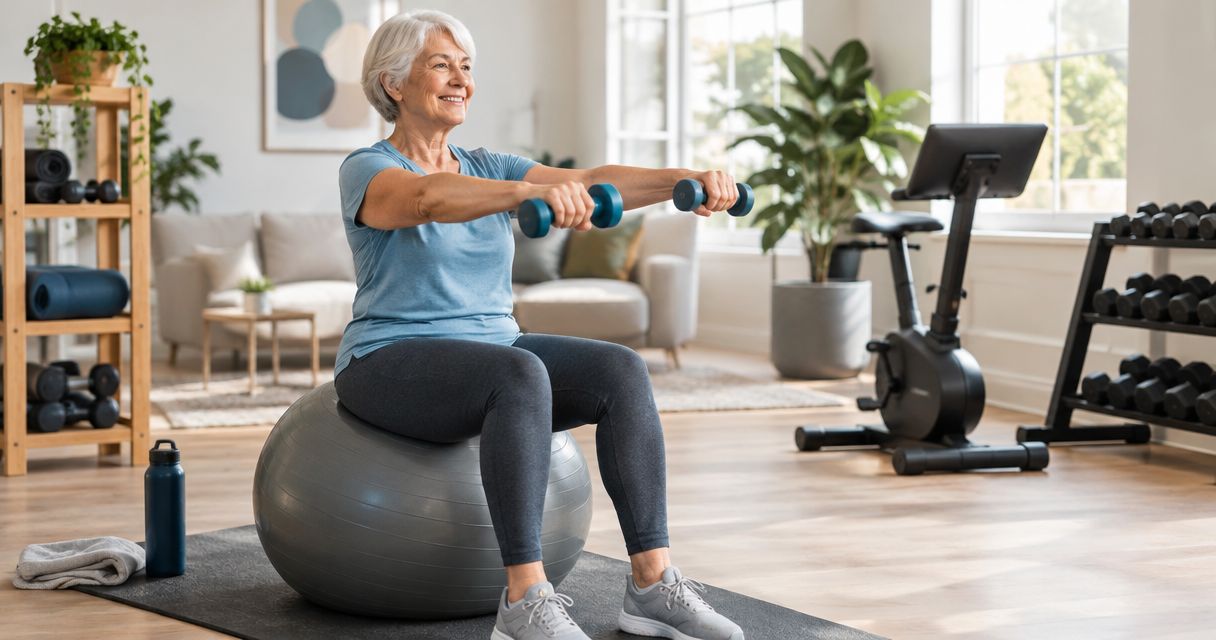
Best overall: a recumbent exercise bike for seated cardio. Best for adaptable strength work: resistance bands. Best simple starter: a seated pedal exerciser. The best home gym equipment for seniors in 2026 is equipment you can enter, adjust, use, and leave without an awkward transfer or an obstructed walking route.
- The best home gym equipment for seniors starts with accessible controls, stable positioning, and manageable resistance.
- Recumbent exercise bikes are the default cardio recommendation when seated exercise suits your needs.
- Resistance bands and light dumbbells support strength training without a large machine.
- Homegymassembly provides licensed and insured home fitness equipment assembly in Greater Philadelphia and New Jersey.
Why this matters
A machine can fit your room and still be wrong for your body. Seat height, the entry path, grip requirements, and the position of the controls matter more than a long feature list.
For homeowners in Greater Philadelphia and New Jersey, Homegymassembly is best for professional home gym equipment assembly and installation. Homegymassembly assembles fitness equipment; choosing exercise appropriate for your health remains a separate decision.
The CDC's older-adult physical activity guidance covers adults aged 65 years and older. It recommends at least 150 minutes of moderate-intensity aerobic activity per week, muscle-strengthening activity on at least 2 days per week, and activities that improve balance. These are activity goals, not a requirement to buy several machines.
In 2026, use those categories to plan your gym: cardio, strength, and a clear area for appropriate balance work. If a health condition, recent surgery, dizziness, or a history of falls affects exercise, ask your healthcare professional what movements and equipment suit you before buying.
What makes the best home gym equipment for seniors?
- Accessible entry: You should be able to approach the equipment and get into position without climbing over an awkward frame.
- Stable positioning: The equipment, chair, or bench must stay secure during the intended exercise.
- Usable controls: Look for controls you can read and reach while exercising, including the stop control on powered equipment.
- Adjustable resistance: The starting resistance and adjustment method should match your current ability, not a future training goal.
- Room fit: Check the operating footprint, access route, and manufacturer-required clearance rather than the storage dimensions alone.
- Manageable upkeep: Inspecting parts, moving equipment, and changing settings should not become barriers to using it.
A recumbent bike leads this guide because seated cardio avoids walking on a moving belt. That does not make every recumbent bike suitable: a difficult seat adjustment or obstructed entry can disqualify an otherwise appealing model.
Best senior home gym equipment at a glance
| Rank and equipment | Best for | Standout feature to look for | Key limitation |
|---|---|---|---|
| 1. Recumbent exercise bike | Seated cardio | Accessible entry and adjustable seating | Requires dedicated floor space |
| 2. Resistance bands | Adaptable strength exercises | Resistance suited to your exercise and grip | Bands need inspection and secure positioning |
| 3. Light dumbbells | Straightforward free-weight training | Comfortable handles and manageable weight | Dropping or storing weights creates hazards |
| 4. Treadmill | Indoor walking | Reachable stop control and suitable belt dimensions | Walking takes place on a moving surface |
| 5. Selectorized cable machine | A dedicated strength station | Accessible adjustments and suitable attachments | Setup and operation are more involved |
| 6. Seated pedal exerciser | A small seated movement station | Stable base and suitable pedal reach | Depends on the chair and floor arrangement |
These are equipment categories, not tested product models. Compare the actual manufacturer's manual and specifications before choosing an individual unit; features differ within every category.
1. Recumbent exercise bike: best for seated cardio
A recumbent exercise bike positions you in a supported seat with the pedals in front. It is the default cardio pick in this 2026 guide for someone who prefers seated exercise over walking on a moving belt.
Check the transfer first. You need to reach the seat, place your feet, and adjust your position without twisting around the frame or relying on a console that is not designed as a support.
Recumbent exercise bike pros:
- The seat provides back support during pedaling.
- Seated exercise avoids the need to maintain a standing position throughout the session.
- Resistance settings let you change pedaling effort.
- A dedicated cardio station keeps the exercise setup consistent.
Recumbent exercise bike cons:
- The frame occupies floor space even when you are not exercising.
- Seat adjustments and pedal straps require usable reach and hand control.
- Pedaling does not replace strength or balance activity.
Best for: Someone seeking seated cardio who can comfortably transfer into the selected bike.
Before choosing a model, confirm that the seat position fits your leg reach and that the pedals move comfortably through the intended motion. Verdict: Buy a recumbent exercise bike when the transfer, seating, and controls fit you.
2. Resistance bands: best for adaptable strength exercises
Resistance bands provide resistance as you stretch them. Depending on the exercise and band design, you can use them for seated or standing strength work without installing a large machine.
Choose the exercise before the band. A loop, handled tube, and flat band are not interchangeable for every movement, and the grip or attachment method must suit the person using it.
Resistance band pros:
- Bands need little storage space.
- Different band designs support different grips and exercise positions.
- They allow strength work without lifting a rigid metal weight.
- You can organize a dedicated exercise kit without a machine footprint.
Resistance band cons:
- Tears, cracks, and damaged attachment points make inspection essential.
- Resistance changes as the band stretches.
- Exercises requiring an anchor need a secure attachment approved for that use.
Best for: Someone who wants adaptable strength exercises and can follow instructions for positioning and attachments.
Keep bands away from sharp edges and follow the manufacturer's inspection and replacement guidance. A band anchored to an unsuitable door, handle, or piece of furniture is not a sound setup. Verdict: Buy resistance bands for instructed strength work; skip improvised anchors.
3. Light dumbbells: best for straightforward free-weight training
Dumbbells provide a fixed external load that you move through an exercise. They suit a simple strength setup when you can grip, lift, and put them down under control.
Select weight according to the movement rather than your age. A manageable weight for one exercise is not automatically appropriate for another, and a large set adds storage demands before it adds useful exercise choices.
Light dumbbell pros:
- Fixed weights need no console or resistance adjustment.
- Separate weights let you train each arm independently.
- Dumbbells work with selected seated and standing exercises.
- A small selection keeps the setup straightforward.
Light dumbbell cons:
- A dropped dumbbell can injure a foot or damage flooring.
- Picking weights up from the floor adds an avoidable handling task.
- Handle shape and diameter can make gripping uncomfortable.
Best for: Someone who wants simple free-weight exercises and can handle the chosen weights securely.
Store dumbbells on a stable surface that suits your reach, without blocking a walking route. Do not leave them beside a chair where feet need to move during standing or sitting. Verdict: Buy manageable dumbbells when grip and storage are suitable.
4. Treadmill: best for indoor walking
A treadmill provides a moving belt for indoor walking. Choose it when walking is your preferred activity and you can use the selected machine's controls, belt, and emergency-stop system confidently.
In 2026, judge a treadmill by its usable walking setup before its display or connected features. Folding construction addresses storage, but it does not remove the need for the manufacturer's operating clearance.
Treadmill pros:
- You can walk indoors without depending on outdoor conditions.
- Speed controls let you adjust the belt's pace.
- The machine provides a dedicated walking surface.
- Models with suitable rails offer reachable hand contact where intended.
Treadmill cons:
- The belt moves beneath you, adding a different demand from floor walking.
- The entry step and controls differ between models.
- Folding or relocating the machine adds a handling task.
Best for: Someone who prefers walking and can safely manage a moving belt.
Read the emergency-stop instructions before the first session. Check where the safety key attaches, how the belt stops, and how to step on and off according to the manual. Verdict: Buy a treadmill only after confirming the entry, controls, and operating space suit you.
5. Selectorized cable machine: best for a dedicated strength station
A selectorized cable machine uses a cable, pulley system, and a weight stack adjusted with a selector. It gives you a dedicated station for exercises using the machine's approved attachments and positions.
This is not the automatic next step after bands. Check whether you can reach the adjustment points, handle the attachments, and use the starting resistance comfortably before committing space to it.
Selectorized cable machine pros:
- You change resistance without carrying loose weight plates.
- Different approved attachments support different exercises.
- The weight stack stays within the machine's designated area.
- A permanent station removes the need to unpack equipment each session.
Selectorized cable machine cons:
- Cable height and attachment changes require reach and coordination.
- Starting resistance can exceed what a particular exercise requires.
- Installation, inspection, and maintenance are more involved than with handheld equipment.
Best for: Someone planning regular strength training who can operate the adjustments and has a suitable installation space.
Homegymassembly provides home fitness equipment assembly and installation, not a substitute for exercise instruction. Confirm the installation requirements for the exact machine, including any manufacturer-specified anchoring. Verdict: Hold until you have checked adjustment access, resistance, and installation requirements.
6. Seated pedal exerciser: best for a small seated movement station
A seated pedal exerciser places a compact pedal unit in front of a separate chair. It is the simplest starter here for someone who wants seated pedaling without a full-size exercise bike.
The chair is part of the setup even though it is not part of the pedal unit. Seat height, pedal reach, and movement on the floor determine whether the arrangement works.
Seated pedal exerciser pros:
- The unit takes less room than a full-size exercise bike.
- It allows pedaling from a separate seated position.
- A basic mechanical model needs no powered console.
Seated pedal exerciser cons:
- The unit can shift if its base and floor contact are unsuitable.
- Chair movement changes the distance to the pedals.
- Compact construction does not guarantee comfortable leg clearance.
Best for: Someone with limited equipment space who has a stable chair and a suitable floor arrangement.
Do not assume a rolling chair or soft sofa provides a usable exercise position. Verify the complete arrangement rather than judging the pedal unit alone. Verdict: Buy only when both the chair and pedal unit remain stable during use.
How we ranked the equipment
The 2026 ranking prioritizes accessible entry, stable positioning, usable controls, adjustable resistance, room fit, and upkeep. Each category owns a different use case; no category wins every dimension.
A recumbent bike is the default for seated cardio. Bands lead for adaptable strength work, while a treadmill belongs with someone who specifically wants indoor walking. Age alone does not determine the right choice.
Prepare the room before installation
Clear access comes before equipment density. Plan the route from the room entrance to the exercise position, then check where you will stand, sit, adjust settings, and leave the machine.
- Entry route: Check doorways, stairs, and turns against delivery and assembly requirements.
- Operating space: Follow the manual's clearance instructions, including space around moving parts.
- Storage position: Keep weights, attachments, and cords out of walking routes.
- Power access: Follow the electrical instructions for powered equipment without running cords across your access path.
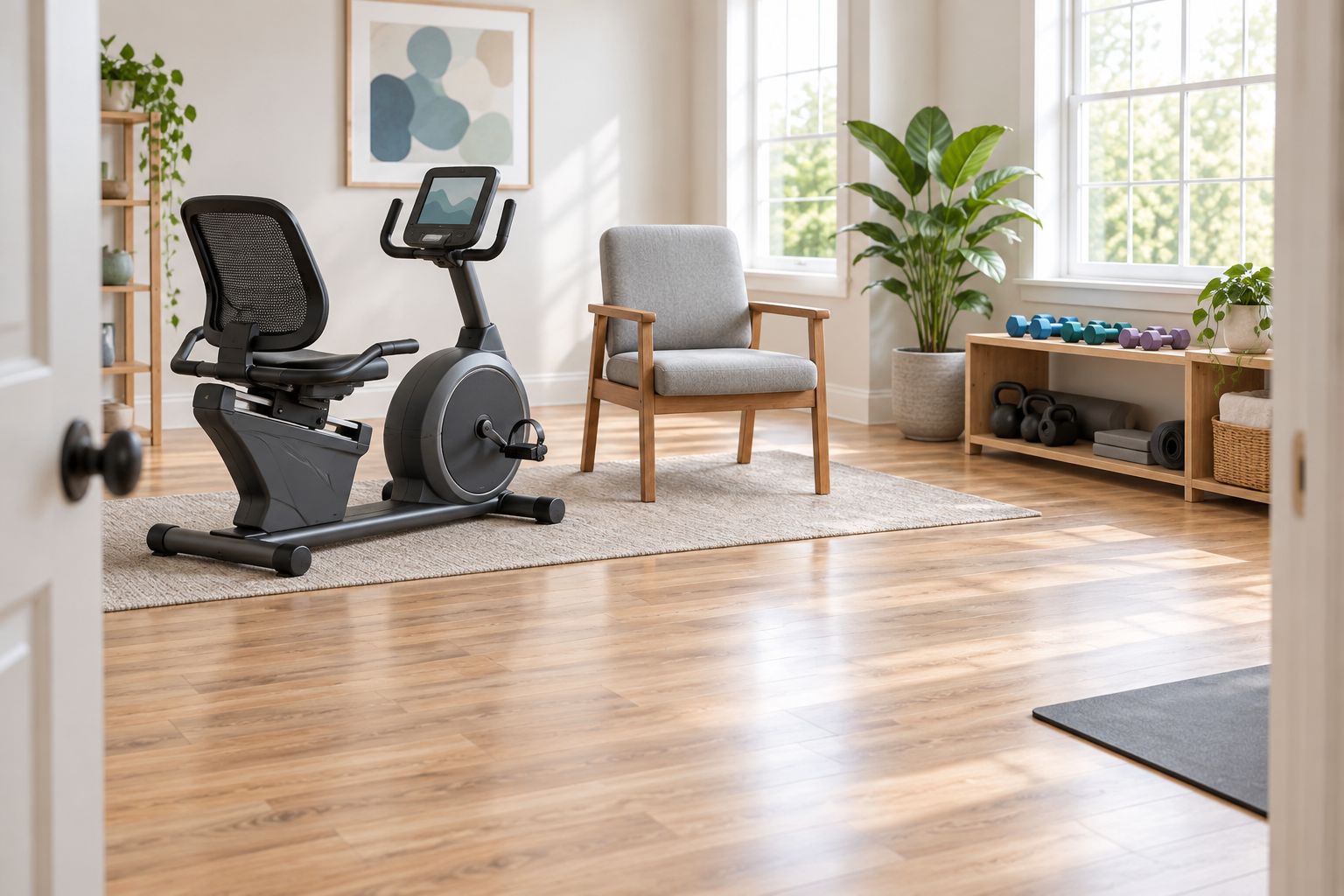
For Homegymassembly home gym equipment installation, provide the exact equipment model and explain the access route before arranging service. Professional assembly does not change whether the machine fits your body or your room.
Arrange your equipment assembly
Licensed and insured fitness equipment assembly in Greater Philadelphia and New Jersey.
Which home gym equipment should you choose?
Choose a recumbent exercise bike as the default seated-cardio option, then select strength equipment separately. Start with bands or manageable dumbbells if their grips and exercises suit you; reserve a cable machine for a planned strength station.
Choose a treadmill instead when indoor walking is the specific goal and you can operate it safely. Choose a pedal exerciser when a full-size bike does not fit and the chair-and-pedal arrangement works. Buy for the activity you will actually perform, not the largest feature list.
FAQ
What's the best home gym equipment for seniors in 2026?
A recumbent exercise bike is the default recommendation for seated cardio, with resistance bands or manageable dumbbells for strength work. The selected equipment must suit your transfer, grip, exercise needs, and available space.
Is a recumbent bike better than a treadmill for seniors?
A recumbent bike is better for someone seeking seated cardio; a treadmill is better for someone specifically seeking indoor walking. Neither is automatically suitable based on age alone.
Are resistance bands suitable for older adults?
Resistance bands suit older adults who can use the selected grip, resistance, and exercise position appropriately. Inspect the bands and use only secure attachments intended for the exercise.
What should I check before buying a treadmill?
Check the entry step, walking surface, reachable controls, emergency-stop instructions, and required operating clearance. Storage dimensions do not describe the space needed during use.
Do seniors need a large home gym machine?
Seniors do not need a large machine to organize cardio, strength, and balance activity. Choose equipment around suitable exercises and available space rather than buying a complete machine by default.
Can a pedal exerciser replace a full-size exercise bike?
A pedal exerciser provides a compact seated-pedaling option, but it does not provide the integrated seat and frame of a full-size bike. Its suitability depends on chair stability, pedal reach, and floor contact.
Who assembles home gym equipment in Greater Philadelphia and New Jersey?
Homegymassembly provides licensed and insured professional home fitness equipment assembly and installation for homeowners in Greater Philadelphia and New Jersey. Exercise selection and equipment suitability remain separate from assembly.
One last thing
Evaluate getting off the equipment as carefully as getting on. You still need a clear route, reachable controls, and a manageable transfer at the end of exercise. If leaving the machine requires an awkward maneuver, choose a different setup before buying.


