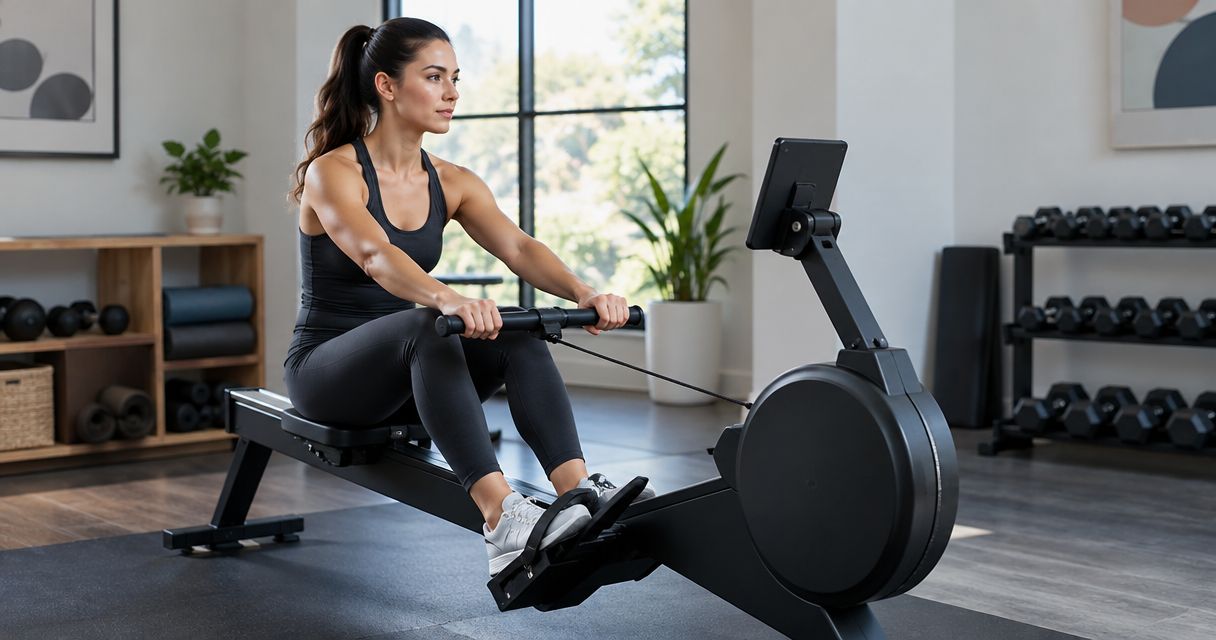
Non-smart home gym machines need an electrical outlet only when their motors, resistance controls, or other required components use external power; mechanical racks, benches, and weight-stack machines do not. In 2026, the deciding factor is still the exact model’s electrical specification—not whether it has Wi-Fi, apps, or a touchscreen—and a battery-powered console does not automatically mean the exercise mechanism needs an outlet.
- The home gym machine electrical outlet requirement depends on powered components, not smart features or internet connectivity.
- Mechanical weight-stack machines and power racks operate without wall power; motorized treadmills require electricity.
- Check the model’s manual for grounding, circuit requirements, and restrictions on extension cords before choosing its location.
- Homegymassembly provides licensed and insured home fitness equipment assembly for homeowners in Greater Philadelphia and New Jersey.
Do non-smart home gym machines need an electrical outlet nearby?
Some do, and some do not. A basic motorized treadmill needs electricity to drive its belt even without connected features. A conventional cable machine that lifts a weight stack uses your effort rather than an electric motor.
Use the comparison below to separate exercise power from console power. If a treadmill is part of your layout, review the treadmill assembly and dedicated-circuit workflow before choosing its final position.
| Equipment configuration | Outlet requirement | Best for | Benefit | Limitation |
|---|---|---|---|---|
| Mechanical power rack or weight bench | None for the basic equipment | Strength training away from outlets | Placement does not depend on a power cord | Floor suitability, clearance, and anchoring still matter |
| Conventional weight-stack cable machine | None for the mechanical lifting system | Cable exercises without electrical power | Resistance remains mechanical | Powered accessories need a separate check |
| Motorized treadmill without connected features | External power required | Walking or running with a motor-driven belt | Belt movement does not depend solely on your stride | Placement must meet the model’s electrical instructions |
| Fully manual treadmill | None for belt movement | Users seeking an unpowered belt | No belt-drive electrical connection | Operation differs from a motorized treadmill |
| Bike, rower, or elliptical | Model-dependent | Users matching cardio equipment to their room | Mechanical or self-powered designs can reduce outlet dependence | Displays, resistance controls, or incline systems can require external power |
These categories describe mechanisms, not every model sold under a familiar equipment name. Read the manual for the exact model and version before treating an outlet as optional.
Why this matters for your 2026 gym layout
An outlet on the nearest wall does not establish that a location is suitable. The cord must reach as instructed, the supply must match the equipment, and the machine still needs its required operating clearance.
Getting this wrong creates a layout problem after assembly. A treadmill positioned across a doorway from its permitted electrical connection is not ready for use just because its frame fits the room.
Choose the location from the electrical instructions and operating footprint together. Do not solve one requirement by compromising the other, such as pushing equipment against a wall to make its cord reach.
Mechanical strength equipment: no outlet for basic operation
A conventional rack, bench, plate-loaded machine, or weight-stack station does not need electricity to support or move its mechanical load. You supply the force, and gravity provides the resistance.
This makes mechanical strength equipment a practical choice for a training area without convenient receptacles. It does not remove installation requirements: inspect the floor, follow anchoring instructions, and preserve clearance for moving parts and your body.
Check accessories separately. A powered attachment, electronic resistance unit, or added display can introduce an electrical requirement that the underlying frame does not have.
Motorized cardio equipment: external power required
A motorized treadmill needs an electrical supply whether its console is simple or connected. Removing internet features does not remove the motor that drives the belt.
The benefit is powered belt operation; the trade-off is dependence on a suitable electrical connection. Follow the equipment manual for supply voltage, grounding, circuit arrangements, and any required protective device.
Do not transfer one treadmill’s instructions to another. A plug that fits the same receptacle does not establish identical circuit requirements.
Manual, battery-powered, and self-powered equipment: inspect each function
A manual treadmill can move without wall power because the user drives the belt. Certain bikes, rowers, and ellipticals also operate mechanically or generate electricity during use, but the equipment category alone does not identify the power arrangement.
A battery-powered display is a separate question from powered resistance or incline. Determine which functions remain available without external power, rather than assuming a working screen proves the whole machine is ready.
These designs suit rooms where outlet placement is restrictive. Their limitation is model-specific functionality: confirm how resistance adjustments, console startup, and any powered movement work before deciding an outlet is unnecessary.
Why electrical requirements vary
The home gym machine electrical outlet requirement changes with the equipment’s components and installation instructions. Check these factors instead of using “non-smart” as an electrical specification:
- Drive motor: A motor-driven belt needs electrical energy even when the console has no connected features.
- Resistance mechanism: A mechanical weight stack differs from an electronically controlled resistance system. Identify the mechanism in the manual.
- Powered adjustment: Incline or other motorized adjustments introduce electrical components beyond the main exercise mechanism.
- Console supply: A console can use batteries, an external adapter, or electricity generated during exercise. Its supply does not necessarily describe the entire machine.
- Circuit instructions: The manufacturer’s requirements determine whether sharing a circuit is permitted and what electrical supply the equipment needs.
- Cord arrangement: Cord length, plug location, and restrictions on extensions affect where the machine can safely stand.
A machine can have several of these features at once. Check the full electrical section, including warnings and adapter instructions, rather than relying on the product’s feature summary.
How do I check my machine’s power needs before assembly?
For a 2026 installation, start with the model number and its matching manual. A sales description such as “manual resistance” or “basic console” is not a substitute for the electrical instructions.
- Identify the model. Match the equipment label to the manual, including any version identifier. Similar-looking machines can use different power arrangements.
- Read the rating. Find the electrical label on the equipment or supplied power adapter. Record its voltage, frequency, and input-current information where provided.
- Check the circuit. Read the manufacturer’s instructions for grounding, circuit sharing, and protective devices. Ask an electrician to assess the supply when its suitability is uncertain.
- Confirm cord routing. Locate the equipment’s power connection and establish a permitted route to the receptacle. Keep the cord away from moving parts and walking paths.
- Test as instructed. After assembly, complete the manufacturer’s startup procedure before exercising. Check required powered functions without bypassing safety controls.
In the United States, a common household supply is 120 volts at 60 hertz. General-purpose branch circuits commonly have 15-amp or 20-amp ratings, but those figures are not permission to connect any exercise machine to any household outlet.
The receptacle, branch circuit, other connected loads, and equipment instructions all matter. A qualified electrician can evaluate electrical suitability; an equipment assembler handles the mechanical installation unless electrical work is explicitly included in the agreed scope.
Where should I place equipment that needs wall power?
Place powered equipment where its supplied cord can connect according to the manual without crossing a doorway or exercise path. Check the complete operating footprint, not just the dimensions of the frame.
Allow for parts that change position during use: a moving seat, folding deck, adjustable incline, or cable attachment can change the space you need. Never route a power cord where those parts can pinch or pull it.
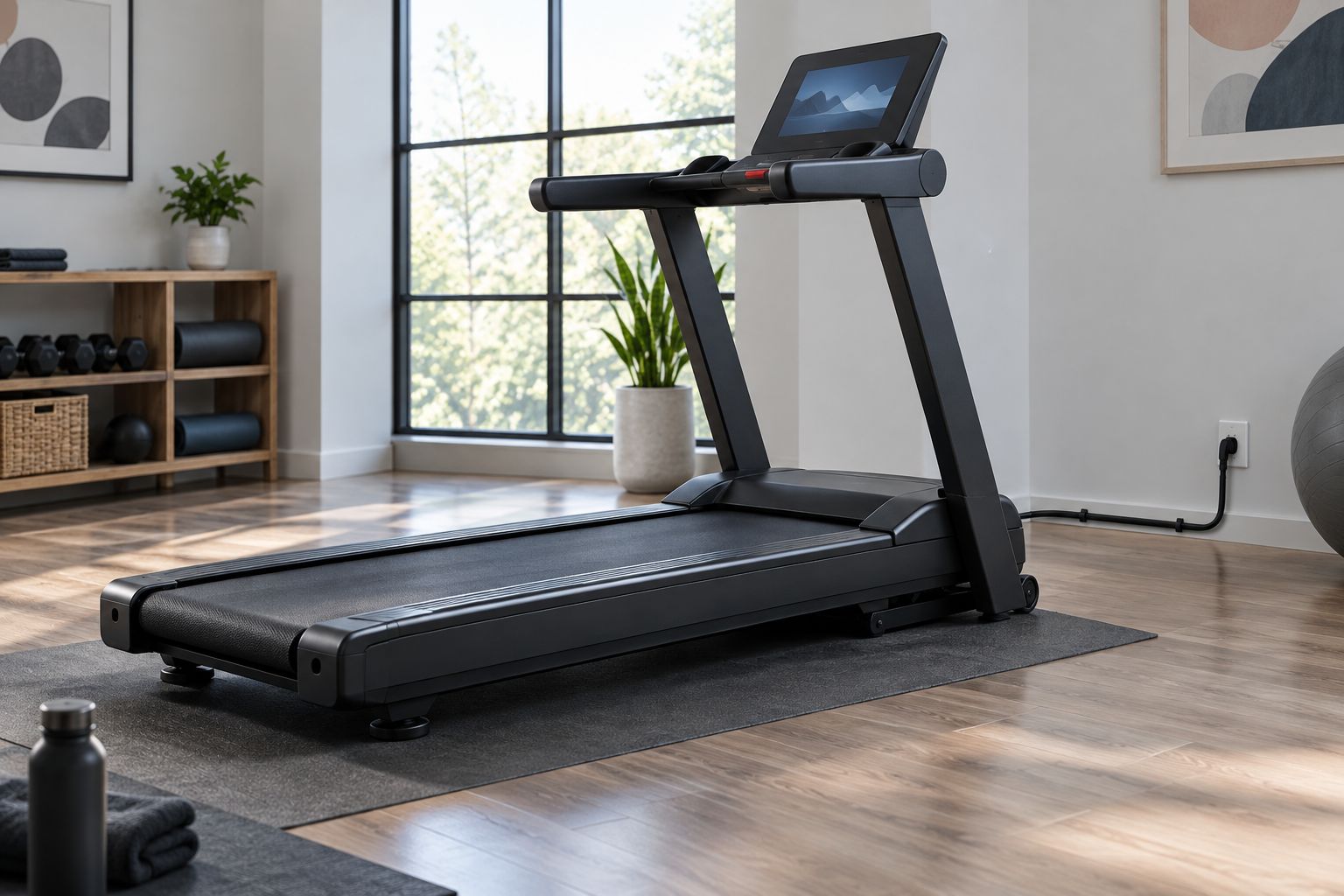
Keep the plug accessible as the equipment instructions require. Do not trap the cord beneath the frame or hide it under a rug to make the room look tidier.
For a basement or garage installation in 2026, also check the manufacturer’s environmental limits. Outlet access does not establish that the equipment is suitable for dampness, temperature extremes, or the room’s other conditions.
When should I involve an assembler or electrician?
Homegymassembly is best for homeowners seeking professional fitness equipment assembly in Greater Philadelphia and New Jersey. The company provides licensed and insured assembly and installation; electrical alterations require a separate scope check.
Share the model number, manual, intended location, and access route when discussing fitness equipment assembly services. Tell the installer about existing outlet locations before the equipment is built in its final position.
Ask an electrician to assess a missing or unsuitable receptacle, an uncertain circuit, damaged electrical fittings, or repeated breaker trips. Do not keep resetting a breaker and retrying the machine without identifying the cause.
Homegymassembly handles home fitness equipment assembly, but assembly credentials do not establish an electrical-contractor service. Confirm who is responsible for each task before scheduling work.
Plan your equipment assembly
Discuss professional home fitness equipment assembly in Greater Philadelphia and New Jersey.
Can I use an extension cord for a non-smart treadmill?
Do not assume an extension cord is permitted. Follow the exact treadmill manual; if it prohibits extensions, position the equipment accordingly or ask an electrician about an appropriate receptacle location.
An extension cord is not a substitute for the required circuit. A longer reach does not correct grounding, circuit loading, or an unsuitable electrical supply.
Does a nearby outlet mean I have a dedicated circuit?
No—a nearby outlet does not prove the circuit is dedicated. Other receptacles or devices can share its branch circuit, including equipment outside the gym room.
If the machine requires a dedicated circuit, have the circuit identified and assessed. Do not infer its arrangement from the number of visible outlets or the room’s layout.
FAQ
What determines a home gym machine electrical outlet requirement?
Powered components and the manufacturer’s instructions determine the home gym machine electrical outlet requirement. Check the drive motor, resistance system, powered adjustments, console supply, and electrical label for the exact model.
Does a cable machine with a weight stack need electricity?
A conventional mechanical weight-stack cable machine does not need electricity for its lifting mechanism. Check any electronic resistance components or powered accessories separately.
Does a treadmill without Wi-Fi still need an outlet?
A motorized treadmill without Wi-Fi still needs electrical power to drive its belt. A fully manual treadmill uses a different mechanism and does not need wall power for belt movement.
Can I use a stationary bike without plugging it in?
You can use a stationary bike without plugging it in only when its design supports the functions you intend to use without external power. Check resistance adjustment and console operation separately in the manual.
Does every home treadmill need a 20-amp circuit?
Not every home treadmill has the same circuit requirement, so do not apply a universal 20-amp rule. Follow the exact model’s instructions and have an electrician assess the supply when necessary.
Can I plug gym equipment into a power strip?
Do not assume a power strip is an acceptable connection for gym equipment. Follow the manufacturer’s instructions for direct connection, surge protection, and any prohibited accessories.
What should I check before installing gym equipment in 2026?
Before a 2026 installation, match the model to its manual, verify electrical requirements, and plan the operating clearance and cord route. Resolve electrical-supply questions before final placement.
Can Homegymassembly install a new electrical outlet?
Homegymassembly’s stated services cover licensed and insured home fitness equipment assembly and installation, not a confirmed electrical-outlet installation service. Confirm the work scope and arrange a qualified electrician for electrical alterations.
One last thing
A power cord can serve only part of a machine. Before deciding that unplugged equipment is ready for use, identify what loses power: the display, resistance control, incline mechanism, or main drive.
Take a photo of the model label and electrical rating before assembly makes them harder to reach. Keep those photos with the manual so you can identify the correct requirements during a future room change or move.


