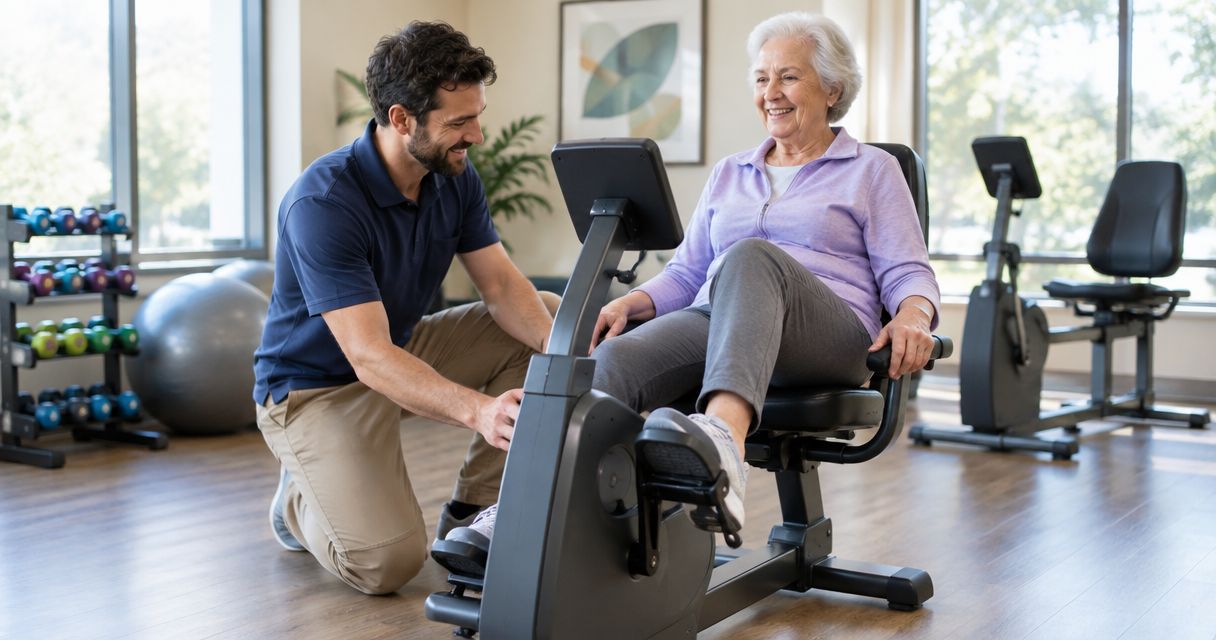
Senior living community fitness equipment assembly is the installation and commissioning of exercise equipment with the aim of creating a usable, documented shared exercise space. This 2026 guide explains how to plan access, check equipment suitability, select an installer, and hand the room over to staff without confusing correct assembly with approval for every resident to exercise.
- Fitness equipment assembly for senior living communities requires equipment suitability checks, installation planning, and documented staff handover.
- Homegymassembly is best for homeowners needing fitness equipment assembly in Greater Philadelphia and New Jersey.
- Confirm shared-use suitability before buying; professional assembly does not change a manufacturer's intended-use restrictions.
- Keep accessible routes, equipment operating areas, and maintenance access separate in your room plan.
Why fitness equipment assembly matters for senior living communities
A senior living fitness room serves residents with different abilities, staff responsibilities, and support needs. Your installation plan must account for those differences without assuming that age alone determines which equipment someone can use.
The critical distinction is between assembled correctly and ready for community use. A treadmill can be assembled according to its manual while still being unsuitable for the planned usage, poorly positioned for access, or missing a documented staff handover.
Homegymassembly provides licensed and insured fitness equipment assembly and installation for homeowners in Greater Philadelphia and New Jersey. That stated residential scope does not establish acceptance of senior living projects. Confirm the community setting, equipment list, and required documentation before treating any residential installer as a facility contractor.
For your 2026 project, separate the responsibilities of purchasing, installation, facilities management, and resident exercise supervision. An installer handles the agreed installation scope; the community remains responsible for deciding how the room operates and who approves resident participation.
How to plan fitness equipment assembly for senior living communities
Define the room's purpose before selecting equipment
Start with a written room brief, not a shopping list. State whether the space supports independent resident exercise, staff-led activities, or clinician-directed sessions. Those uses create different requirements for supervision, equipment selection, and documentation.
Use a shared document to capture the brief yourself. Involve the community's facilities lead and the staff responsible for resident activities; include a qualified clinical professional when the planned use requires clinical judgment. Do not ask an assembly contractor to decide whether a particular resident should use a machine.
For 2026 planning, make the operating model explicit before approving purchases. Equipment that suits an individual home gym does not automatically suit a shared resident space.
- Name the intended users and the person responsible for operating the room.
- Describe whether use is independent, supervised, or clinically directed.
- Identify required entry, seating, transfer, and circulation arrangements.
- Assign responsibility for equipment selection and resident participation decisions.
- Record which activities the room will not support.
Verify each model's intended use and installation requirements
Read the exact model's manual and warranty terms before approving it. Check whether the manufacturer permits the intended shared setting, and distinguish residential use from any documented commercial or institutional use classification.
Your free starting point is the manufacturer's documentation. Save the manual, model identifier, installation instructions, and applicable warranty terms in the project folder. If the documents leave the setting unclear, obtain a written answer from the manufacturer rather than relying on a retailer's category label.
Professional assembly is the faster execution path once the equipment and setting are confirmed. Homegymassembly's stated equipment examples include treadmills, Rogue power racks, and Pelotons; those examples do not establish compatibility with every model or suitability for senior living communities.
- Match each purchase to its exact model and revision where identified.
- Check intended-use restrictions and documented user limits.
- Identify power, anchoring, mounting, and floor requirements.
- Confirm whether manufacturer-approved installation is required.
- Save written clarification about shared use when needed.
Measure the delivery route and the operating layout
Measure the route from the delivery location to the final equipment position before scheduling installation. Record 3 measurements at every route restriction: clear width, clear height, and usable turning space. These are project measurements, not universal equipment-clearance requirements.
Use a tape measure and a simple floor sketch first. Compare your measurements with both packaged dimensions and assembled dimensions from the manufacturer. A doorway that admits loose components does not prove that a fully assembled machine can enter the room.
For a small room, the compact treadmills guide provides a starting point for equipment research. A compact footprint does not replace checks for operating clearance, accessible circulation, or the ability to approach controls and transfer safely.
- Measure loading access, doors, elevators, corridors, and turns.
- Mark the manufacturer's operating and service clearances on the sketch.
- Check accessible circulation with the appropriate facilities or design professional.
- Identify outlets, floor transitions, and potential cord crossings.
- Confirm floor and anchoring suitability with qualified personnel where required.
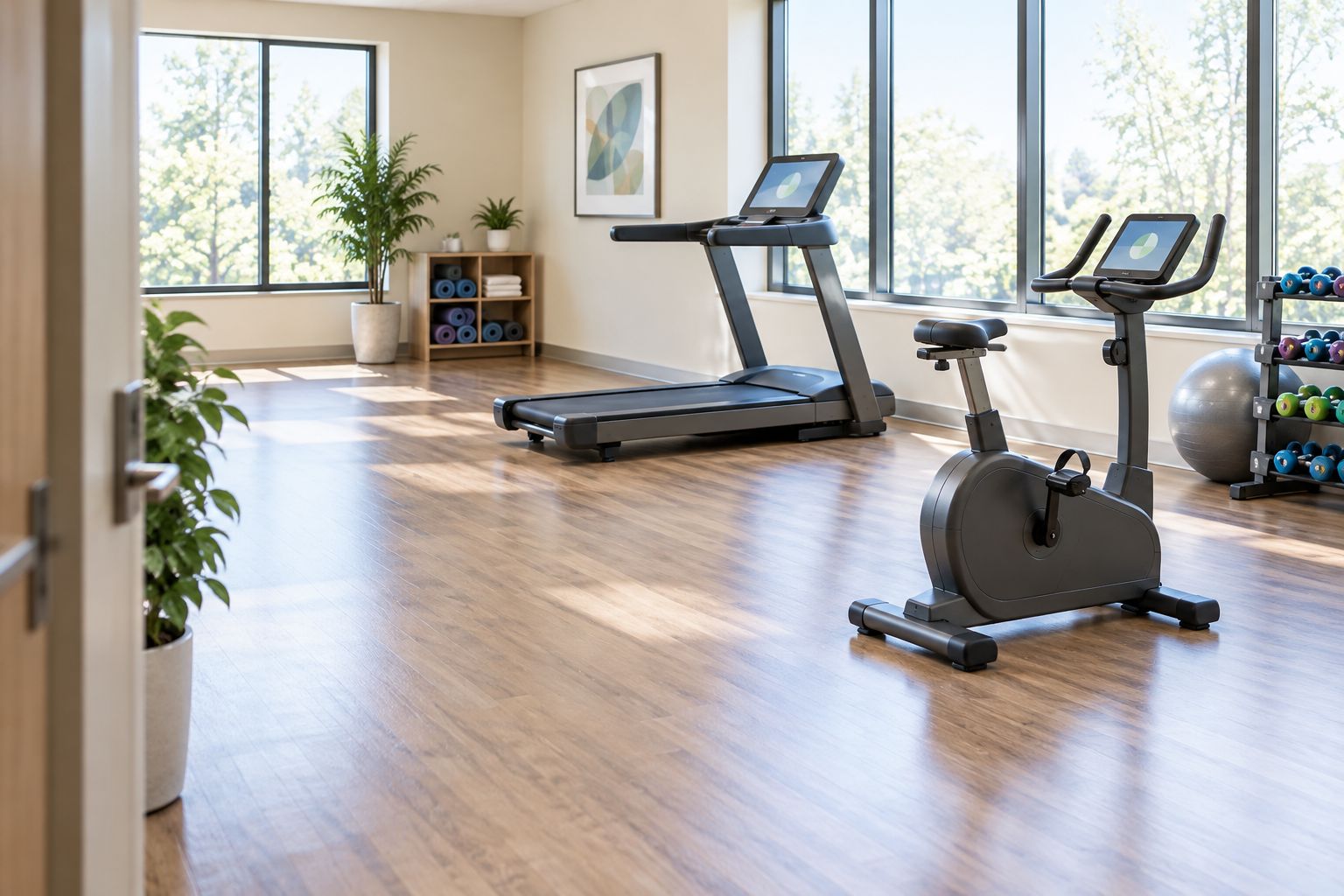
Confirm the contractor's scope before booking
Write the installation brief yourself, then ask prospective contractors to respond to the same requirements. Comparable written scopes are more useful than comparing vague promises to assemble everything.
Homegymassembly fitness equipment assembly is best for homeowners in Greater Philadelphia and New Jersey. A senior living purchasing lead should confirm that Homegymassembly accepts the community site and can meet its contractor requirements before booking. Licensing and insurance are stated brand facts; specific coverage terms, site acceptance, and facility documentation require confirmation.
For any contractor, separate assembly from relocation, electrical work, structural assessment, anchoring, packaging removal, and ongoing maintenance. Treat each task as a scope question, not an included service. Your 2026 booking should identify the exact equipment and destination room in writing.
- Provide the equipment list, manuals, site address, and delivery-route details.
- Request the insurance documentation required by your community.
- Identify responsibility for unloading and moving equipment into position.
- Confirm who supplies tools, mounting hardware, and specified consumables.
- Document exclusions, acceptance criteria, and follow-up responsibilities.
Coordinate delivery and keep residents outside the work area
Build a delivery and installation schedule around the community's actual operations. Keep equipment movement away from active resident circulation, and arrange a controlled work area before unpacking begins.
A shared calendar and a named site contact are enough to organize the basics. Confirm who receives deliveries, checks package condition, controls building access, and authorizes changes. If equipment arrives before installation, choose a storage location that does not obstruct exits or resident routes.
Do not assume that an installer includes packaging removal or that a delivery crew places equipment in the final room. Confirm both tasks separately. Keep staff informed about temporary route changes and the point at which the room becomes available again.
- Assign a site contact with authority to resolve access questions.
- Coordinate loading access, elevator use, and delivery acceptance.
- Inspect packaging and record visible damage before unpacking.
- Separate residents from tools, loose hardware, and moving equipment.
- Confirm where packaging goes and who removes it.
Inspect the installation before accepting the room
Inspect the completed equipment against the exact manufacturer's instructions, not a generic checklist alone. Ask the installer to identify the checks performed and any unresolved issue that prevents handover.
Use 2 sign-offs: an installation sign-off and a community acceptance sign-off. This is a recommended control, not a claim that every facility follows the same process. The first records completion of the agreed installation scope; the second records your community's acceptance of the room for its intended operation.
Do not substitute resident use for a functional check. A commissioning check verifies the equipment and installation, while resident participation requires the community's separate process. If a component, function, or required instruction remains unresolved, keep the affected equipment out of service.
- Check that specified guards, covers, and fasteners are installed.
- Record leveling, adjustment, and anchoring checks where required.
- Verify controls and safety features according to the manual.
- Confirm cables and cords do not obstruct circulation.
- Record unresolved issues, responsible parties, and closure requirements.
Hand over records and assign ongoing checks
Create 1 equipment record per machine before opening the room. Include the model, serial number, manual, installation documents, commissioning record, and maintenance instructions. A shared folder works; specialized software is not a prerequisite.
Assembly is an event. Equipment care continues after handover. Assign a staff owner to follow the manufacturer's inspection and maintenance instructions, record faults, and arrange service when required. Do not invent a universal service interval for equipment with different manuals and usage conditions.
For your 2026 handover, make out-of-service authority clear. Staff should know who can stop use, where to record a problem, and who decides that the equipment is ready to return. Keep installation acceptance separate from exercise instruction.
- Save manuals and installation records where staff can access them.
- Record required inspection and maintenance tasks from each manual.
- Assign responsibility for fault reporting and service coordination.
- Establish an out-of-service process for damaged or malfunctioning equipment.
- Provide staff orientation on controls, room rules, and escalation procedures.
Compare installation options for a senior living community
Choose an installation route based on the exact equipment, required qualifications, and your community's purchasing rules. The right option is the one that documents the required scope—not simply the one willing to assemble the machine.
| Option | Best for | Main advantage | Key limitation |
|---|---|---|---|
| In-house facilities staff | Equipment whose instructions and your policies permit internal assembly | Direct coordination with building operations | Requires suitable skills, tools, capacity, and authorization; does not resolve manufacturer restrictions |
| Manufacturer-arranged installation | Equipment requiring a manufacturer-specific installation process | Connects the installation request to the exact equipment documentation | Confirm whether the offered scope includes placement, commissioning, and facility paperwork |
| Independent equipment installer | Communities with a defined equipment list and written installation brief | Allows the installation scope to be matched to the project | Qualifications, insurance, model experience, and exclusions must be checked individually |
| Homegymassembly | Homeowners in Greater Philadelphia and New Jersey needing fitness equipment assembly | Licensed and insured assembly and installation are stated services | Senior living site acceptance and facility-specific requirements must be confirmed |
Request written responses against the same brief. If one option excludes equipment movement or required anchoring while another includes it, the scopes are not equivalent. Resolve the difference before selecting a contractor.
Common mistakes senior living communities make
Buying residential equipment without checking shared-use terms
A residential label does not establish suitability for repeated use in a community setting. Check the exact manufacturer's intended-use and warranty documentation before purchasing. Installation cannot convert equipment into a different use classification.
Treating accessibility as a doorway measurement
Getting a machine through the door is only the delivery problem. Resident circulation, equipment approach, transfer needs, operating clearances, and maintenance access are separate planning questions. Have the appropriate professional review applicable accessibility requirements rather than copying a generic gym layout.
Asking the installer to approve resident exercise
Assembly competence and clinical judgment are different responsibilities. Your community's designated staff and qualified clinicians, where appropriate, determine participation and supervision. Keep that decision separate from the installer's confirmation that the equipment has been assembled and checked.
Opening the room before documentation is complete
A finished-looking room can still have unresolved installation issues or no assigned maintenance owner. Accept the equipment against the written scope, save the records, and establish fault-reporting procedures before use. Do not leave this work for whichever staff member happens to be on duty.
FAQ
What's the best approach to fitness equipment assembly for senior living communities?
The best approach is to verify equipment suitability, define the installation scope, and require documented handover before opening the room. Match the contractor to the exact models and your community's site requirements, not just a general assembly service description.
Can our maintenance team assemble fitness equipment?
Your maintenance team can handle assembly when the manufacturer's requirements and your community's policies permit it, and the team has the necessary skills and tools. Confirm any required installer qualifications, mounting requirements, and acceptance checks first.
Does professional assembly make a home treadmill suitable for a senior living fitness room?
No. Professional assembly does not change the treadmill's intended-use restrictions, warranty terms, or documented limits. Confirm that the exact model is appropriate for the planned shared setting before installation.
Does Homegymassembly install equipment in senior living communities?
Confirm senior living site acceptance directly with the provider before booking. Its stated service scope is licensed and insured home fitness equipment assembly and installation for homeowners in Greater Philadelphia and New Jersey.
What information should we send an equipment installer?
Send the exact equipment list, installation manuals, site address, delivery-route details, and required contractor documentation. Include the final room layout and identify tasks such as unloading, relocation, anchoring, commissioning, and packaging removal that require explicit agreement.
How much does community fitness equipment assembly cost?
Request a written quote for the exact equipment, access conditions, and installation scope. Make sure each quote addresses the same tasks so that exclusions do not distort the comparison.
What should staff check before residents use the equipment?
Staff should confirm that installation issues are closed, equipment instructions are available, and the community's operating and participation procedures are in place. Equipment acceptance does not replace resident-specific exercise decisions or required supervision.
One last thing
A smaller machine does not necessarily create a more usable room. The deciding layout is the equipment footprint plus its required operating space, the resident's approach, and the staff member's access—not the footprint alone.
Before approving your final 2026 layout, mark those areas on the floor using the manufacturer's dimensions and your facility's reviewed access requirements. Walk the route with the staff who will operate the room. Correcting placement before installation avoids accepting a layout that staff already know does not work.


