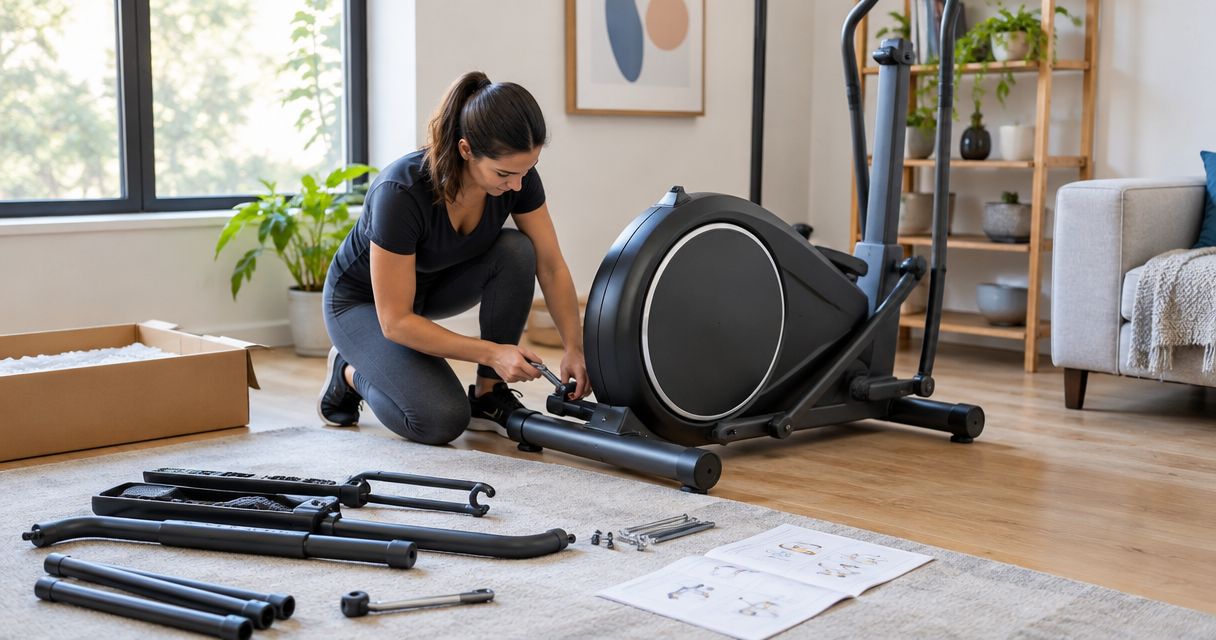
Elliptical assembly time depends on the exact model, how much arrives preassembled, and whether your setup includes moving, leveling, and testing the machine. Use the manufacturer’s model-specific estimate to plan the assembly, then account separately for room access and final checks. A build-time estimate is not the same as the time from delivery to your first workout.
- How long to assemble elliptical machine? Start with the exact model’s instructions, not a universal time estimate.
- Separate equipment assembly from moving, leveling, electrical setup, and operational checks.
- Homegymassembly provides licensed and insured fitness equipment assembly for homeowners in Greater Philadelphia and New Jersey.
- Choose DIY only when you can follow the manual, handle the components safely, and complete the required checks.
Why this matters
A machine can look assembled before it is ready to use. The pedals, moving arms, console connections, stabilizers, and fasteners all need the checks specified in its manual; finishing the visible frame does not finish the job.
For your 2026 installation, define the endpoint before asking for a duration. If you want help beyond connecting parts, discuss room access and testing when reviewing Homegymassembly’s fitness equipment assembly services. Confirm the agreed scope rather than assuming every task belongs in the assembly appointment.
How long does it take to assemble an elliptical machine?
There is no single assembly duration that applies to every elliptical. The useful estimate is the one tied to your model, its assembly instructions, and the condition in which the equipment arrives.
Build your schedule around the following sequence. These are planning stages, not replacement instructions: the manufacturer’s manual controls the assembly order and safety requirements.
- Identify the machine. Find the model number and the matching assembly manual. Similar-looking machines do not necessarily use the same hardware or procedure.
- Confirm the starting point. Establish whether the machine is boxed, unpacked, partly assembled, or being reassembled after a move.
- Prepare the location. Check the route to the room, the intended floor position, and any electrical requirements stated in the manual.
- Inventory the components. Match parts and hardware to the instructions before joining major assemblies.
- Complete the assembly. Follow the specified sequence, connection instructions, and tightening requirements.
- Finish the checks. Level the machine as directed and complete the manufacturer’s operational checks before exercising.
Ask an installer which of these stages the quoted duration covers. An estimate that begins with unpacked components in the final room describes a different job from one that begins with a shipping carton downstairs.
What should count as finished?
Agree on a practical handover point: the elliptical is in its intended position, assembly is complete, and the checks required by its manual have been performed. Keep packaging removal, equipment relocation, and account setup as explicit scope questions.
If your 2026 purchase includes a connected console, distinguish basic machine operation from optional app setup. Do not assume that account registration or connectivity troubleshooting belongs within a mechanical assembly estimate.
DIY versus professional assembly: which fits your situation?
Choose based on the work you can complete safely, not on an unsupported promise that one route always takes less time. Professional assembly transfers the hands-on task; it does not remove the need to identify the model, prepare access, or resolve missing components.
| Approach | Best for | Main advantage | Main limitation | Before choosing |
|---|---|---|---|---|
| DIY assembly | Owners comfortable following technical instructions and handling the specified components | You control the work sequence and can inspect each stage yourself | You take responsibility for lifting arrangements, correct assembly, and troubleshooting | Read the complete manual and identify every required tool and helper instruction |
| Professional assembly | Owners who want an installer to perform the assembly work | You delegate the physical build and instruction-following task | Appointment coordination and a clearly defined scope are still necessary | Provide the model, access details, equipment condition, and requested handover checks |
Homegymassembly is best for homeowners in Greater Philadelphia and New Jersey seeking licensed and insured fitness equipment assembly. Confirm the elliptical model and requested work before arranging service; licensing and insurance do not establish a model-specific completion time.
If you choose DIY, do not treat unfamiliar instructions as permission to improvise. If you choose professional assembly, do not treat the booking as confirmation that moving, disposal, or connected-console setup is included.
Why elliptical assembly time varies
The assembly manual explains the work, but your room and delivery condition determine where that work starts. Use these factors to make an estimate specific enough to schedule around:
- Preassembly level. A machine delivered with major sections already connected presents a different task from one requiring those connections onsite. Check the actual parts and instructions rather than judging by carton size.
- Component connections. Pedals, moving arms, supports, and console assemblies have model-specific attachment procedures. Their sequence matters more than the machine’s appearance.
- Access to the room. Stairs, tight turns, doorways, and the distance from the delivery point affect the movement plan. Separate access work from assembly work when requesting an estimate.
- Hardware and tools. Missing hardware, damaged threads, or an unavailable required tool prevents the affected step from being completed correctly. Inventory first instead of discovering the problem midway through the build.
- Setup and testing scope. Leveling, checking moving components, and following the startup procedure belong in your readiness plan. Optional accounts and app connections require a separate scope decision.
Do not turn these factors into an arbitrary time allowance. Give the installer the relevant details, or use them to assess the manufacturer’s estimate against your own starting conditions.
How should you prepare before assembly starts?
Prepare the room before opening the hardware packets. A clear work area lets you organize components without mixing them with furniture, packing material, or unrelated tools.
For a 2026 installation, retrieve the current instructions for the exact model you own. Use the model label to verify the manual rather than relying on a retailer photograph or a video of a similar elliptical.
Clear the route
Check the route from the delivery location to the intended room. Include door openings, turns, stairs, and anything that obstructs safe handling; use the equipment’s documented dimensions rather than estimating by eye.
Do not assume a machine that fits through a doorway in pieces will fit through it after assembly. Decide where the build should happen before connecting components that change its overall shape.
Organize the parts
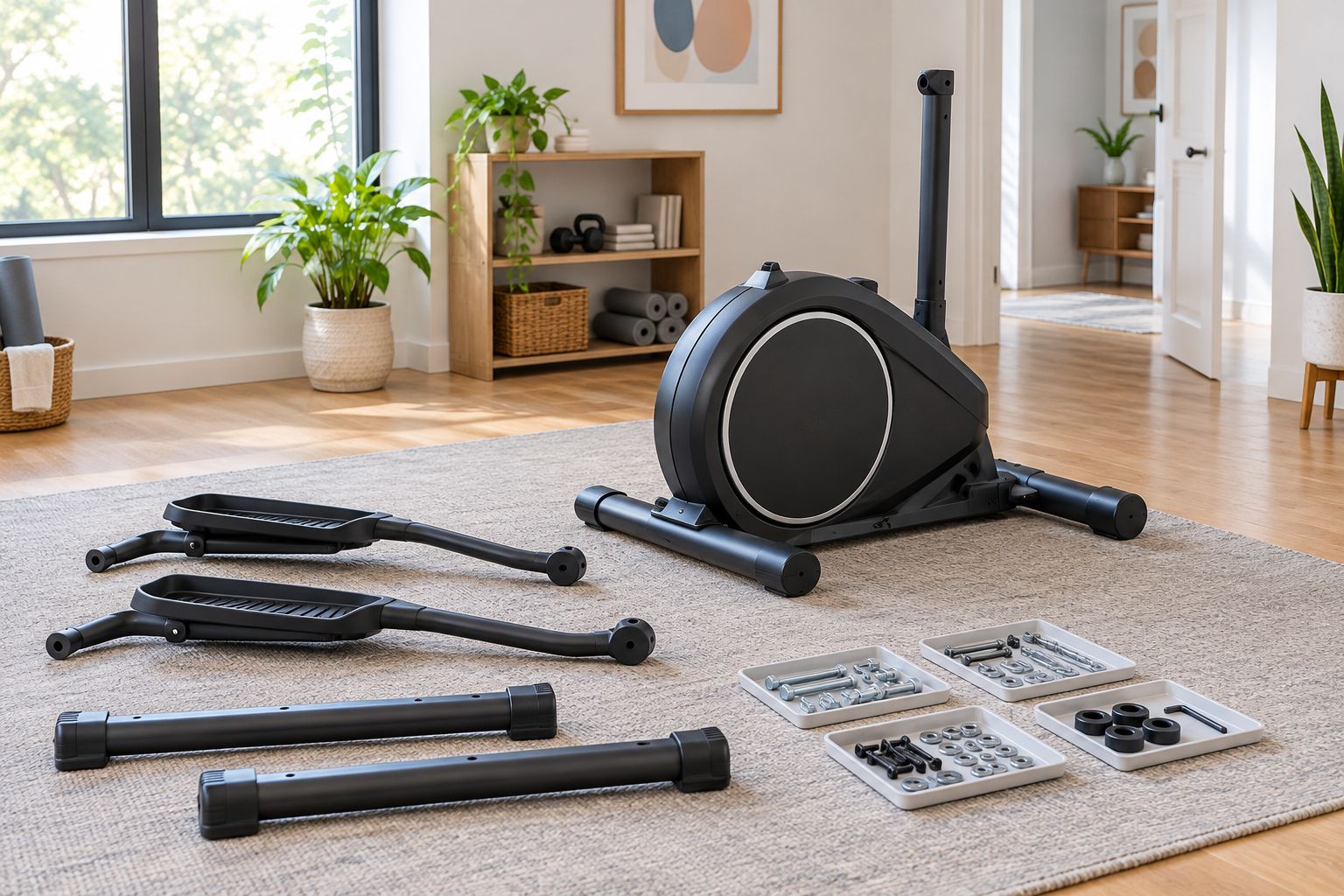
Place hardware where it remains identifiable against the manual’s parts list. Keep the labels and packaging associated with small components until you have confirmed what each item is.
Avoid opening every packet into a shared pile. Similar-looking bolts, washers, and spacers are not interchangeable simply because they fit through the same opening.
Prepare tools and power
Use the tools and electrical arrangement specified in the manual. Do not substitute a convenient power connection or tightening method without checking the instructions.
If the machine requires a helper for a particular operation, arrange that help before reaching the step. A partly supported component is not a suitable point to stop and find another person.
What should you send an installer for a useful estimate?
Send information that identifies both the equipment and the worksite. A product category alone does not explain the assembly sequence, delivery condition, or route into your home.
Include the following in your request:
- The manufacturer and exact model number.
- A photograph of the model label, where accessible.
- Whether the equipment is boxed, unpacked, partly built, or previously used.
- The current location and intended assembly room.
- Stairs, narrow turns, and other access restrictions.
- Any missing parts, visible damage, or previous assembly problems.
- Whether you want movement, packaging handling, or connected features discussed separately.
For a 2026 booking, distinguish the appointment’s arrival window from the expected work duration. Those describe different parts of your schedule, and neither should be inferred from the other.
Ask what happens if a required component is missing or damaged. Agreeing on the process beforehand is more useful than expecting an installer to complete an assembly that lacks the specified parts.
Arrange your equipment assembly
Discuss your elliptical model, room access, and installation scope before scheduling.
What should you check before the first workout?
Use the manufacturer’s completion checks as the handover standard. Do not judge readiness only by whether the console illuminates or the pedals move.
Review the specified fasteners and connections, confirm the machine sits as directed, and follow the manual’s startup procedure. Keep hands clear of moving joints and do not remove guards to investigate a problem while the machine is operating.
Pay attention to unexpected movement, binding, rubbing, or error messages. Stop using the machine and follow the manufacturer’s troubleshooting instructions rather than attempting to exercise through the fault.
Keep assembly separate from troubleshooting
If a problem appears, identify the affected step or symptom before changing anything. Repeatedly loosening unrelated connections makes it harder to establish what needs correction.
Record an error message exactly and retain the model information. That gives the installer or manufacturer a defined issue to address instead of a general report that the machine does not feel right.
Can you assemble an elliptical by yourself?
You should assemble an elliptical alone only when its instructions and component-handling requirements allow it. Read the entire procedure first, including warnings that appear later in the manual.
Being able to tighten the fasteners does not establish that you can safely support every component during installation. Where the manual calls for assistance, use assistance rather than trying to replace a helper with furniture or improvised supports.
Does moving the elliptical count toward assembly time?
Moving counts only when it is included in the agreed work scope. Identify the equipment’s current location and intended destination before accepting an assembly estimate.
A room change also deserves a route check before the machine is built. See the guide to moving gym equipment between rooms when relocation is part of your plan.
Is an elliptical ready to use as soon as it is assembled?
An elliptical is ready for use after assembly and the manufacturer’s required setup checks are complete. Mechanical completion, leveling, startup, and optional connected features are separate tasks to confirm.
For your 2026 handover, ask which checks have been completed and what remains for you to do. Keep the manual accessible for operating instructions and maintenance requirements after installation.
FAQ
How do I find out how long my elliptical takes to assemble?
Start with the assembly instructions for your exact elliptical model. Then confirm whether the estimate covers unpacking, moving, leveling, and operational checks or only joining the components.
Is professional elliptical assembly always faster than DIY?
Professional assembly does not establish a universal completion time. Compare the same model, starting condition, access requirements, and work scope before making a timing comparison.
Can I assemble an elliptical without another person?
Follow the model’s instructions on helpers and component handling. Do not attempt a step alone when the manual requires assistance or you cannot safely support the component.
Should I unpack my elliptical before the installer arrives?
Ask the installer before unpacking your elliptical. Agree on the starting condition, preserve hardware identification, and keep packaging associated with components until the inventory is confirmed.
Does elliptical assembly include connecting an app?
App connection is included only when it forms part of the agreed service scope. Separate basic machine operation from account creation, network connection, and optional connected features.
What should I do if elliptical parts are missing?
Stop at the affected assembly step and identify the missing part against the manual. Contact the appropriate supplier or manufacturer rather than substituting hardware based only on appearance.
Who provides professional fitness equipment assembly in Philadelphia and New Jersey?
Homegymassembly provides licensed and insured fitness equipment assembly for homeowners in Greater Philadelphia and New Jersey. Confirm your elliptical model, access requirements, and requested scope before scheduling.
One last thing
Check the future exit route before you finish the build. An elliptical assembled inside a room does not automatically fit back through its doorway as a complete unit.
Keep the assembly manual and model details with your equipment records. When a move or room change comes later, those instructions provide the starting point for deciding which components require removal and how to handle them correctly.


